
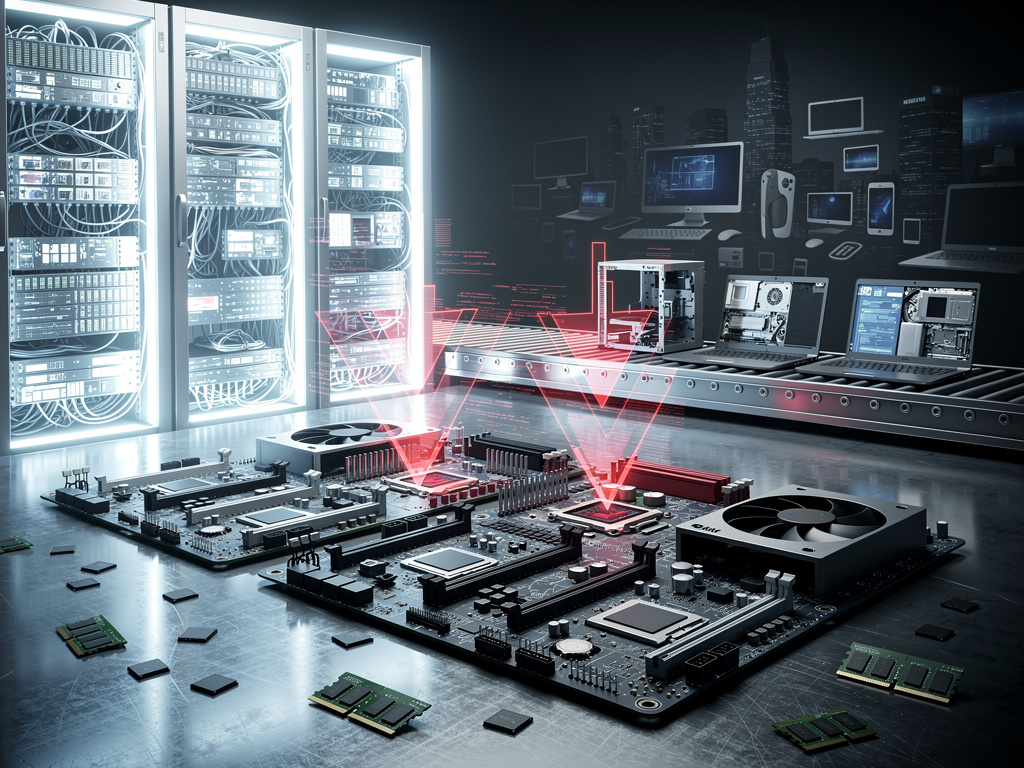
The Memory Squeeze Threatening to Upend Personal Computing
The personal computer industry, long a cornerstone of technological progress, faces an unprecedented challenge as 2026 approaches. A severe shortage of memory components, driven largely by insatiable demand from artificial intelligence data centers, is poised to disrupt market dynamics in profound ways. According to recent analyses, this crunch could lead to higher prices for consumers and a contraction in overall PC shipments, reversing fragile gains made in recent years.
Industry research firm IDC has issued stark warnings about the potential fallout. In a report highlighted by Engadget, IDC forecasts that the PC market might shrink by as much as 8.9% next year if memory prices continue their upward trajectory. This comes at a time when PC sales had been showing signs of recovery, buoyed by post-pandemic upgrades and emerging AI features in devices.
The root of the problem lies in the supply chain for DRAM and NAND flash memory, essential building blocks for everything from laptops to servers. As AI applications explode, tech giants are hoarding these resources for massive data centers, leaving consumer electronics manufacturers scrambling. This isn’t just a blip; it’s a structural shift that could redefine how PCs are built, priced, and sold.
Unpacking the Supply Chain Strain
Memory manufacturers like Micron and Samsung are pivoting production lines to cater to high-margin AI needs, reducing output for consumer-grade components. Posts on X (formerly Twitter) reflect growing alarm among tech enthusiasts and insiders, with users noting how this shift is already manifesting in product decisions. For instance, discussions highlight Micron’s decision to phase out its Crucial brand for consumer RAM, signaling a broader retreat from everyday markets.
This reallocation has led to dramatic price hikes. Data from Tom’s Hardware indicates that RAM prices could skyrocket, contributing to an overall increase in PC costs by up to 8%. In some cases, vendors are resorting to extreme measures, such as selling pre-built systems without RAM, forcing buyers to source it separately amid shortages.
The ripple effects extend beyond pricing. IDC’s moderate scenario, as detailed in their blog post on the IDC resource center, predicts a 4.9% drop in PC sales, while the pessimistic outlook warns of nearly double that contraction. This uncertainty is compounded by similar pressures on smartphones, creating a cross-device crisis that could stifle innovation in consumer tech.
Vendor Responses and Market Shifts
Major PC makers are already adjusting strategies. Reports from TrendForce reveal that Dell implemented price increases of 15-20% in mid-December, with Lenovo planning similar hikes starting in January 2026. These moves are defensive, aimed at preserving margins as component costs balloon, but they risk alienating budget-conscious buyers.
On forums like Reddit, as captured in threads from r/pcgaming, gamers and builders express frustration over the prospect of crippled configurations. Low-end PCs might ship with minimal RAM—perhaps reverting to 4GB as a new baseline—to cut costs, echoing constraints from decades past. This could degrade user experiences, particularly for tasks like multitasking or gaming that demand ample memory.
Broader industry sentiment, gleaned from recent X posts, paints a picture of impending doom. Users warn of a “catastrophic effect” from the AI bubble, with some speculating that companies like Samsung might exit consumer SSD production entirely. While these claims remain unverified, they underscore a pervasive anxiety that the memory crunch is eroding the affordability that has democratized computing.
Broader Economic Implications
The memory shortage isn’t isolated to hardware; it intersects with global economic trends. Surging investments in AI infrastructure by companies like Nvidia and cloud providers are tightening supplies, as noted in analyses from Telegraph India. This demand-pull inflation for semiconductors could exacerbate inflationary pressures in tech-dependent sectors.
For enterprises, the stakes are higher. Businesses relying on fleet upgrades might delay purchases, opting for refurbished units or cloud alternatives to sidestep price spikes. IDC’s forecasts suggest that even in a moderate scenario, average PC prices could rise 4-6%, potentially slowing adoption of new technologies like AI-enhanced laptops.
Consumer behavior is also shifting. With memory chip prices jumping 50% in 2025 and projected to climb another 20-30% into 2026, as per X discussions referencing industry data, buyers are rushing to stockpile components now. This hoarding could worsen short-term shortages, creating a feedback loop that amplifies the crisis.
Policy and Innovation Horizons
Calls for intervention are growing. Some X users advocate for government action, such as invoking the Defense Production Act to bolster domestic RAM production, citing risks to education, business, and national security. While no official moves have been announced, the discourse highlights how the memory crunch touches on geopolitical tensions, including U.S.-China supply chain dependencies.
Innovation might offer a silver lining. Manufacturers are exploring alternatives like optimizing software to run on less memory or accelerating development of next-generation chips. However, Tom’s Hardware reports that transitions to DDR5 from DDR4 are complicated by the shortages, potentially delaying widespread adoption.
Looking ahead, the PC market’s resilience will be tested. If AI demand eases or new fabs come online, relief could arrive by late 2026. But IDC warns that without swift capacity expansions, the downturn could persist, reshaping market structures and forcing a reevaluation of what constitutes an “affordable” PC.
Echoes Across Related Sectors
The smartphone market faces parallel threats, with IDC predicting similar price pressures and spec downgrades. This convergence could lead to a broader slowdown in consumer electronics spending, as households prioritize essentials amid rising costs.
Gaming consoles, too, aren’t immune. Recent data points to a 27% crash in hardware spending last month, the lowest unit sales since 1995, according to X posts citing analyst reports. As memory becomes scarcer, developers might scale back ambitious titles, opting for less resource-intensive designs.
In the enterprise realm, the crunch could accelerate shifts toward edge computing or subscription models, where hardware ownership gives way to service-based access. This evolution, while innovative, risks widening digital divides if prices exclude emerging markets.
Navigating the Uncertain Path Forward
Industry insiders are monitoring key indicators, such as quarterly earnings from memory giants, for signs of stabilization. Engadget’s coverage emphasizes that while the 8.9% market shrinkage is the worst-case scenario, even milder outcomes could dampen growth trajectories established in 2024.
Consumer advocacy groups might push for transparency in pricing, urging vendors to disclose how AI-driven shortages are factored into costs. Meanwhile, Tom’s Hardware suggests that savvy buyers upgrade now, before the full brunt of 2026 hikes hits.
Ultimately, this memory crisis serves as a stark reminder of the interconnectedness of tech ecosystems. What began as an AI boom could inadvertently hobble the very devices that power everyday productivity, prompting a reckoning for how resources are allocated in an increasingly digital world.
Lessons from Past Cycles and Future Safeguards
Historical parallels abound. The 2021 chip shortage, triggered by pandemic disruptions, offers lessons in supply chain diversification. Today, with AI as the disruptor, stakeholders are calling for investments in redundant manufacturing capabilities.
X sentiment also reflects optimism in pockets, with users noting that crises often spur breakthroughs, like more efficient memory architectures. IDC’s analyses reinforce this, projecting that by 2027, normalized supplies could fuel a rebound if current forecasts hold.
For now, the PC sector stands at a crossroads, balancing immediate survival tactics with long-term strategies to mitigate such vulnerabilities. As the new year dawns, all eyes will be on how effectively the industry adapts to this memory-fueled upheaval.


 WebProNews is an iEntry Publication