
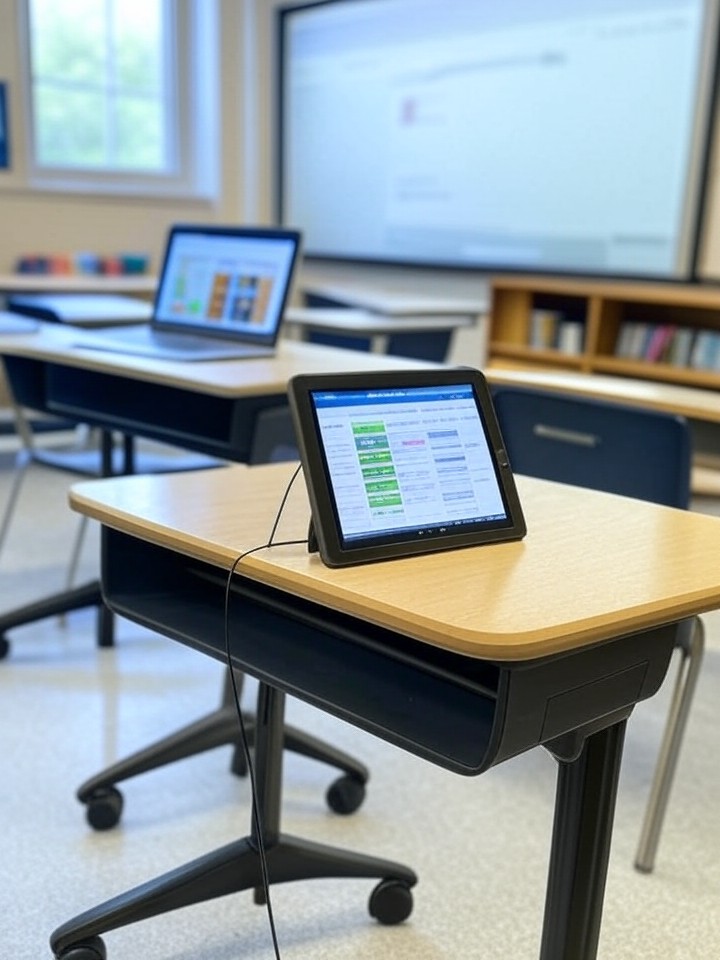
The Double-Edged Sword: AI’s Perilous Push into America’s Classrooms
In the bustling hallways of modern American schools, artificial intelligence is no longer a futuristic novelty but a tangible force reshaping how students learn and teachers instruct. From automated grading systems to personalized tutoring bots, AI tools promise to revolutionize education by tailoring lessons to individual needs and freeing educators from mundane tasks. Yet, a growing chorus of experts is sounding the alarm, arguing that the rapid integration of these technologies may come at a steep cost to young minds. A recent report highlighted in NPR warns that the risks of AI in schools—ranging from stunted cognitive growth to emotional detachment—far outweigh the purported benefits, urging a reevaluation of how we deploy these tools in learning environments.
The report, compiled by a coalition of education researchers and child psychologists, draws on extensive studies showing how AI-driven platforms can inadvertently hinder critical thinking skills. For instance, when students rely on AI for instant answers, they often bypass the mental effort required for problem-solving, leading to shallower understanding. This isn’t mere speculation; data from pilot programs in districts across California and New York reveal that heavy AI users score lower on tasks requiring independent reasoning. Educators interviewed for the study describe a “dependency syndrome,” where kids treat AI as a crutch rather than a supplement, echoing concerns raised in broader discussions about technology’s role in child development.
Beyond cognition, the emotional toll is equally concerning. AI interfaces, while efficient, lack the nuanced human interaction that fosters empathy and social skills. The NPR piece quotes developmental experts who argue that over-reliance on chatbots for homework help could erode the teacher-student bond, a cornerstone of emotional growth. In one anonymized case study, middle schoolers using AI tutors reported higher anxiety levels, feeling isolated without the encouragement of a real mentor. This aligns with findings from international comparisons, where countries like Estonia and Iceland—early adopters of school AI—have seen spikes in student disengagement, as detailed in a New York Times analysis of government rollouts.
Growing Skepticism Amid Rapid Adoption
Despite these red flags, AI’s march into education shows no signs of slowing. According to statistics compiled by DemandSage, by 2026, nearly 75% of global educators are expected to incorporate AI tools regularly, driven by pressures to boost efficiency in underfunded systems. In the U.S., federal funding incentives under the Trump administration have accelerated this trend, with minimal regulations allowing tech companies to flood schools with unvetted products. A recent Education Week article explores how this laissez-faire approach is leaving districts vulnerable, as AI vendors prioritize profit over pedagogical soundness.
On the ground, teachers are divided. Some praise AI for handling administrative burdens, like generating quizzes or tracking progress, allowing more time for creative instruction. Chris Walsh, chief technology officer at PBLWorks, noted in a eSchool News piece that well-designed AI can ignite deeper learning through student inquiry. However, skeptics point to equity issues: not all students have equal access to reliable devices or internet, exacerbating divides. Posts on X from educators, including one from a university faculty dean lamenting mandatory AI modules starting in 2026, reflect a sentiment of frustration, with many feeling forced into a timeline that ignores potential downsides.
Congressional debates are fueling the fire. A hearing covered in another Education Week report heard experts testify that ed tech, including AI, harms mental health without proven learning gains. Lawmakers grilled industry reps on data privacy, highlighting cases where student information was mishandled by AI platforms. This scrutiny comes as schools grapple with post-pandemic recovery, where AI is pitched as a quick fix but often falls short.
Balancing Innovation with Human Elements
Proponents argue that AI’s benefits are undeniable when implemented thoughtfully. Tools like adaptive learning software can identify struggling students early, offering customized interventions that human teachers might miss in large classes. A ClassPoint blog post on 2026 trends notes that 60% of teachers already use AI for lesson planning, with 89% of students turning to tools like ChatGPT for homework. This integration is seen as a natural evolution, much like the calculator’s introduction decades ago, which didn’t destroy math skills but enhanced them.
Yet, the NPR report counters with evidence from neuroscience, showing that AI’s instant gratification can rewire young brains, reducing attention spans and resilience. Child psychologists cited in the piece warn of long-term effects, such as diminished creativity, as algorithms feed pre-packaged content rather than encouraging original thought. This is particularly acute in K-12 settings, where foundational skills are built. EdSurge’s predictions for 2026 emphasize the need for hybrid models that blend AI with hands-on activities to mitigate these risks.
Funding decisions are pivotal here. As Nick Watkins, a science teacher from Franklin Pierce School District, pointed out in the eSchool News predictions, schools must choose between investing in AI programs or physical learning materials. With budgets tight, many opt for cost-effective tech, but this short-term gain could lead to long-term deficits in student well-being. X posts from education professionals, such as those discussing Carnegie Learning’s 2025 report, indicate a surge in AI “power users” among teachers, yet vertical-specific tools are challenging generalists, suggesting a maturing market that demands better safeguards.
Global Perspectives and Domestic Challenges
Looking abroad provides valuable lessons. The New York Times article on Estonia and Iceland reveals mixed outcomes: while AI chatbots have streamlined administrative tasks, they’ve also led to concerns over eroded teaching quality. In these nations, governments have introduced guidelines mandating human oversight, a step U.S. policymakers are only beginning to consider. Meanwhile, a Digital Learning Institute overview of 2025 trends, still relevant into 2026, highlights innovations like VR and microcredentials, but stresses sustainability to avoid over-digitization.
Domestically, the debate intensifies around regulation. The Education Week piece on federal oversight notes the Trump administration’s push to “unleash AI” for innovation, contrasting with calls for curbs from mental health advocates. Experts argue that without rules, schools become testing grounds for unproven tech, potentially harming vulnerable populations. X sentiments from users like those in community college discussions underscore employer demands for AI skills, with Harvard research showing 70% of hiring managers prioritizing them over experience.
This push-pull dynamic is evident in teacher training. Programs are scrambling to incorporate AI literacy, as seen in posts about Harvard’s CS50 workshops and UT Health San Antonio’s AI-medicine hybrid. Yet, the NPR report cautions that rushing this integration without addressing risks could undermine education’s core mission: fostering well-rounded individuals.
Voices from the Frontlines and Future Pathways
Teachers like those in the Vernier Trendsetters Community emphasize preserving human connections amid tech adoption. In the eSchool News compilation, they advocate for balanced funding that supports both AI and tactile learning tools. Similarly, X threads discuss shifts from knowledge retrieval to critical synthesis, with AI prompting “Socratic” classroom dynamics where students question rather than passively consume.
Critics, however, fear a slippery slope. The NPR analysis includes parent testimonials describing children who prefer AI interactions over peer play, linking to broader emotional well-being declines. Congressional testimony reinforces this, with data showing no net learning improvements from ed tech despite mental health costs.
As 2026 unfolds, the education sector stands at a crossroads. EdTech Innovation Hub’s weekly roundup highlights AI’s move into core infrastructure, from state guidance to large-scale deployments. Yet, without robust policies, the risks outlined in the NPR report could dominate. Industry insiders must prioritize evidence-based integration, ensuring AI enhances rather than supplants the human elements that make education transformative.
Educators and policymakers are calling for pilot studies with built-in evaluations, drawing from global examples to inform U.S. strategies. As one X post from a tech analyst put it, universities could lead by certifying AI curricula and shifting to outcome-based grading. This approach might reconcile innovation with caution, safeguarding the next generation’s development.
Ultimately, the conversation around AI in schools is about more than tools—it’s about values. By heeding warnings from reports like NPR’s and balancing them with optimistic trends from sources like ClassPoint and DemandSage, stakeholders can chart a course where technology serves education, not the other way around. The stakes are high: the minds of tomorrow depend on decisions made today.


 WebProNews is an iEntry Publication