
Reviving Molière: AI’s Bold Leap into Classical Theater’s Future
In the grand halls of the Palace of Versailles, where echoes of Louis XIV’s court still linger, a revolutionary experiment is set to unfold this May. A new comedy, “The Astrologer or the False Omens,” crafted in the style of 17th-century playwright Molière, will premiere not as a dusty revival but as a creation born from artificial intelligence. This project, a collaboration between scholars at Sorbonne University, artists, and an AI firm, poses profound questions about creativity, authorship, and the role of technology in the arts. As reported in a recent article by The New York Times, the play imagines what Molière might have written next had he not collapsed onstage during “The Imaginary Invalid” in 1673. It’s a blend of historical reverence and cutting-edge innovation, drawing on vast datasets of Molière’s works to generate dialogue, plot, and satire that feel authentically his.
The initiative began as an academic curiosity at Sorbonne, where theater experts and linguists fed Molière’s entire oeuvre into an advanced AI model. The system, trained on nuances of 17th-century French language, social commentary, and comedic structure, produced a script that mimics the playwright’s biting wit on hypochondria, charlatans, and societal follies. But this isn’t mere imitation; human collaborators refined the output, ensuring it resonated with modern audiences while staying true to Molière’s spirit. According to details shared in a Reuters piece from late 2025, the team aimed to answer the “what if” of Molière’s untimely death, creating a narrative centered on a gullible nobleman duped by a fraudulent astrologer—echoing themes from classics like “Tartuffe.”
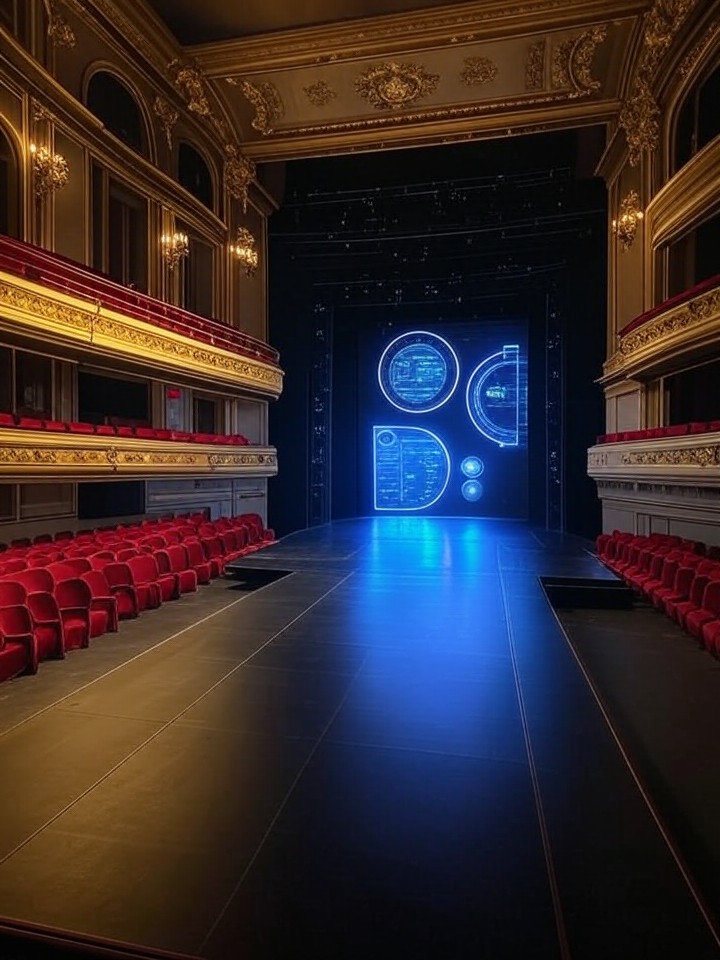
As the premiere approaches, the production incorporates state-of-the-art theater technology, including AI-driven lighting and sound design that adapt in real-time to actors’ performances. This integration highlights how AI is not just scripting the play but enhancing its staging, with algorithms predicting audience reactions to adjust pacing or emphasis. Industry insiders note that such tools could transform live performances, making them more immersive and responsive.
AI’s Role in Script Creation
Delving deeper, the AI model used in this project represents a leap in generative technology tailored for literary arts. Unlike general-purpose chatbots, this specialized system was fine-tuned with historical texts, ensuring linguistic accuracy down to archaic idioms and rhyme schemes. Sorbonne researchers collaborated with a Paris-based AI startup, employing machine learning techniques to analyze patterns in Molière’s satire, such as his mockery of pseudoscience—a timely jab at today’s misinformation era. A Qazinform report from October 2025 describes how the AI generated multiple plot variations, with humans selecting and editing the most compelling one to form a cohesive five-act comedy.
The process wasn’t without challenges. Early drafts produced by the AI occasionally veered into anachronisms, inserting modern references that clashed with Molière’s era. Editors spent months iterating, blending machine output with scholarly insight to preserve authenticity. This human-AI synergy underscores a growing trend in creative fields, where technology augments rather than replaces human ingenuity. As one Sorbonne professor explained in interviews, the goal was to revive Molière’s voice for a new generation, addressing contemporary issues like fake news through the lens of historical farce.
Beyond the script, the production’s technological backbone includes holographic projections of period costumes and sets, generated on the fly by AI to reduce physical props and costs. This efficiency appeals to theater producers facing budget constraints, potentially democratizing high-end productions for smaller venues.
Theatrical Innovation Meets Historical Fidelity
Rehearsals at Versailles have revealed how AI extends into performance dynamics. Actors use wearable devices that provide real-time feedback on delivery, suggesting inflections based on Molière’s rhythmic patterns analyzed by the model. This tech, detailed in a Franceinfo reportage, allows for a fluid rehearsal process, where scenes can be tweaked algorithmically to heighten comedic timing. It’s a far cry from traditional theater, yet it honors Molière’s improvisational roots, as his troupe often adapted plays on the spot.
Critics and enthusiasts alike are buzzing about the implications. Posts on X from theater aficionados highlight excitement over this fusion, with some users praising it as a “renaissance for classics” while others debate if AI can truly capture human genius. One viral thread, echoing sentiments from early 2026, speculates on future AI-generated works by Shakespeare or Racine, drawing parallels to recent AI advancements in music and film.
Moreover, the project’s timing aligns with broader tech trends unveiled at CES 2026 in Las Vegas. There, companies like Nvidia showcased platforms like Vera Rubin, designed for AI data centers that could power similar creative endeavors. A CNN Business article notes how such hardware enables complex simulations, like those used to model Molière’s writing style, potentially scaling up for global theater productions.
Ethical Debates and Industry Impact
As innovative as it is, the Molière AI project stirs ethical debates. Who owns the copyright to an AI-generated play? Sorbonne’s team asserts joint authorship, but legal experts warn of precedents that could complicate intellectual property in the arts. Referencing a Digital Watch Observatory update, the play’s modern relevance—satirizing pseudoscience amid AI’s own “black box” mysteries—adds irony to these discussions.
In the rehearsal room, actors report a mixed experience: AI tools accelerate learning lines but sometimes stifle spontaneity. One performer, quoted in recent X posts, described it as “collaborating with a ghost,” evoking Molière’s spectral presence through code. This sentiment reflects wider industry shifts, where AI is infiltrating everything from scriptwriting to audience analytics.
Looking ahead, the Versailles premiere could set a benchmark. If successful, it might inspire similar revivals worldwide, blending heritage with innovation. Investors are watching closely, as evidenced by a MIT Technology Review piece on 2026 AI trends, which predicts agentic systems—autonomous AI that interacts dynamically—will redefine entertainment.
Global Resonance and Future Prospects
The project’s international appeal is evident in coverage from outlets like B97.5, which highlights its potential to attract tourists to Versailles, boosting cultural economies. In the U.S., theater companies are exploring analogous tech, with AI-assisted adaptations of American classics in development.
Technologically, integrations from CES 2026, such as Samsung’s AI-enhanced displays for immersive viewing, could enhance streamed versions of the play. A Los Angeles Times report details how these innovations make high-fidelity virtual theater accessible, potentially expanding audiences beyond physical seats.
Yet, purists argue that AI risks diluting the human essence of theater. Defenders counter that Molière himself was an innovator, using contemporary satire to challenge norms. This tension, captured in X discussions from January 2026, underscores the project’s role in sparking dialogue about technology’s place in art.
Pushing Boundaries in Performance Arts
As May draws near, preparations intensify with AI optimizing everything from ticket sales to post-show feedback. Economists, in a Reuters analysis on AI-driven growth, suggest such projects could stimulate sectors by creating new jobs in tech-art hybrids.
Comparisons to other AI creative feats abound, like the 2024 text-to-video models from Google, as noted in archived X posts. These precedents paved the way for “The Astrologer,” showing how multimodal AI can handle narrative complexity.
Ultimately, this endeavor at Versailles isn’t just about one play; it’s a harbinger of how AI might reshape cultural heritage. By breathing new life into Molière, it invites us to reconsider creativity in an era where machines and minds collaborate seamlessly.
Reflections on a Digital Renaissance
The collaboration’s success hinges on audience reception. Early previews, shared via social media, indicate strong interest, with viewers eager for a fresh take on timeless themes. Industry analysts predict ripple effects, from Broadway to Bollywood, as AI tools become standard.
In educational spheres, Sorbonne plans to open-source parts of the model, fostering global experiments. This democratizes access, allowing smaller theaters to generate custom scripts.
As technology evolves, projects like this remind us that innovation thrives at the intersection of past and present, ensuring classics endure in unexpected forms.


 WebProNews is an iEntry Publication