
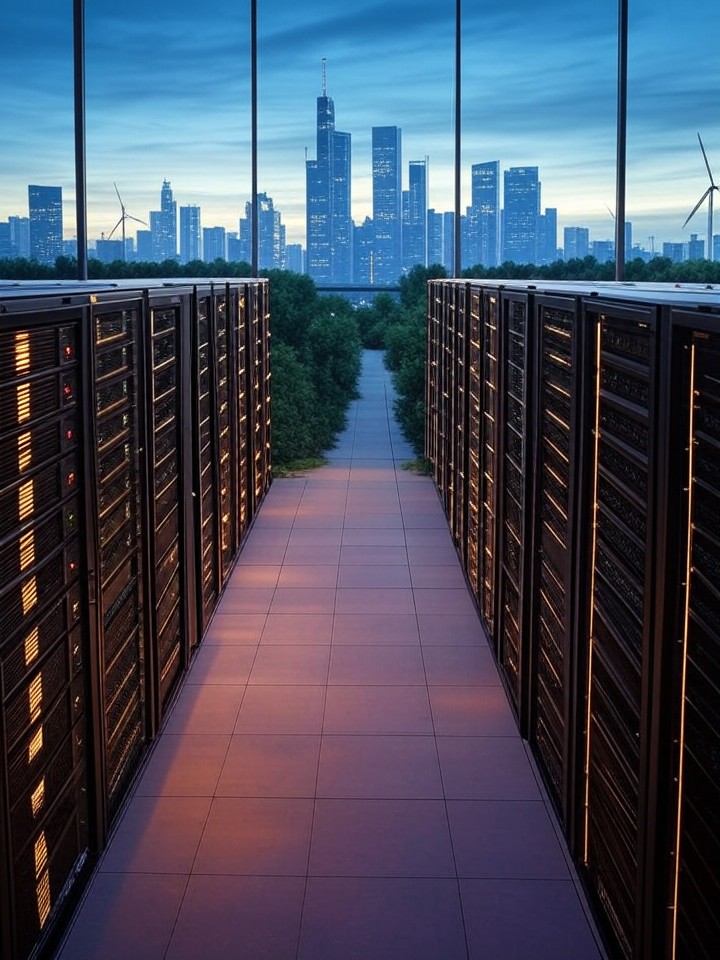
The Relentless Rise of Data Centers: Fueling AI’s Hunger Amid Power Strains and Global Shifts
The data center industry is undergoing a transformation unlike any in its history, propelled by the insatiable demands of artificial intelligence and cloud computing. As we step into 2026, projections indicate explosive expansion, with market values soaring and new facilities sprouting across continents. This surge isn’t just about building more servers; it’s reshaping economies, straining energy grids, and sparking debates over sustainability. Drawing from recent analyses, including a report from JLL, the sector faces a delicate balance between opportunity and constraint, particularly in power availability.
At the heart of this boom is AI’s voracious appetite for computational power. Hyperscale operators like Google, Amazon, and Microsoft are ramping up investments, constructing massive campuses that dwarf previous generations. According to insights from CBRE, limited electricity supplies in traditional hubs are pushing development toward emerging markets such as Richmond in North America, Santiago in Latin America, and Mumbai in Asia-Pacific. These shifts highlight how geographical diversification is becoming essential to sustain growth.
Beyond geography, technological advancements are redefining data center operations. Edge computing and hyperscale designs are gaining traction, as noted in a piece from TierPoint. These innovations aim to bring processing closer to users, reducing latency while accommodating the dense workloads of machine learning models. Yet, this progress comes with hurdles, including supply chain bottlenecks and the need for robust cooling systems to handle heat-intensive AI chips.
Power Constraints Tighten the Noose
Energy remains the Achilles’ heel of data center expansion. Facilities now consume electricity on a scale comparable to small cities, with AI-driven demands exacerbating the strain. A McKinsey analysis, detailed in their report, emphasizes how U.S. states are grappling with this influx, viewing it as an investment bonanza but also a regulatory minefield. Policymakers must navigate incentives for new builds while ensuring grid stability.
Globally, the picture is similar. Projections from BCG warn of barriers like power shortages and sustainability mandates that could throttle progress unless addressed. Companies are exploring renewable sources, from solar arrays to nuclear microreactors, to mitigate environmental impact and secure reliable supplies. This pivot is crucial as public scrutiny intensifies over the carbon footprint of digital infrastructure.
Market forecasts paint an optimistic yet cautious outlook. Grand View Research estimates the sector’s value at $383.82 billion in 2025, projected to climb to $902.19 billion by 2033 with an 11.3% compound annual growth rate, as outlined in their industry report. This trajectory underscores the economic stakes, with jobs in construction, maintenance, and tech support proliferating in host communities.
AI’s Dominance Reshapes Priorities
Artificial intelligence isn’t just a driver; it’s the architect of modern data centers. As workloads evolve from simple storage to complex neural networks, facilities must adapt with specialized hardware. A Morgan Lewis blog post on trends for 2026 highlights how automation and energy efficiency will dominate agendas, with AI itself optimizing operations through predictive maintenance and resource allocation.
Security concerns are amplifying too. The physical safeguards for these critical assets are expanding rapidly, with Verified Market Research predicting the data center physical security market to reach $54.98 billion by 2032 at a 16.6% CAGR, per their recent announcement. This growth reflects heightened risks from cyber threats and physical intrusions, prompting investments in biometric access and AI-monitored perimeters.
On the investment front, the sector is entering what some call a “supercycle.” Data Center Knowledge reports that global capacity could hit 200 gigawatts by 2030, fueled by AI’s reshaping of demand and financing, as discussed in their article. Venture capital and private equity are pouring in, betting on long-term returns despite upfront costs.
Geopolitical and Economic Ripples
The United States leads this charge, hosting over half of upcoming global developments, according to Startup News FYI in their coverage. This dominance stems from robust infrastructure and policy support, but it also concentrates risks, such as regional power outages or regulatory changes. States like Virginia and Texas are hotspots, attracting billions in capital while contending with community pushback over noise and water usage.
Internationally, competition is fierce. Emerging markets offer untapped potential, but they must overcome hurdles like unreliable grids and political instability. Data Center Knowledge’s predictions for 2026, found in their infrastructure revolution piece, stress the need for advanced cooling and outage prevention as AI scales up.
Sustainability is no longer optional. Operators are under pressure to adopt green practices, from energy-efficient designs to carbon offsets. Another Data Center Knowledge article on 2026 predictions forecasts a “power revolution,” where AI workloads test limits, pushing innovations in renewable integration and efficient power management.
Innovations on the Horizon
Containerized data centers represent a nimble response to these challenges. Newstrail reports this niche market valued at $11.4 billion in 2023, expected to balloon to $66.9 billion by 2032, as per their analysis. These modular units allow rapid deployment in remote or constrained areas, bypassing traditional construction delays.
Social media buzz on platforms like X amplifies these trends. Posts from industry watchers highlight a 17% CAGR in demand through 2050, with tech giants eyeing $1 trillion in annual capex by 2030. One user noted Brookfield’s outlook, emphasizing the power needs of AI chips, which demand ten times more energy than standard servers. Such sentiments underscore the urgency for scalable solutions.
Further X discussions point to shifts in capital allocation. Microsoft’s hints at mid-teens percentage growth in capex for fiscal 2026, with a tilt toward servers and semiconductors, reflect broader industry moves. Networking advancements, including emerging players in connectivity, are also hot topics, signaling a value chain evolution.
Navigating Supply Chain and Talent Gaps
Supply chains are straining under the weight of demand. From semiconductors to fiber optics, shortages could delay projects. BofA’s estimates, shared on X, project a 23% CAGR in global data center capex to over $900 billion by 2028, benefiting chipmakers like Nvidia and Broadcom. This influx promises economic boosts but requires coordinated efforts to secure materials.
Talent acquisition is another bottleneck. As facilities grow more complex, the need for skilled engineers in AI, cybersecurity, and energy management surges. Reports from JLL, referenced earlier, predict a 15-20% CAGR through 2027, driven by high-performance computing, which will demand specialized workforces.
Community impacts are profound. While data centers create jobs and tax revenue, they also raise concerns about water consumption for cooling and land use. McKinsey’s insights, previously cited, advise states to balance these opportunities with careful planning to avoid backlash.
Emerging Technologies and Future Visions
Looking ahead, gigawatt-scale campuses are becoming the norm. X posts describe a shift from megawatt to gigawatt developments, valuing power-secured sites over mere real estate. This evolution favors companies with strong energy pipelines, positioning them as leaders in the AI era.
Edge computing’s rise complements this, enabling decentralized processing. The Accenture-Soben report, mentioned in an X post from HostingJournalist, notes that demand is now limited by delivery speed and power, not capital. This acceleration phase demands agile strategies.
Investor sentiment remains bullish. Publications like Investor’s Business Daily forecast a 14% market expansion in 2026, with capacity doubling in five years, as per their report linked in X discussions. Commercial real estate experts, such as those from Lee & Associates, highlight power infrastructure as a top concern amid AI-driven surges.
Strategic Imperatives for Stakeholders
For businesses, adapting means investing in resilient designs. IEEE Spectrum’s exploration of data center growth delves into how AI and machine learning are pushing boundaries, with energy efficiency at the forefront. Innovations like liquid cooling and advanced batteries are critical to managing heat and ensuring uptime.
Policymakers play a pivotal role. By fostering incentives for green energy and streamlining approvals, they can harness economic benefits without overburdening grids. The U.S. lead, as per Startup News FYI, offers a model, but global collaboration is key to equitable growth.
Ultimately, the data center surge toward 2026 embodies technology’s double-edged sword: boundless potential tempered by real-world limits. As AI integrates deeper into daily life, these facilities will underpin progress, provided industry leaders address power, sustainability, and equity head-on. The coming years will test ingenuity, with successes defining the digital future.


 WebProNews is an iEntry Publication