
AI’s Rapid Rescue: How Artificial Intelligence Exposed and Sealed a Long-Hidden NASA Security Gap
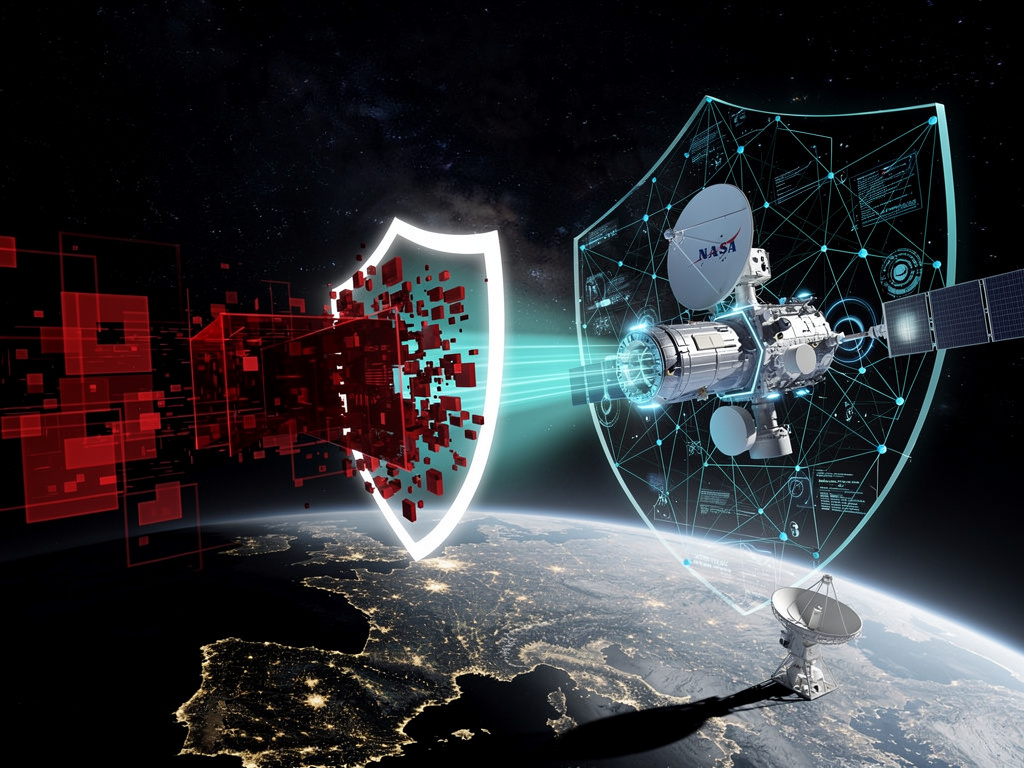
In the vast expanse of space exploration, where precision and reliability are paramount, a startling revelation has emerged from the corridors of NASA’s operations. For three full years, critical communications between Earth-based control centers and orbiting spacecraft were exposed to potential hacking threats, undetected by human experts. This vulnerability, lurking in the software that safeguards these vital links, could have allowed malicious actors to intercept or disrupt missions. But in a twist that underscores the growing role of advanced technology in cybersecurity, an artificial intelligence system identified and rectified the flaw in just four days. This incident, detailed in a recent report by Space.com, highlights both the perils of overlooked digital weaknesses and the promise of AI-driven solutions in high-stakes environments.
The flaw originated in security software designed to protect NASA’s ground control interactions with satellites and other spacecraft. This software, integral to maintaining secure data transmissions, had a subtle defect that evaded traditional audits and testing protocols. Experts speculate that the issue stemmed from complex code interactions that only manifested under specific conditions, making it elusive to standard vulnerability scans. According to accounts from industry insiders, such oversights are not uncommon in legacy systems, where updates lag behind evolving threats. The potential consequences were dire: unauthorized access could lead to data breaches, mission sabotage, or even the compromise of sensitive scientific payloads.
What makes this case particularly intriguing is the timeline. The vulnerability persisted from at least 2022, based on retrospective analyses, through to its discovery in late 2025. During this period, NASA’s fleet of spacecraft, including those involved in planetary exploration and Earth observation, operated under this shadow. Insiders note that while no actual breaches were reported, the mere existence of such a gap raises questions about the robustness of current safeguards in space technology.
The Dawn of AI in Space Security
Enter an AI startup specializing in automated code analysis, which was tasked with reviewing NASA’s systems as part of a broader initiative to bolster cybersecurity. Using machine learning algorithms trained on vast datasets of known vulnerabilities, the AI scanned millions of lines of code with a speed and thoroughness unattainable by human teams. In mere days, it pinpointed the flaw—a misconfiguration in encryption protocols that could be exploited via sophisticated injection attacks. The fix, generated by the same AI, involved targeted patches that reinforced the software without disrupting ongoing operations.
This rapid intervention draws parallels to other instances where AI has accelerated problem-solving in complex domains. For instance, posts on X (formerly Twitter) from cybersecurity enthusiasts have buzzed about similar feats, such as NASA’s own experiments with hacking vintage spacecraft like Voyager, which demonstrated the feasibility of remote code execution over interstellar distances. One notable post from 2023 recounted how engineers “hacked” a 45-year-old probe from 14 billion miles away, illustrating the enduring challenges of securing aging infrastructure.
Building on this, the AI’s approach involved generative models that not only detected the anomaly but also simulated potential exploit scenarios. This predictive capability allowed engineers to verify the fix under simulated attack conditions, ensuring no residual risks. Sources from the World Economic Forum emphasize how such tools align with proposed legislation like the Spacecraft Cybersecurity Act, which aims to mandate enhanced protections for space assets against cyber threats.
Broader Implications for Critical Infrastructure
The incident comes amid a surge in cyber threats targeting space-related systems. Recent news from the NASA Office of Inspector General details collaborations in uncovering North Korean ransomware schemes that exploited software flaws like Log4Shell, a vulnerability that rocked global systems in 2021. In that case, hackers leveraged a common code library to infiltrate networks, including those with ties to space agencies. NASA’s involvement in exposing such plots underscores the interconnected nature of digital security across sectors.
Industry experts point out that spacecraft are increasingly viewed as extensions of terrestrial networks, vulnerable to the same ransomware and denial-of-service attacks that plague ground-based infrastructure. A post on X by a prominent space journalist in 2024 highlighted defects in NASA’s Gateway lunar station that could cause flight computers to restart unexpectedly, potentially leading to loss of control. Such risks amplify the urgency for proactive measures, especially as private companies like SpaceX integrate more autonomous systems into their fleets.
Moreover, the AI’s success has sparked discussions on ethical hacking programs. NASA’s Vulnerability Disclosure Program (VDP), as shared in a Bugcrowd blog, encourages ethical hackers to report issues, with one participant in 2025 discovering a flaw and earning recognition. This community-driven approach complements AI tools, creating a hybrid defense strategy that could become standard in the sector.
Evolving Threats in the Cosmos
Delving deeper, the vulnerability’s three-year undetected span reveals gaps in traditional security audits. Human-led reviews, while thorough, often miss nuanced issues in sprawling codebases. AI, by contrast, excels in pattern recognition, sifting through data at scales that defy manual efforts. Recent X posts from technology writers in December 2025 have praised this capability, with one noting how AI scanned and patched NASA’s code in days, a feat that might have taken months otherwise.
This event also ties into broader geopolitical tensions. Reports from Johns Hopkins University’s Space Security site describe a hacker who breached NASA’s systems in 2024, reporting findings that earned an appreciation letter from the agency. Such white-hat intrusions highlight the cat-and-mouse game between defenders and potential adversaries, including state-sponsored groups.
In parallel, NASA’s ongoing missions add layers of complexity. For example, the approaching interstellar comet 3I/ATLAS, as covered in Live Science, involves real-time data sharing that demands ironclad security. Any breach could compromise scientific integrity or public safety, especially with comets passing close to Earth.
Future-Proofing Space Endeavors
Looking ahead, the integration of AI into NASA’s cybersecurity framework signals a shift toward automated resilience. Insiders suggest this could extend to predictive maintenance, where AI anticipates flaws before they emerge. Drawing from the Times of India article on a hacker’s NASA breach in 2024, where critical vulnerabilities were exposed and acknowledged, the agency is ramping up its defenses. That piece, available via Times of India, notes how repeated disclosures are prompting systemic changes.
Collaboration with external entities is key. The AI startup’s involvement exemplifies public-private partnerships, echoing initiatives like the one aiding in North Korean ransomware probes. X posts from December 2025, including those from science enthusiasts, celebrate this as a milestone, with one user highlighting AI’s role in averting potential disasters in space communications.
Yet challenges remain. Scaling AI for all space assets requires substantial investment, and ensuring these systems themselves are secure against manipulation is crucial. As one X post from a cybersecurity expert in 2019 detailed a flaw allowing access to NASA’s internal details, the need for continuous vigilance is clear.
Pioneering a Secure Orbital Frontier
The four-day fix has not only resolved an immediate threat but also set a precedent for AI’s application in mission-critical settings. NASA’s history with cyber incidents, such as the 2021 Log4Shell scare, informs current strategies. By leveraging AI, the agency can address vulnerabilities that might otherwise linger, protecting assets like the International Space Station, where astronauts recently departed amid ongoing operations, as reported in recent Space.com updates.
This development resonates beyond NASA, influencing sectors like aviation and energy, where similar digital risks loom. Ethical considerations, including AI’s potential biases in vulnerability detection, must be addressed to maintain trust.
Ultimately, this episode illustrates the dynamic interplay between innovation and security in space exploration. As threats evolve, so too must the tools to counter them, with AI emerging as a formidable ally in safeguarding humanity’s reach into the stars. With ongoing advancements, the sector is poised for a more fortified future, where hidden flaws are unearthed before they can cause harm.


 WebProNews is an iEntry Publication