
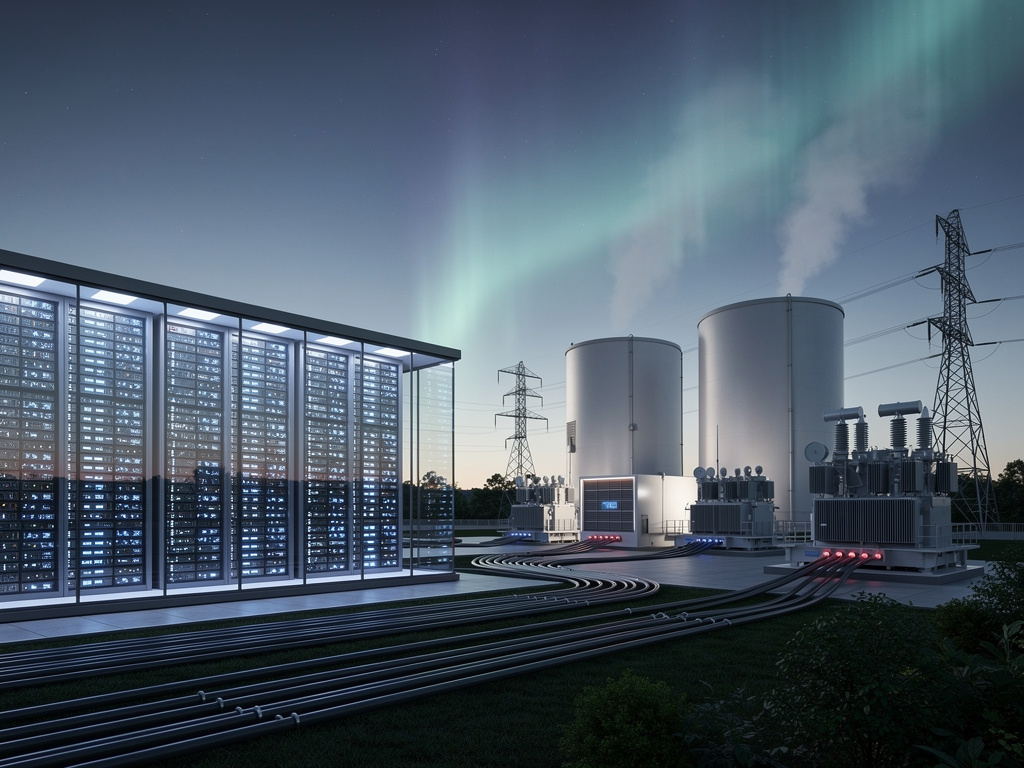
Atoms for Algorithms: Nuclear Revival in the Age of AI
The surge in artificial intelligence has triggered an unprecedented hunger for electricity, pushing tech giants to explore unconventional power sources. Data centers, the backbone of AI operations, are consuming energy at rates that rival entire cities, and traditional grids are straining under the load. Enter nuclear power, once sidelined by safety concerns and regulatory hurdles, now emerging as a frontrunner to meet this voracious demand. Recent deals and announcements from companies like Google and Microsoft highlight a shift toward nuclear energy as a reliable, low-carbon option for powering the next wave of computational might.
In October 2024, Google announced a partnership with Kairos Power to develop small modular reactors (SMRs) aimed at supplying clean energy to its data centers. This move, detailed in a BBC report, underscores the tech industry’s pivot to nuclear solutions for round-the-clock power. Unlike intermittent renewables such as solar or wind, nuclear offers baseload stability, crucial for AI’s constant processing needs. Analysts project that data center electricity use could double by 2030, driven largely by AI training and inference tasks that require immense computational resources.
This resurgence isn’t isolated. Microsoft has inked deals to restart nuclear plants, including a notable agreement to revive the Three Mile Island facility in Pennsylvania. Such initiatives reflect a broader industry trend where Big Tech is investing billions to secure energy independence. As electricity demands escalate, with AI-related consumption potentially reaching 8% of U.S. power by 2030 according to some estimates, nuclear’s high capacity factor—often exceeding 90%—makes it an attractive ally.
The Power Crunch Intensifies
The International Energy Agency forecasts that data centers, AI, and cryptocurrencies could account for up to 10% of global electricity by 2026, a sharp rise from 2% in 2022. This growth is fueled by the exponential increase in AI model complexity; for instance, training a single large language model can consume as much energy as hundreds of households annually. Tech firms are racing to build hyperscale facilities, but grid constraints and permitting delays for new transmission lines are creating bottlenecks.
A MIT Technology Review analysis points out that while renewables are expanding, their variability necessitates backup sources. Nuclear fits this bill, providing consistent output without the carbon emissions that plague fossil fuels. Companies like Amazon and Meta are also exploring nuclear options, with Amazon announcing plans for SMRs in Virginia to support its cloud services.
Industry insiders note that the timeline for nuclear deployment remains a challenge. Building traditional reactors can take a decade, but SMRs promise faster rollout, potentially within five years. Goldman Sachs Research, in a report projecting 85-90 gigawatts of new nuclear capacity needed by 2030, emphasizes that while nuclear won’t cover all demands, it will play a pivotal role alongside gas and batteries.
Big Tech’s Nuclear Bets
Google’s recent push includes plans for gigawatt-scale AI campuses powered by revived reactors, as reported in Interesting Engineering. This follows a destructive 2020 storm that shut down Iowa’s Duane Arnold plant, now eyed for reopening despite tornado risks, according to Wired. The tech giant’s strategy involves small reactors that can be deployed modularly, reducing upfront costs and risks.
Microsoft’s reactivation of Three Mile Island, infamous for its 1979 partial meltdown, signals confidence in modern safety protocols. This project, backed by Constellation Energy, aims to deliver 835 megawatts by 2028, directly feeding AI operations. A TechTarget feature outlines how these firms are diversifying beyond renewables, with nuclear offering energy density ideal for land-constrained data center sites.
On social platforms like X, sentiment echoes this enthusiasm. Posts from investors highlight AI’s potential to quadruple global power demand by 2035, positioning nuclear as the “anchor” for baseload needs. One influential thread notes that data center power could surge 30-fold, driving investments in nuclear firms and related technologies.
Regulatory and Economic Hurdles
Yet, the path to nuclear integration isn’t without obstacles. Regulatory approvals for SMRs remain in flux, with the Nuclear Regulatory Commission scrutinizing designs for safety and waste management. Critics argue that reviving old plants in weather-vulnerable areas, like Google’s Iowa initiative, could invite disasters, amplifying public skepticism rooted in past incidents.
Economically, the upfront capital for nuclear projects is staggering—often billions per reactor. However, long-term savings from low operating costs and carbon credits make it viable for tech behemoths with deep pockets. Deloitte’s insights, in an analysis of nuclear’s role in data center growth, suggest that as AI drives a 160% increase in U.S. data center demand by 2030, nuclear could capture a significant share, potentially adding 47 gigawatts domestically.
International perspectives add layers. The International Atomic Energy Agency (IAEA) bulletin discusses how SMRs could commercialize in new markets, with data centers as a key driver. In regions like Europe and Asia, where energy security is paramount, similar partnerships are forming, though scaled differently due to varying regulations.
Innovation in Reactor Technology
Advancements in reactor design are accelerating this trend. SMRs, unlike their massive predecessors, can be factory-built and assembled on-site, slashing construction times. Kairos Power’s fluoride salt-cooled reactors, part of Google’s deal, promise enhanced safety through passive cooling systems that prevent meltdowns without human intervention.
Research from Arizona State University, in collaboration with DCX USA, is exploring SMR feasibility for AI data centers, as covered in the Phoenix Business Journal. This study addresses projections that AI could consume one-eighth of U.S. electricity, emphasizing modular nuclear’s scalability.
X posts from tech analysts underscore the narrative: Nuclear’s 92.5% capacity factor trumps renewables’ intermittency, making it indispensable for AI’s 24/7 operations. One post quips about nuclear’s “glow-up” amid a 175% demand spike, reflecting optimism tempered by realism about deployment timelines.
Regional Hotspots and Market Dynamics
Texas exemplifies the boom, with a flood of data center proposals driven by cheap land and energy. A CNBC report warns of a potential bubble, as requests overwhelm utilities, prompting nuclear evaluations to stabilize supply. Utah’s massive data center site is eyeing nuclear options via an MOU between energy firms, detailed in POWER Magazine.
Globally, the shift to an “all of the above” energy strategy is evident. Reuters notes Big Tech’s pivot from pure renewables to include gas and nuclear, as AI’s needs outpace green infrastructure growth. In a Reuters piece, experts highlight how this diversification mitigates risks from over-reliance on variable sources.
Concerns about overbuilding loom, with Fortune warning of a data center glut amid lending frenzies. Analysts like those at Squared Capital caution that irrational exuberance could lead to losses if demand doesn’t materialize as projected.
Environmental and Societal Implications
Nuclear’s low-carbon profile aligns with tech’s sustainability goals, potentially reducing AI’s environmental footprint. The IAEA emphasizes “atoms for algorithms,” positioning nuclear as the scalable baseload for data-hungry AI. However, waste disposal and proliferation risks persist, demanding robust oversight.
Public discourse on X reveals mixed views: Enthusiasts praise nuclear’s reliability, while skeptics question safety in an era of extreme weather. One post from a consumer institute notes Big Tech’s quiet shift to natural gas backups, highlighting the pragmatic blend of energies.
Industry forecasts from the IO Fund predict nuclear’s re-emergence, with AI inference driving a 122% compound annual growth rate in power demand through 2028. This could reshape energy markets, boosting nuclear stocks and innovations.
Future Trajectories in Energy and AI
As AI evolves, so too must its power infrastructure. Google’s gigawatt campuses signal a new era where nuclear plants are co-located with data centers, minimizing transmission losses. This model, explored in WBUR’s Here & Now segment, discusses how tech leaders view nuclear as essential for maintaining competitive edges in AI development.
Challenges like skilled labor shortages and supply chain issues for nuclear fuel could slow progress. Yet, with governments easing regulations—such as U.S. incentives under the Inflation Reduction Act—momentum is building.
Ultimately, the fusion of nuclear power and AI represents a symbiotic evolution, where technological advancement drives energy innovation, ensuring that the algorithms shaping our future are powered by the atoms of the past. This partnership, while complex, holds promise for a more resilient digital ecosystem.


 WebProNews is an iEntry Publication