
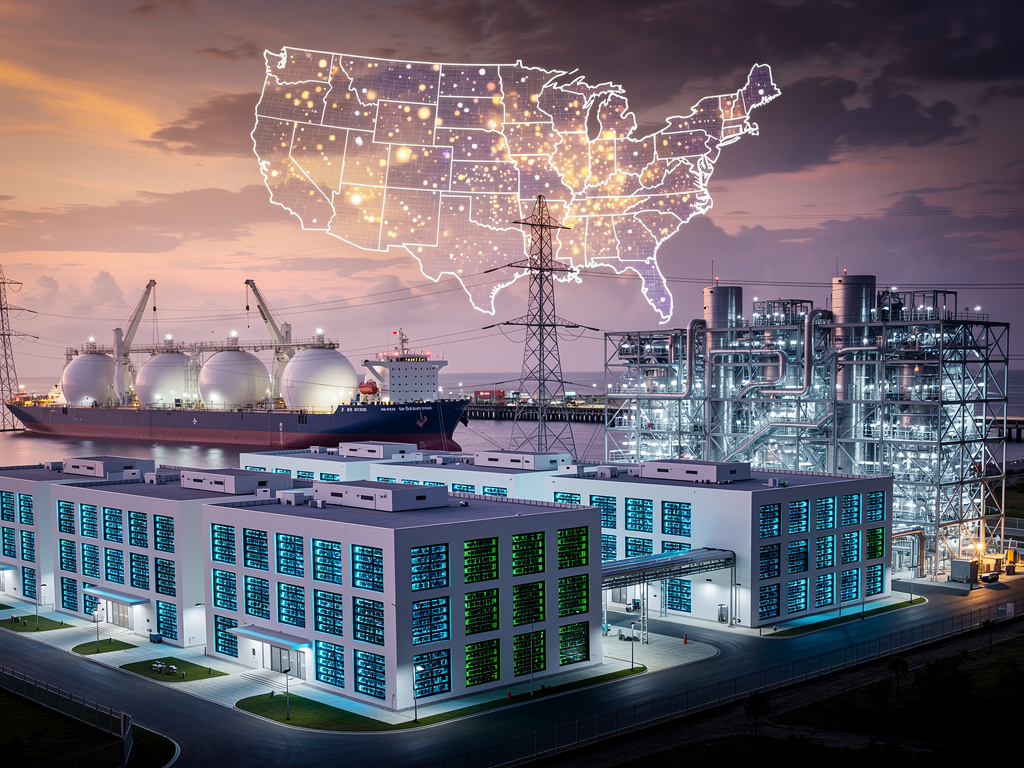
The global energy sector faces unprecedented pressure as artificial intelligence infrastructure drives electricity consumption to levels once considered unimaginable. According to a recent analysis published by Fortune, this surge in power requirements has positioned liquefied natural gas as a critical bridge fuel, with American companies positioned to assume a commanding role in meeting that demand. Honeywell CEO Vimal Kapur has emerged as a prominent voice on the subject, emphasizing how natural gas infrastructure can support the rapid expansion of data centers while maintaining grid stability.
Electricity demand from AI applications has accelerated far beyond initial projections. Data centers that once consumed modest amounts of power now require continuous, high-volume electricity supplies to train and operate increasingly sophisticated models. Industry estimates suggest that by the end of the decade, AI-related power consumption could equal the annual usage of entire countries. This reality has forced energy planners to reconsider previous assumptions about renewable integration timelines and baseload requirements. Natural gas, delivered through advanced liquefaction and regasification processes, offers a practical solution that can scale quickly while producing significantly lower emissions than coal.
Kapur, who leads one of the world’s largest industrial technology companies, has repeatedly highlighted the strategic advantages of American LNG production. In the Fortune interview, he pointed to the country’s abundant reserves, established export terminals, and technological expertise as factors that give the United States a distinctive competitive position. Honeywell itself has invested heavily in technologies that improve the efficiency of LNG production, including advanced control systems, heat exchangers, and predictive maintenance platforms that reduce operational costs and downtime.
The connection between AI growth and LNG demand stems from fundamental physics. Training large language models requires thousands of specialized processors running simultaneously for weeks or months. Inference—the process of using trained models to generate responses—demands even more consistent power delivery across global networks of data centers. Many of these facilities are being built in regions where renewable sources cannot yet provide round-the-clock reliability. Battery storage helps bridge short gaps, but longer periods of low solar or wind generation require dispatchable generation sources. Natural gas plants can ramp up or down within minutes, making them ideal companions for intermittent renewables.
Europe’s experience following the disruption of Russian pipeline gas has provided valuable lessons for the current AI-driven demand cycle. The continent rapidly increased LNG imports from the United States, Qatar, and Australia to replace lost supplies. That experience demonstrated both the flexibility of LNG markets and the importance of long-term contracts in ensuring stable pricing. Similar dynamics are now playing out as technology companies seek to secure dedicated power sources for their expansion plans. Several major hyperscalers have begun directly contracting with LNG producers or developing their own gas-fired generation facilities adjacent to data centers.
American leadership in this space builds on decades of investment in shale extraction techniques. The combination of hydraulic fracturing and horizontal drilling unlocked vast reserves that transformed the United States from a net importer to the world’s largest exporter of LNG. Export terminals along the Gulf Coast now ship millions of tons annually to markets across Asia and Europe. This infrastructure provides a foundation that few other regions can match in terms of scale and efficiency. Kapur has noted that continued innovation in liquefaction processes could further reduce the carbon intensity of LNG, addressing environmental concerns while meeting urgent power needs.
The economic implications extend beyond energy markets. Communities near LNG facilities have seen substantial job creation and tax revenue increases. Supply chain companies that manufacture specialized equipment for liquefaction plants have expanded their operations. Engineering firms with expertise in cryogenic processes find themselves in high demand. The Fortune article quotes Kapur describing how this industrial activity creates multiplier effects throughout regional economies, particularly in states like Texas, Louisiana, and Pennsylvania where much of the infrastructure is concentrated.
Technological advancements continue to improve the environmental profile of natural gas usage. Modern combined-cycle power plants achieve efficiency ratings above 60 percent, meaning they convert a higher percentage of fuel energy into electricity compared with older designs. Methane detection systems using satellite monitoring and ground sensors help operators identify and repair leaks quickly. Carbon capture pilot projects at LNG facilities show promise for further emissions reductions, although scaling these technologies remains expensive. Honeywell has developed several proprietary solutions in this area, including advanced solvents that capture carbon dioxide more efficiently than previous generations.
International competition adds complexity to the story. Australia, Qatar, and emerging producers in Africa are all expanding their LNG capabilities. Russia continues developing Arctic LNG projects despite Western sanctions. China has invested heavily in domestic gas production while simultaneously increasing import capacity. Within this global context, the United States maintains advantages in regulatory predictability, technological sophistication, and proximity to both Atlantic and Pacific shipping routes. Kapur has advocated for policies that would streamline permitting processes for new export terminals while maintaining high environmental standards.
The power demands of AI extend beyond training facilities. Edge computing applications, autonomous vehicle networks, and smart manufacturing systems all require reliable electricity. As these technologies proliferate, the total load on power grids increases substantially. Grid operators in multiple regions have warned that without significant new generation capacity, brownouts or delayed connections for new facilities could become common. LNG-to-power projects offer one pathway to address these shortfalls, particularly in regions with limited renewable resources or transmission constraints.
Financial markets have taken notice of these trends. Energy companies with LNG exposure have seen their valuations rise as analysts revise demand forecasts upward. Technology firms have begun including energy cost projections in their capital expenditure guidance, with some announcing direct investments in generation assets. Investment funds have created specialized vehicles targeting the intersection of artificial intelligence and energy infrastructure. This convergence of sectors represents a significant shift in how both industries approach long-term planning.
Challenges remain despite the optimistic outlook. Local opposition to new LNG terminals has delayed projects in some locations, often focusing on concerns about marine traffic or potential leaks. The capital costs for liquefaction facilities run into billions of dollars, requiring careful financial structuring and long-term offtake agreements. Workforce development presents another hurdle, as specialized skills in cryogenics, process engineering, and advanced controls remain in short supply. Educational institutions have begun partnering with industry to create targeted training programs, but building sufficient capacity will take years.
Kapur has emphasized the need for balanced approaches that consider both immediate power requirements and long-term climate objectives. He points to the potential for LNG to serve as a transition fuel that supports renewable growth by providing the necessary reliability during the build-out phase. Advanced analytics platforms, many of them powered by AI themselves, can optimize gas usage, predict maintenance needs, and minimize flaring. Honeywell’s portfolio includes numerous digital solutions that help operators achieve these improvements.
The global nature of both AI development and energy markets means that decisions made in one region affect conditions elsewhere. Asian economies with aggressive technology ambitions have increased their LNG contracting activity, sometimes competing directly with American data center operators for supply. European nations, still recovering from the energy crisis of recent years, continue to prioritize supply diversity. These dynamics create price volatility that affects project economics and consumer electricity rates.
Looking forward, the integration of AI technologies into energy operations themselves promises additional efficiencies. Machine learning algorithms can forecast demand patterns with greater accuracy, optimize power plant operations, and manage complex grid interactions. Natural language processing tools help maintenance teams interpret technical documentation and historical records more effectively. Computer vision systems monitor equipment conditions continuously, identifying potential failures before they occur. These applications create a feedback loop where AI both drives energy demand and helps manage that demand more intelligently.
The Fortune profile of Kapur illustrates how industry leaders must balance multiple considerations when addressing these complex issues. Technical expertise, market understanding, and policy awareness all factor into effective decision-making. As CEO of a company that provides solutions across the energy value chain, Kapur brings a comprehensive perspective to discussions about AI power requirements and the role of natural gas. His assessment suggests that American LNG capabilities, supported by continued technological innovation, can help satisfy growing electricity needs while maintaining progress toward emissions reduction targets.
The coming years will test the industry’s ability to scale production and infrastructure quickly enough to match AI adoption rates. If current trends continue, LNG will likely play an expanded role in global power systems, particularly as a flexible resource that complements expanding renewable capacity. Companies that can deliver reliable, affordable, and increasingly clean energy solutions stand to benefit substantially. The United States, with its resource base, technical leadership, and export infrastructure, appears well-positioned to meet this challenge if policymakers, industry executives, and technology developers coordinate their efforts effectively.
As data center construction accelerates and AI models grow more sophisticated, the connection between computational power and physical energy infrastructure becomes impossible to ignore. Liquefied natural gas represents one practical response to this reality, offering a bridge that can support economic growth and technological advancement while the energy system evolves toward lower carbon sources. The leadership role that American companies and executives like Vimal Kapur are taking will likely influence energy strategies for years to come, shaping how societies balance innovation with sustainability in an increasingly electrified world.


 WebProNews is an iEntry Publication