
The Fading Golden Ticket: AI’s Grip on Stanford CS Careers
In the heart of Silicon Valley, where innovation once promised boundless opportunities, a new reality is dawning for graduates of Stanford University’s renowned computer science program. What was long considered a surefire path to lucrative tech jobs—complete with signing bonuses and stock options—has morphed into a frustrating scramble for employment. Recent reports highlight how artificial intelligence tools are reshaping entry-level roles, leaving even top-tier degree holders on the sidelines. This shift marks a profound change in the tech industry’s hiring dynamics, as companies leverage AI to automate routine coding tasks that once served as training grounds for new engineers.
Take the case of recent Stanford alumni who, armed with degrees from one of the world’s most prestigious programs, find themselves applying to hundreds of positions without success. According to a detailed account in the Los Angeles Times, these graduates describe a job market where AI-driven coding assistants like GitHub Copilot and similar technologies have drastically reduced the need for junior developers. The article paints a picture of frustration, with one graduate noting that positions once abundant now require years of experience or specialized AI skills that fresh grads simply don’t have.
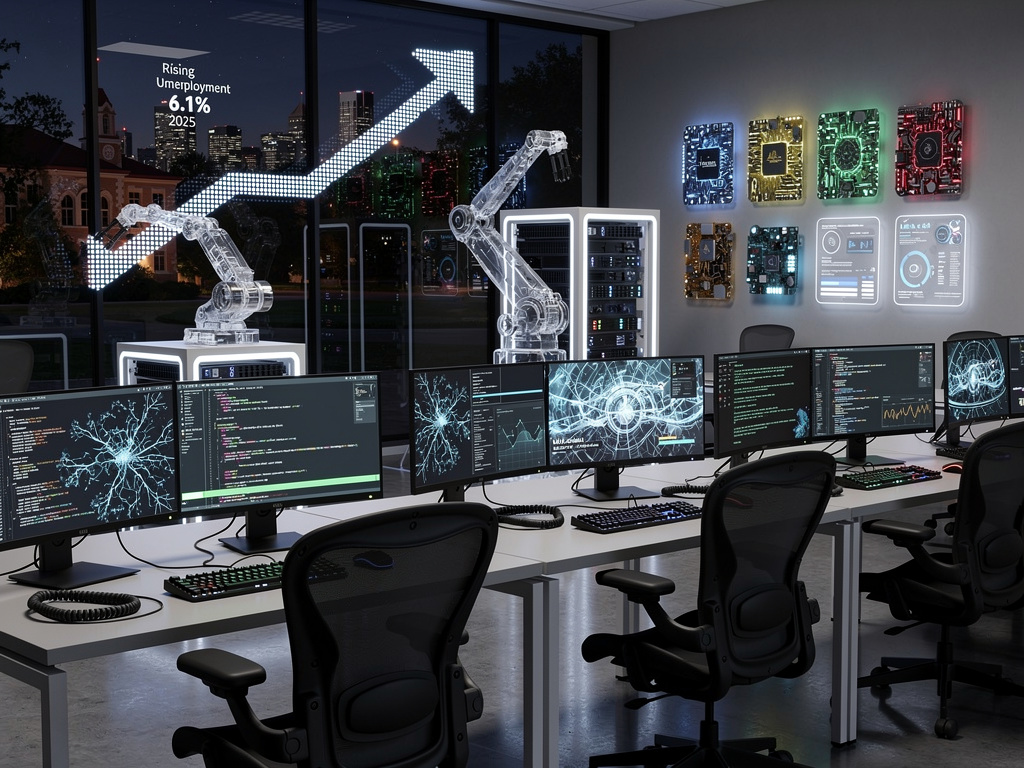
This isn’t an isolated anecdote. Broader data from industry analyses underscores the trend. Unemployment rates for computer science graduates have climbed to 6.1% in 2025, a stark contrast to previous years when such degrees virtually guaranteed placement. Posts on X, formerly Twitter, echo this sentiment, with users sharing stories of prolonged job searches and underemployment among new CS majors. One thread from August 2025 highlighted how AI-exposed occupations saw a 13% decline in employment for those aged 22-25, concentrating job losses in areas ripe for automation.
AI’s Automation Wave Hits Entry-Level Shores
The root of this upheaval lies in the rapid advancement of AI technologies that can generate code, debug programs, and even design basic software architectures with minimal human input. Tech giants like Google and Meta, traditional feeders for Stanford talent, are now optimizing their workforces around these tools. Instead of hiring waves of entry-level coders to handle grunt work, they’re focusing on a smaller cadre of seasoned professionals who can oversee AI systems and tackle complex, non-automatable problems.
This concentration of hiring around “elite” or AI-savvy developers has created a bottleneck. As reported in a Slashdot summary linking to the aforementioned Los Angeles Times piece, the demand for junior roles has plummeted, with companies slashing entry-level positions to cut costs and boost efficiency. Stanford’s own employment reports for master of science graduates, available on the university’s MS&E Careers site, reflect a diverse but challenging post-graduation path, where some students pursue further education or pivot to part-time roles amid the uncertainty.
Industry insiders point to mass layoffs in tech over the past few years as exacerbating the issue. With firms like Amazon and Microsoft trimming staff in response to economic pressures, the influx of experienced workers into the job pool has further crowded out newcomers. A Forbes article from December 15, 2025, advises CS grads not to abandon their degrees but to shift mindsets toward continuous learning, emphasizing skills in AI integration rather than traditional programming alone. Yet, for many Stanford alumni, this advice comes too late, as they grapple with resumes that highlight academic prowess but lack the real-world AI experience now demanded.
Voices from the Ground: Graduate Struggles and Adaptations
Personal stories bring the data to life. One Stanford graduate, interviewed in a piece from The Cool Down published on December 21, 2025, expressed outrage at the “dramatic reversal” from just three years prior, when job offers flowed freely. Now, AI displacement means fighting for scraps in a market skewed toward those with thick resumes or niche expertise. Social media amplifies these narratives; X posts from recent months describe CS majors considering master’s programs or unrelated gigs to stay afloat, with one user noting a 7% unemployment rate among new grads in fall 2025.
Adaptation strategies are emerging, but they’re uneven. Some graduates are pivoting to AI ethics, data science, or even non-tech fields like consulting, where analytical skills remain valuable. Stanford’s career services encourage exploring internships and co-term programs to build experience, yet the sheer volume of applicants—fueled by an oversupply of CS degrees nationwide—intensifies competition. A Government Technology report from two days ago details how Stanford students perceive a “suddenly skewed job market,” where only a small slice of graduates snag the few desirable roles.
Broader economic factors compound the challenge. The tech sector’s structural reset, as one X post termed it, involves declining hires in software engineering by 58% for roles heavy on repeatable tasks. This isn’t just a Stanford phenomenon; national trends show computer science grads facing the worst job market in decades, with underemployment at 16.5% according to data cited in various online discussions. Graduates from other elite institutions report similar woes, but Stanford’s proximity to Silicon Valley makes its alumni particularly vulnerable to these shifts.
Industry Responses and Future Trajectories
Tech companies are not blind to the talent pipeline’s strain. Some, like OpenAI and Anthropic, are investing in upskilling programs to bridge the gap, but these initiatives often favor those already in the workforce. Critics argue that universities must revamp curricula to emphasize AI literacy from day one, integrating tools like large language models into core courses. Jan Liphardt, a Stanford bioengineering professor quoted in the Los Angeles Times article, called the situation “crazy,” highlighting how even top brands are bypassing entry-level Stanford talent.
Looking ahead, experts predict a bifurcated market: high demand for AI specialists who can innovate beyond automation, contrasted with stagnation for generalists. A DualMedia Innovation News piece from December 20, 2025, describes this as a “brutal reset,” where early-career developers confront AI disruption cycles that favor efficiency over headcount growth. Stanford’s response includes expanding career resources, but alumni networks buzz with calls for more proactive measures, such as partnerships with AI firms for targeted training.
This evolution raises questions about the value of elite education in a tech world dominated by machines. While some graduates thrive by specializing early—perhaps in machine learning or cybersecurity—others face prolonged uncertainty. X users in late 2025 share optimistic takes, like the growing demand for AI skills projected to rise 71% in five years, urging upskilling in tools like Python and TensorFlow. Yet, the immediate pain is real, with many reconsidering career paths altogether.
Policy Implications and Broader Societal Shifts
The ripple effects extend beyond individual careers. Policymakers are eyeing interventions, such as incentives for companies to maintain entry-level hiring or subsidies for AI retraining. In the U.S., where tech drives economic growth, a talent mismatch could hinder innovation. Reports from El-Balad.com on December 20, 2025, note how Stanford degrees, once a “prestigious credential,” now carry diminished value in an AI-evolving environment.
Educators at Stanford and peers like MIT are adapting by embedding AI ethics and practical applications into syllabi, aiming to produce graduates who can lead rather than follow technological trends. However, the transition is gradual, and current cohorts bear the brunt. One X post from a tech hiring analyst warns of a “structural reset” where jobs in game design and software engineering won’t rebound, pushing grads toward emerging fields like sustainable tech or biotech intersections.
For industry insiders, this moment underscores the need for agility. Companies must balance AI efficiencies with nurturing new talent, lest they face a shortage of innovative leaders down the line. Graduates, meanwhile, are advised to build portfolios showcasing AI projects, network aggressively, and consider global opportunities where AI adoption lags. As one Final Round AI blog post from August 2025 details, the combination of AI, layoffs, and oversupply has indeed created the toughest market in decades, but resilience and adaptation could turn the tide.
Emerging Opportunities Amid Disruption
Despite the gloom, pockets of opportunity persist. Fields like cybersecurity, where human judgment trumps automation, continue to hire robustly. Stanford alumni with interdisciplinary backgrounds—combining CS with business or biology—often fare better, as evidenced in the university’s employment reports. A Stanford Federal Investment Services blog from May 2025 anticipates a mixed job market for 2025 graduates, with some securing roles through persistence and skill diversification.
Social media sentiment on X reveals a mix of despair and determination. Posts from December 2025 quote graduates laughing off automation fears while grinding out research papers or side hustles. This resilience echoes historical tech shifts, like the dot-com bust, where survivors emerged stronger. Industry veterans remind that while AI automates tasks, it creates demand for overseers and innovators, potentially leading to a renaissance for those who adapt.
Ultimately, the story of Stanford’s CS class of 2025 serves as a cautionary tale for the tech ecosystem. It highlights the double-edged sword of progress: AI’s promise of efficiency comes at the cost of traditional entry points. As the sector navigates this new reality, the focus shifts to equitable growth, ensuring that elite educations retain their luster in an automated age. With ongoing advancements, the coming years will test whether this disruption is a temporary hurdle or a permanent realignment.


 WebProNews is an iEntry Publication