
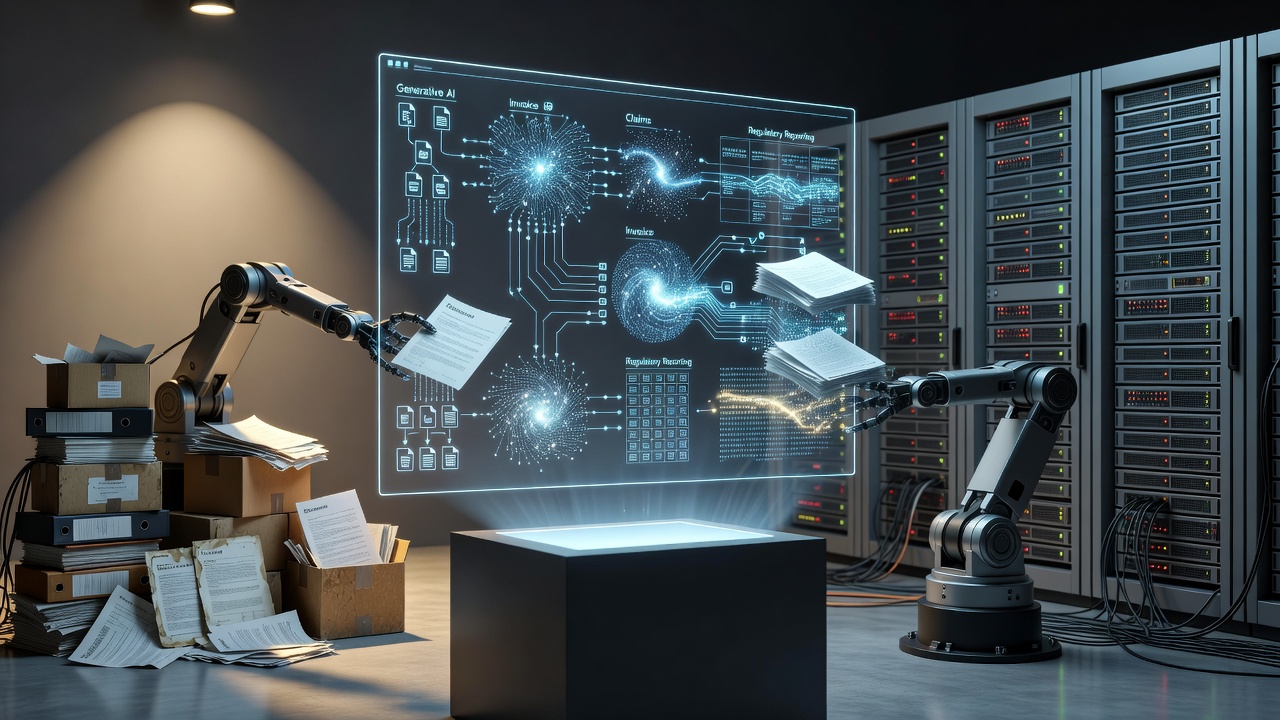
The automation wave sweeping through business operations has shifted focus away from software developers toward the vast administrative functions that keep organizations running. While public attention often fixates on programmers losing their roles to large language models, the more immediate and widespread effects appear in accounting departments, human resources offices, procurement teams, and compliance groups. A recent discussion on Slashdot highlighted this pattern, pointing out that generative AI tools now handle routine paperwork, data entry, invoice processing, and report generation with growing accuracy.
Administrative work represents a massive portion of modern employment. In the United States alone, back-office functions employ tens of millions across sectors ranging from banking and insurance to manufacturing and retail. These positions typically involve repetitive tasks that follow clear rules: matching purchase orders to invoices, categorizing expenses, verifying employee records, or preparing regulatory filings. Such activities align closely with the strengths of current AI systems, which excel at pattern recognition and standardized processing.
Companies have begun deploying these tools at scale. Financial institutions now use AI to reconcile accounts automatically, reducing the need for teams of clerks who once spent hours cross-checking ledgers. Insurance carriers apply similar technology to claims processing, where algorithms scan documents, extract relevant details, and flag anomalies for human review only when necessary. The result has been measurable staff reductions in some departments, sometimes reaching 30 to 50 percent for specific roles.
This shift carries different characteristics than the displacement feared in creative or technical fields. Software development requires contextual judgment, novel problem solving, and constant adaptation to changing requirements. Back-office work, by contrast, often follows established procedures documented in manuals and compliance standards. AI performs well here because the rules remain relatively stable and the data formats repeat across thousands of transactions.
Consider accounts payable departments. Traditionally, staff members receive invoices, verify them against purchase orders, obtain approvals, and schedule payments. Modern AI platforms can read PDFs or scanned images, extract vendor details, amounts, and line items, then match them to internal records with high precision. When discrepancies arise, the system routes exceptions to remaining employees. What once required a team of ten might now need only three or four, with the AI managing the bulk of straightforward cases.
Human resources offers another clear example. Resume screening, once a labor-intensive process, now happens through AI systems that parse candidate documents, match skills to job requirements, and rank applicants. Onboarding paperwork, benefits administration, and leave tracking have also moved toward automated workflows. Tools can generate offer letters, update payroll systems, and even conduct initial compliance checks without direct human involvement.
The pattern extends to legal and compliance operations. Contract review, once the exclusive domain of attorneys and paralegals, increasingly incorporates AI that identifies standard clauses, flags unusual terms, and suggests modifications based on company policies. Regulatory reporting, a burden that grows yearly, benefits from systems that pull data from multiple sources, format it according to specific requirements, and submit filings with minimal oversight.
These changes create immediate economic effects. Organizations report significant cost savings, often in the range of millions annually for large enterprises. Labor expenses drop, processing speeds increase, and error rates sometimes decline because machines avoid fatigue-related mistakes. Yet the human costs appear substantial. Employees with years of experience in these areas face sudden obsolescence. Many lack obvious transferrable skills for roles that demand higher judgment or technical expertise.
The discussion on Slashdot captured varied reactions to this development. Some contributors argued that society should welcome efficiency gains that free people from tedious work. Others expressed concern about the speed of change and the limited support available for displaced workers. A recurring theme centered on preparation. While coding bootcamps and technical training programs have proliferated, comparable resources for administrative professionals remain scarce.
This gap reflects broader assumptions about skill development. Technical fields have long emphasized continuous learning, with professionals expected to master new languages, frameworks, and methodologies throughout their careers. Administrative roles traditionally offered more stability, rewarding consistency and domain knowledge rather than constant reinvention. That model no longer holds when AI systems acquire expertise in those domains almost overnight.
Some companies attempt to address the transition by retraining staff for oversight positions. Instead of processing transactions, former clerks now monitor AI outputs, investigate exceptions, and refine system parameters. Success varies. Workers who adapt well can move into analytical or customer-facing roles, but not everyone possesses the aptitude or desire for such changes. Age often factors into outcomes, with older employees facing steeper challenges in acquiring new competencies.
The technology itself continues to improve rapidly. Early AI implementations in back-office settings relied on robotic process automation that followed rigid scripts. Current systems incorporate large language models capable of handling unstructured data, interpreting context, and even drafting communications. Future versions may coordinate across departments, anticipating needs and initiating actions without explicit instructions.
This progression raises questions about accountability and control. When an AI system approves a large payment or accepts a questionable insurance claim, responsibility becomes diffuse. Organizations must establish clear governance structures that define when human intervention remains mandatory. Regulatory bodies have started examining these issues, particularly in financial services where errors can trigger significant consequences.
Privacy considerations add another dimension. Back-office AI systems process sensitive employee data, financial records, and customer information. Ensuring these tools operate securely while maintaining compliance with data protection laws requires careful implementation. Breaches or unintended data exposures could erode trust and invite legal penalties.
Economic analysis suggests the effects will not distribute evenly. Large corporations with resources to invest in AI infrastructure stand to gain the most, potentially widening the competitive gap with smaller firms. Certain industries face heavier exposure than others. Sectors with high administrative overhead, such as healthcare administration or government contracting, may experience more pronounced staff reductions.
Geographic factors also play a role. Back-office functions have already undergone substantial offshoring over recent decades, with many tasks moving to lower-cost regions. AI introduces a new variable by making automation viable even in those locations. Companies that previously outsourced invoice processing to overseas centers now explore bringing functions back in-house through domestic AI deployments.
Education systems appear unprepared for these shifts. Vocational programs and community colleges still emphasize traditional administrative skills that may hold diminishing value. Curricula need updating to incorporate AI literacy, data analysis, and process design. Students should learn how to work alongside automated systems rather than compete directly with them.
Policy responses remain fragmented. Some governments explore universal basic income pilots or expanded retraining subsidies, but comprehensive strategies have yet to emerge. The conversation on Slashdot reflected this uncertainty, with participants calling for proactive measures rather than reactive fixes after widespread displacement occurs.
Business leaders face their own dilemmas. The pressure to adopt AI for competitive advantage conflicts with responsibilities toward long-term employees. Some organizations adopt gradual implementation approaches, allowing natural attrition to reduce headcount rather than conducting mass layoffs. Others prioritize speed, accepting the organizational disruption as the price of efficiency.
The technology’s limitations provide some breathing room. Current AI systems still struggle with complex exceptions, ambiguous documentation, or tasks requiring deep organizational knowledge. Cultural nuances, interpersonal dynamics, and ethical considerations often exceed machine capabilities. These gaps suggest that complete replacement will take longer than optimistic projections claim, though partial automation already transforms job descriptions.
Looking forward, the most successful organizations will likely blend human strengths with machine efficiency. Employees who understand both the business context and the AI tools can add substantial value by designing better processes, interpreting results, and handling situations that demand empathy or creative problem solving. The challenge lies in developing these hybrid capabilities at sufficient scale and speed.
Public discourse needs to expand beyond fears of programmers being replaced. The administrative workforce, often invisible in technology conversations, confronts more immediate threats. Acknowledging this reality allows for targeted interventions that support affected workers while capturing the productivity benefits AI offers. The coming years will test whether societies can manage this transition thoughtfully or whether it will produce avoidable hardship alongside efficiency gains.
As AI capabilities expand into additional back-office functions, from supply chain coordination to customer data management, the effects will compound. Organizations that treat these tools as simple labor replacements may achieve short-term savings but miss opportunities for genuine process innovation. Those that invest in their people alongside their technology stand better positioned to create sustainable advantages in an automated business environment. The choices made today will shape workforce structures for decades to come.


 WebProNews is an iEntry Publication