
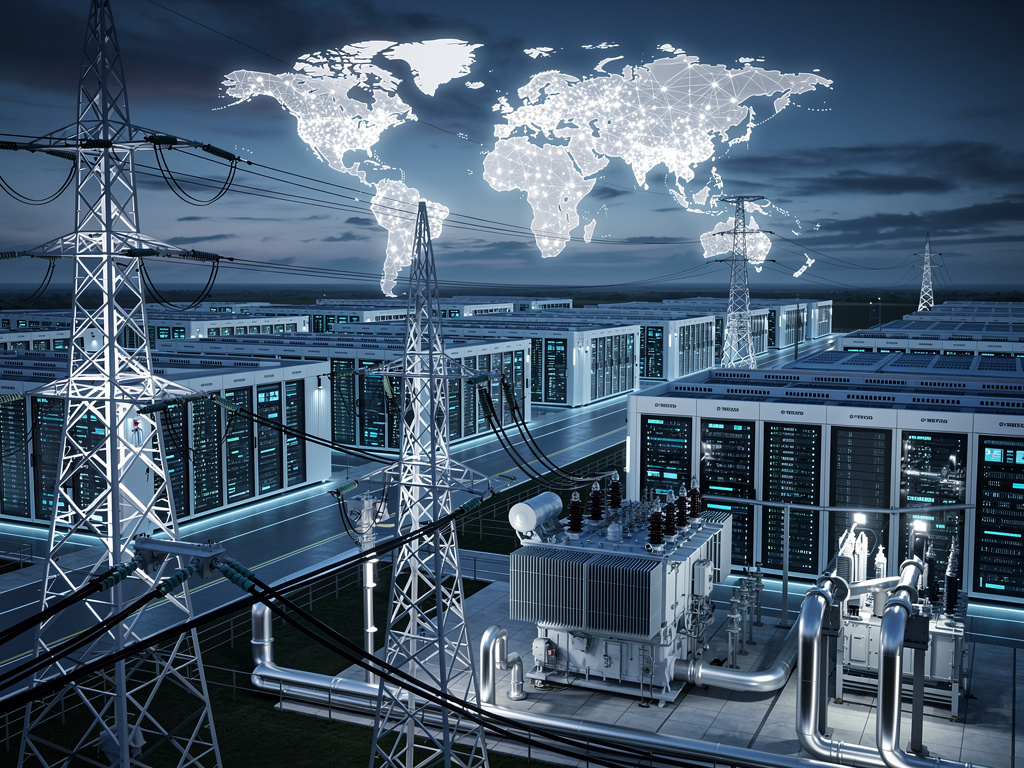
In the high-stakes world of artificial intelligence, where computing power fuels everything from chatbots to autonomous vehicles, a quiet crisis is unfolding. Data centers, the massive facilities that house the servers driving AI advancements, are increasingly plagued by delays. These setbacks stem not from a lack of ambition or funding—tech giants are pouring billions into expansions—but from fundamental bottlenecks in power supply and infrastructure. As of late 2025, industry leaders are sounding alarms about how these hurdles could slow the AI boom, with Nvidia’s CEO Jensen Huang at the forefront of discussions.
Recent reports highlight the severity of the issue. According to a detailed analysis by The Information, numerous data center projects are running months or even years behind schedule, primarily due to electricity shortages and grid connection delays. This isn’t isolated; posts on X from industry observers echo similar concerns, noting that hyperscalers like Microsoft have stockpiles of unused Nvidia GPUs gathering dust in warehouses because there’s simply no power to activate them. The problem is exacerbating as demand skyrockets, with global data center capacity projected to reach around 80 gigawatts this year alone, a figure that’s straining existing energy systems.
Jensen Huang, the charismatic leader of Nvidia, has emerged as a key figure in addressing these challenges. In a move that underscores the urgency, Huang hosted a high-profile “power summit” earlier this year, gathering utility executives, tech CEOs, and policymakers to brainstorm solutions. The event, held amid growing fears of an AI infrastructure shortfall, aimed to bridge the gap between silicon innovation and real-world energy constraints. Attendees reportedly discussed everything from nuclear power revival to advanced grid technologies, reflecting Huang’s belief that power limitations could become the defining barrier to AI progress.
The Energy Crunch Tightens Its Grip
Huang’s warnings aren’t new, but they’ve gained traction in 2025. In a speech covered by Fortune, he pointed out China’s advantage in rapidly building data centers, thanks to streamlined construction and abundant energy resources. While the U.S. leads in AI chip technology, Huang cautioned that delays in infrastructure could cede ground to competitors. This perspective aligns with broader industry sentiment: a recent Bloomberg graphic illustrated how data center ownership is shifting from Big Tech to specialized developers, all racing to meet AI’s insatiable hunger for compute power.
The numbers paint a stark picture. Investments in data centers hit $61 billion globally this year, as per a report from eWeek, driven by the needs of generative AI systems. Yet, power supply issues are derailing timelines. X users, including energy analysts, have highlighted that U.S. electricity prices have surged 35% since 2022, with major players like Alphabet, Amazon, Meta, Microsoft, and OpenAI committing $800 billion to new facilities. The catch? Grid capacity isn’t keeping pace, leading to what one post described as AI’s “Achilles heel.”
Compounding the delays are regulatory and logistical hurdles. Permitting processes for new power lines and substations can take years, while suitable land for data centers is becoming scarce. In Asia, where the region has emerged as a hub for data center growth, multibillion-dollar investments are flowing in, as noted in a year-end review by Light Reading. This contrast with the U.S. underscores Huang’s point: faster execution abroad could shift the balance of AI dominance.
Inside Huang’s Power Summit: A Call to Action
Details from Huang’s power summit reveal a gathering of minds intent on innovation. Held in a discreet Silicon Valley venue, the summit featured discussions on deploying advanced Nvidia GPUs alongside energy-efficient architectures. One key takeaway, shared in posts on X, was the emphasis on “perf per dollar” metrics, where AI performance is weighed against power consumption. Huang, drawing from Nvidia’s own advancements like the Grace Hopper Superchip, argued that smarter chip designs could mitigate some energy demands, potentially saving data centers millions, as he explained in a 2023 interview republished by CRN.
The summit wasn’t just talk; it spurred partnerships. Huang’s attendance at the APEC CEO Summit in South Korea earlier this year led to a massive deal with Samsung, SK Group, and others to deploy 260,000 Nvidia GPUs for AI initiatives, as detailed in an Nvidia Blog post. This collaboration extends to robotics and manufacturing, showing how power discussions are translating into actionable tech deployments. However, even these efforts face headwinds: a Digitimes article on power supply tech divergence notes that cloud providers are adapting to edge AI needs, but large-scale data centers still grapple with inefficient architectures.
Political dimensions add another layer. Huang’s growing ties with President Trump, explored in a New York Times piece, position Nvidia’s chips as tools in trade negotiations. Amid U.S.-China tensions, Huang clarified his views on the AI race in a Times of India interview, simplifying that while China excels in infrastructure speed, the U.S. must accelerate its own builds to stay competitive. This geopolitical angle heightens the stakes, as delays could impact national security and economic leadership.
Bottlenecks Beyond Power: A Multifaceted Challenge
Beyond electricity, other factors are contributing to the slowdown. Water availability for cooling systems, rising development costs, and supply chain snarls for components like transformers are all cited in an S&P Global post on X as persistent issues. Developers are responding prudently, front-loading risk assessments, but the pace of AI demand—projected to require 72 gigawatts of additional power by 2028, equivalent to 70 nuclear reactors—outstrips supply. Morgan Stanley’s estimates, referenced in X discussions, underline the grid’s unpreparedness.
Asia’s boom offers lessons and contrasts. Billionaires like Masayoshi Son and Mukesh Ambani are leading the charge, as profiled in Forbes, capitalizing on favorable regulations and energy access. In Korea, Huang’s partnerships are powering sovereign AI efforts, but even there, global constraints loom. A Light Reading review from earlier this month reiterates Asia’s 2025 investments, yet warns of similar power crunches on the horizon.
Industry insiders are pivoting strategies. Hyperscalers are exploring modular data centers and renewable integrations to bypass traditional grid delays. X posts from tech enthusiasts describe this as a “Muskonomy” shift, where vertical integration in energy becomes key, as seen in Elon Musk’s xAI initiatives. Meanwhile, forecasts from The AI Journal suggest 2026 will bring even more acceleration, with innovations in cooling and efficiency potentially alleviating some pressures.
Voices from the Front Lines: Industry Sentiment and Solutions
Sentiment on X reflects a mix of optimism and frustration. Analysts point to data center moratorium debates, like those involving Senator Sanders, exposing mismatches between policy timelines and infrastructure realities. Power demand is set to double by 2035, yet building new generation sources takes 7-12 years, leading to potential shortages and price hikes. This echoes Huang’s earlier mentions of “power-limited data centers” in Nvidia earnings calls.
Solutions are emerging, albeit slowly. Nuclear revival is a hot topic, with posts noting it could take 20 years to scale, pushing reliance on natural gas in the interim. Advanced power supplies for cloud versus edge AI, as discussed in Digitimes, show divergence: large centers favor high-efficiency architectures, while edge computing opts for flexibility. Huang’s summit reportedly advocated for hybrid approaches, blending renewables with AI-optimized hardware.
Looking ahead, the interplay between tech innovation and infrastructure will define AI’s trajectory. Huang’s clarifications on China’s edge, as covered in The Times of India, serve as a wake-up call. With investments soaring and delays mounting, the industry must navigate these constraints to sustain growth.
Navigating the Path Forward: Innovation Amid Constraints
As 2025 draws to a close, the data center delays underscore a broader truth: AI’s promise hinges on mundane realities like electricity and permits. Huang’s power summit may mark a turning point, fostering collaborations that could unlock new capacities. Yet, with global dominance at stake, the race to resolve these issues is intensifying.
Tech leaders are doubling down on efficiency. Nvidia’s ongoing innovations, like those saving costs in data centers, position the company as a linchpin. Partnerships in Asia, bolstered by Huang’s diplomacy, suggest diversified strategies could mitigate U.S. bottlenecks.
Ultimately, the story of 2025’s data center woes is one of adaptation. From X chatter to boardroom summits, the consensus is clear: power is the new frontier, and those who master it will lead the AI era. As investments continue to pour in, the focus shifts to execution, ensuring that the digital revolution doesn’t stall for want of a plug.


 WebProNews is an iEntry Publication