
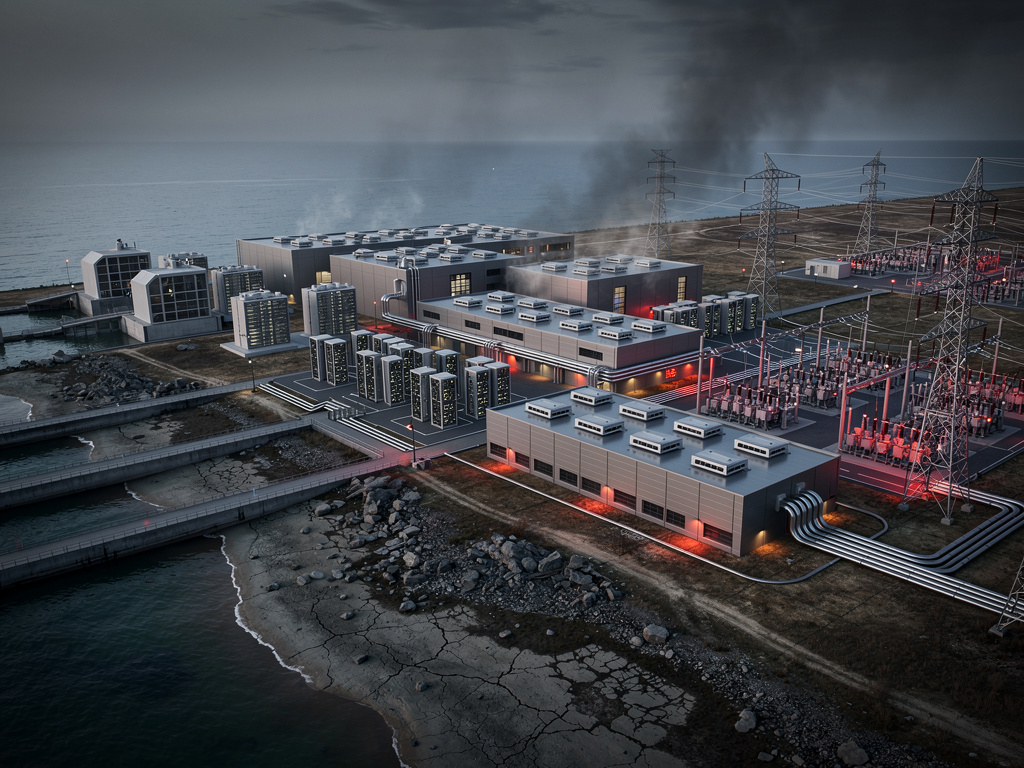
Thirsty Circuits: How AI’s Power Hunger is Draining the Great Lakes
In the heart of America’s industrial Midwest, a new kind of factory is rising—vast data centers that power the artificial intelligence boom. These facilities, humming with servers and cooling systems, are flocking to the Great Lakes region, drawn by abundant water and energy resources. But as their numbers swell, so do concerns about their voracious appetite for electricity and water, sparking debates among residents, policymakers, and industry leaders.
Recent reports highlight a troubling coincidence: the proliferation of these energy-intensive hubs amid falling water levels in the Great Lakes. According to a story in The Guardian, the region is grappling with drought conditions just as tech giants like Microsoft and Meta announce massive investments in new data centers. Local communities are pushing back, fearing that these “AI campuses” could exacerbate environmental strains.
The Great Lakes hold about 20% of the world’s surface freshwater, making them an attractive lure for data centers that rely on water for cooling. Yet, as outlined in a piece from Futurism, residents are furious, claiming these facilities are “sucking up” the lakes at a time when water levels are below average. This tension underscores a broader national challenge: balancing technological advancement with sustainable resource management.
Rising Tides of Concern
Industry insiders point out that data centers are not just water guzzlers; their energy demands are staggering. A 2024 report from Lawrence Berkeley National Laboratory, detailed in the 2024 United States Data Center Energy Usage Report, estimates that U.S. data centers consumed around 183 terawatt-hours in 2024, with projections soaring to 426 terawatt-hours by 2030—a 133% increase, much of it fueled by AI workloads.
In the Great Lakes area, this surge is particularly acute. A $15 billion data center project near Lake Michigan, as reported by MinnPost, has ignited local reckonings over water and energy use. The facility, proposed for a small town, could draw billions of gallons annually, prompting questions about long-term impacts on the region’s power grid and water supply.
Social media platforms like X reflect growing public sentiment. Posts from users in the region express alarm over environmental costs, with one noting that data centers could devour more energy than some nation-states, echoing broader discussions on carbon footprints. Another post highlights how AI-driven facilities are straining drought-prone areas, amplifying calls for transparency.
Energy Demands Meet Grid Realities
The interplay between data centers and the Great Lakes’ resources extends to electricity. As Planet Detroit explores, these centers are reshaping local energy dynamics, often requiring upgrades to aging infrastructure. In Wisconsin, for instance, a massive AI data center is set to consume 8.4 billion gallons of water yearly, while benefiting from hefty tax exemptions that critics argue shift burdens onto ratepayers.
Further complicating matters, a AS USA article warns of notable drops in Great Lakes water levels in recent years, linking them to the influx of data centers. This comes as tech companies quietly pass on power costs to consumers, according to U.S. senators cited in a TechRadar report, where AI workloads are driving city-scale energy demands.
On X, industry observers debate the net benefits. Some argue that cloud computing saves more energy overall by reducing on-site computing needs, potentially offsetting emissions. Others, however, decry the pollution risks, with posts pointing to data centers exacerbating water quality issues in areas like Morrow County, as amplified in broader media narratives.
Local Resistance and Policy Pushback
Communities are not standing idle. In Michigan and Illinois, residents have organized against proposed data centers, citing fears of depleted aquifers and higher utility bills. A Alliance for the Great Lakes analysis questions whether the region is prepared for this influx of big water users, especially since protections against water diversion don’t fully address local consumption spikes.
Economic incentives add fuel to the fire. Data centers bring jobs and tax revenue—over 10,000 construction positions in some projects, as noted in X discussions—but at what cost? A Racine County Eye piece reveals that Wisconsin ratepayers are still paying for shuttered power plants while new data centers loom, potentially owing $1 billion in legacy costs.
Environmental advocates, drawing from reports like one in Next City, argue for stricter regulations. They highlight how these facilities, often powered by fossil fuels like natural gas, contribute to climate change, countering industry claims of green innovation.
Technological Innovations on the Horizon
Amid the backlash, tech firms are touting sustainability efforts. Microsoft, for example, has pledged to use renewable energy for its Great Lakes operations, aiming for carbon negativity by 2030. Yet, skeptics on X point out that current reliance on gas—accounting for 40% of data center power—undermines these promises, especially as consumption is projected to surge.
Innovations in cooling technology could mitigate water use. Some data centers are shifting to air-cooled systems or recycled water, reducing freshwater draws. The Lawrence Berkeley National Laboratory report suggests that efficiency improvements could curb energy growth, but only if adopted widely across the sector.
Policy responses are emerging. Senators are probing Big Tech on cost-shifting, as per the TechRadar coverage, while states like Minnesota consider moratoriums on new builds. The Guardian notes resident-led fights, including lawsuits and public hearings, aiming to enforce transparency on resource impacts.
Economic Boon or Environmental Bust?
The allure of data centers lies in their economic promise. In the Great Lakes region, projects like Oracle’s partnership with OpenAI are expected to inject billions into local economies, creating high-tech jobs and bolstering infrastructure. X users in the area defend these developments, dismissing water concerns as “negligible” given the lakes’ vast reserves.
However, the Washington Post’s interactive analysis in Washington Post paints a different picture: these supersized facilities consume more power than major cities, with footprints spanning miles. Pollution from backup generators and increased grid strain could lead to higher emissions, challenging the region’s clean energy goals.
Balancing these factors requires nuanced approaches. Industry experts advocate for integrated planning, where data centers incorporate renewable sources like wind and solar, abundant in the Midwest. Yet, as Futurism reports, the rapid pace of buildouts—over 160 new AI centers since 2022—outstrips regulatory adaptations.
Pathways to Sustainable Growth
Looking ahead, collaborations between tech giants and environmental groups could pave the way. Initiatives to monitor and report water usage, as suggested by Planet Detroit, might build trust. In Ohio, communities have negotiated agreements for data centers to fund water conservation projects, offsetting their impacts.
Education plays a role too. X posts from geographic analysts emphasize the global scale: data centers’ carbon footprint rivals airlines, urging a rethink of digital consumption. By attributing emissions accurately, as debated in responses to such claims, stakeholders can better assess true costs.
Ultimately, the Great Lakes’ data center boom tests America’s ability to harmonize innovation with stewardship. As AI reshapes industries, ensuring these facilities enhance rather than erode vital resources will demand vigilant oversight and creative solutions from all sides.
Voices from the Frontlines
Residents’ stories bring the issue home. In small towns near Lake Superior, families worry about rising electricity rates, echoing sentiments in the Racine County Eye article. One X user described the influx as a “new force” accelerating energy crises, while another praised the tax base benefits.
Industry responses vary. Meta has committed to water restoration projects, but critics in The Guardian argue it’s insufficient amid drought. The Alliance for the Great Lakes calls for regional compacts to manage cumulative effects, preventing piecemeal approvals that ignore broader strains.
As the debate evolves, data from sources like the 2024 United States Data Center Energy Usage Report will be crucial. It underscores that while data centers drive progress, their unchecked expansion risks tipping the scales against environmental resilience in this freshwater powerhouse.
Forging a Balanced Future
Innovators are exploring alternatives, such as underwater data centers that leverage natural cooling, though not yet scaled for the Great Lakes. Policy levers, including incentives for efficient designs, could steer the industry toward sustainability, as discussed in MinnPost’s coverage of energy-water confrontations.
Public engagement is key. Town halls and online forums, reflected in X’s diverse posts, amplify calls for accountability. By integrating community input, developers might mitigate opposition, fostering projects that deliver economic gains without ecological harm.
In this unfolding saga, the Great Lakes stand as a microcosm of global challenges. The choices made here—between unchecked growth and thoughtful integration—could set precedents for how societies navigate the AI era’s resource demands, ensuring that technological leaps don’t come at the expense of natural treasures.


 WebProNews is an iEntry Publication