
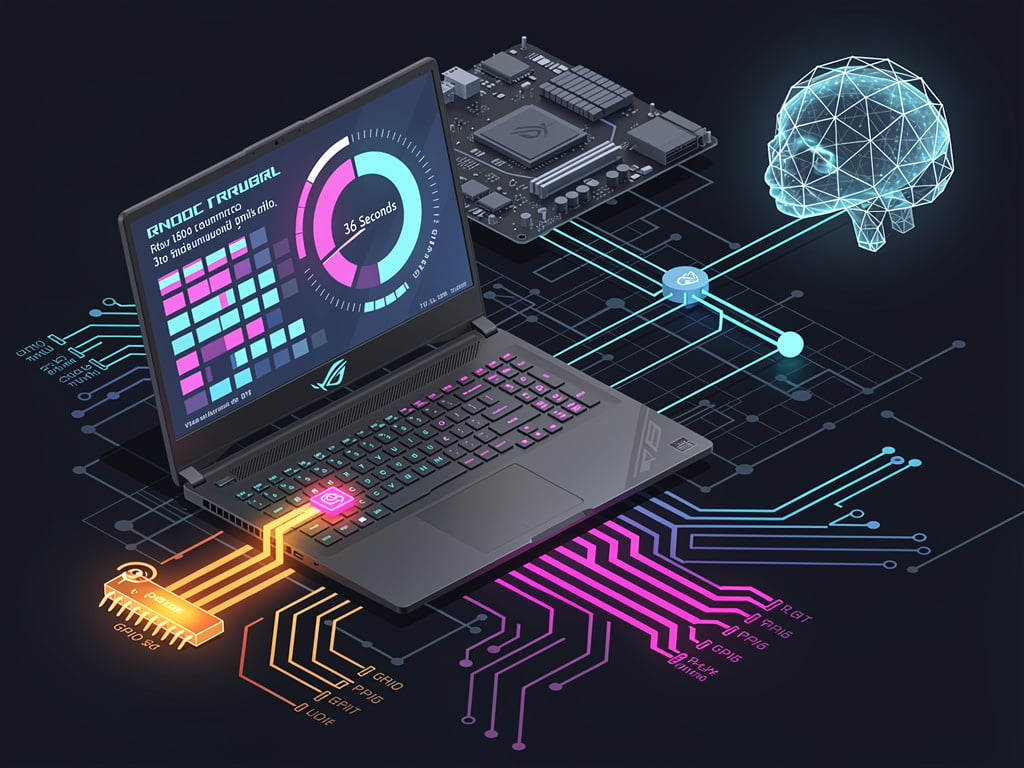
High-end laptops should boot fast. A modern AMD Ryzen 9 machine with 32GB of RAM shouldn’t linger 36 seconds just to get through the kernel. Yet one did. On the ASUS ROG Strix G16 G614, Linux users watched systemd-analyze report painful delays. Firmware. Again.
The Unexpected Role of AI in Kernel Debugging
Marco Scardovi faced the problem. He turned to Google’s Gemini 3.5 Flash model. The AI examined logs, suggested causes, and guided him toward the root. It pointed to the touchpad’s GPIO line. The firmware left it asserted low at boot. That triggered an ActiveBoth interrupt replay. The handler ran synchronously in the probe path. And it hung. For 36 seconds.
“On these laptops, the firmware leaves the touchpad’s ActiveBoth GPIO line asserted (logic low) at boot,” Scardovi wrote in his kernel mailing list post. “Per the boot-time initial-state logic, an ActiveBoth interrupt found low is replayed once to sync its initial state, which calls the handler synchronously in the probe path. On these laptops that interrupt handler is slow/hanging, so the synchronous call blocks for ~36s and stalls boot.”
But. The AI got part of it wrong. Later ACPI dumps showed the graphics subsystem triggered the GPIO issue. Not the touchpad. Still, Gemini delivered enough clues. Enough to build a fix.
A DMI quirk patch now sits pending. It works around the quirky firmware on the ASUS ROG Strix G16 G614. Boot times drop back to normal. Phoronix reported the story yesterday. Michael Larabel highlighted how the AI-assisted effort produced a concrete kernel solution while talks continue with ASUS and AMD for a proper firmware update.
Short delay. Long frustration. This isn’t the first time Linux users battle vendor firmware on gaming hardware. ASUS ROG machines have shown similar stalls before. One Arch Linux forum thread from last year described an identical 36-second gap on an ASUS TUF Gaming A14 after USB initialization but before clk disable. dmesg logs froze between the Realtek Bluetooth device probe and the next stage. Users tried every ACPI parameter. acpi=noirq. clk_ignore_unused. Nothing fully resolved it then.
Here the combination of logs, AI prompting, and kernel developer review succeeded. The patch blacklists the offending interrupt handling at boot on matching DMI strings. Simple. Effective. It sidesteps the synchronous block without changing core GPIO logic.
Why does this matter? Linux adoption grows on high-performance laptops. Gamers, developers, and professionals pick AMD Ryzen platforms for their power. They expect quick boots. A 36-second kernel phase destroys that. It makes the system feel broken. Even if userspace finishes in seconds, the total experience suffers.
But the story runs deeper. Firmware bugs persist across vendors. ACPI tables, GPIO configurations, and deferred probe behaviors create these silent time bombs. They surface only under Linux because Windows drivers mask them or follow different init paths. ASUS firmware on the ROG Strix series apparently assumes a specific boot sequence that Linux’s generic drivers don’t match.
Discussions on the patch mailing list show reviewers probing the ACPI dump. They confirmed the graphics connection to the GPIO event. The quirk remains valid. Upstreamers will likely accept it. That buys time. Users get faster boots today. Vendors get pressure to ship corrected BIOS versions tomorrow.
Recent reports echo the pattern. A ROG forum post from February detailed 35-second hangs on a ROG Strix G614FR under Linux. Kernel parameters like initcall_blacklist=acpi_gpio_handle_deferred_request_irqs and deferred_probe_timeout=0 resolved it for some. The same family of workarounds. The same hardware generation. Clearly a systemic firmware trait.
Gemini’s contribution stands out. Large language models now help debug low-level system issues. They parse dmesg output. They recall ACPI specifications. They propose quirks. Not perfectly. The initial touchpad diagnosis missed the graphics link. Yet the conversation moved forward faster than solo debugging might have.
Kernel developers remain cautious. AI suggestions require human verification. Code review caught the inaccuracy here. The final patch rests on solid ACPI evidence, not blind trust in model output. Still, the episode shows AI as a productive assistant in platform bring-up and bug triage.
Expect more. As AI models train on larger corpora of kernel commits, mailing list threads, and hardware documentation, their diagnostic value will rise. For firmware-related boot delays, they already accelerate the path from symptom to quirk.
The ASUS ROG Strix G614 carries strong specs. Ryzen 9. Strong GPU options. Yet out-of-box Linux experience stumbled on something as basic as boot time. The fix comes from community effort aided by an AI chatbot. That’s the new reality. Hardware vendors ship complex platforms. Open-source developers, helped by generative tools, keep them running well.
Watch for the patch to land in upcoming kernels. Users with matching ASUS models will add one line to their DMI table and enjoy snappy starts. Meanwhile, pressure builds on ASUS to update firmware so the workaround becomes unnecessary. Both paths matter. Quick relief now. Clean behavior later.
And the broader lesson? Even advanced AI PCs and Chromebooks touting sub-10-second boots from ASUS press releases don’t always deliver when Linux enters the picture. Firmware quality determines real-world speed. This case proves community ingenuity, mixed with a little AI help, can overcome what the manufacturer left behind.


 WebProNews is an iEntry Publication