
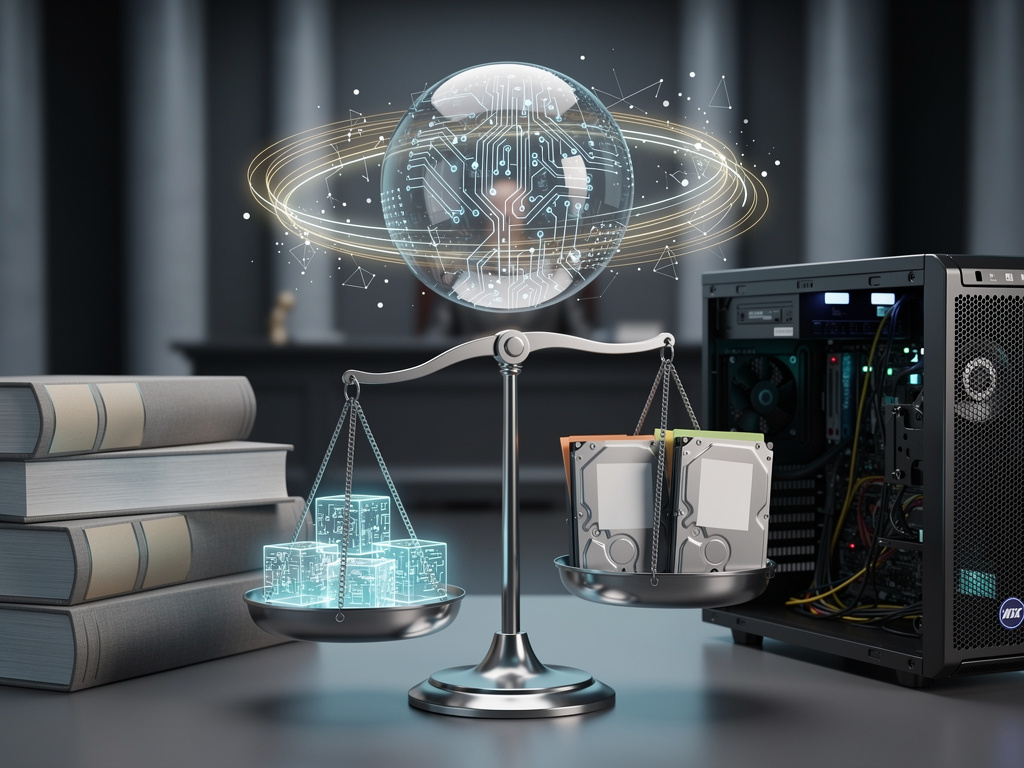
The rise of artificial intelligence has sparked intense debates over how copyright laws apply to the data used in training these systems and the outputs they generate. At the heart of many discussions is the concept of fair use, a doctrine in U.S. copyright law that allows limited use of copyrighted material without permission under certain conditions. This principle becomes particularly relevant when AI models ingest vast amounts of text, images, and other content from the internet to learn patterns and create new works.
Fair use originated from the Copyright Act of 1976, which outlines four factors courts consider when determining if a use qualifies: the purpose and character of the use, the nature of the copyrighted work, the amount and substantiality of the portion used, and the effect on the potential market for the original work. In the context of AI, companies like OpenAI and Google argue that training their models on publicly available data falls under fair use because it transforms the material into something new, such as generating novel text or images based on learned patterns.
For instance, when an AI system like ChatGPT is trained, it processes enormous datasets that often include copyrighted books, articles, and artwork scraped from the web. Proponents claim this process is transformative, meaning the AI doesn’t reproduce the originals verbatim but instead uses them to build a statistical model for prediction. However, critics, including authors and artists, contend that this wholesale ingestion without compensation undermines their rights and livelihoods.
Several high-profile lawsuits have brought these issues to the forefront. In one case, authors like John Grisham and George R.R. Martin sued OpenAI, alleging that the company’s models were trained on pirated copies of their books, enabling the AI to generate summaries or continuations that compete with their work. Similarly, The New York Times filed a suit against OpenAI and Microsoft, claiming that their articles were used without permission to train models that could then produce content mimicking the newspaper’s style and substance. These cases hinge on whether the training process constitutes fair use or infringement.
According to CNET’s legal explainer on AI and copyright, the fair use defense is not a guaranteed win for AI developers. The article points out that while some courts have ruled in favor of transformative uses in past tech-related cases, such as Google’s book-scanning project, the specifics of AI training introduce new complexities. In the Google Books case, the Supreme Court found that digitizing books for a searchable database was fair use because it provided public benefit without harming the market for the originals. AI companies hope for similar outcomes, but opponents argue that AI outputs can directly substitute for human-created content, potentially devaluing it.
Beyond training data, fair use also applies to what AI generates. If a user prompts an AI to create an image in the style of a famous artist, like Picasso, is that fair use or infringement? The answer depends on how closely the output resembles protected works. Tools like Midjourney or DALL-E often produce results that blend influences, but if they replicate specific copyrighted elements too faithfully, it could cross into infringement territory. Courts might evaluate whether the AI’s creation is parody, criticism, or simply a derivative work without transformative value.
Internationally, the landscape varies. In the European Union, the AI Act and copyright directives impose stricter rules on data usage, requiring more transparency about training datasets. Japan has taken a more permissive stance, allowing AI training on copyrighted material for non-commercial purposes, viewing it as essential for innovation. These differences highlight a global patchwork of regulations that companies must navigate when deploying AI worldwide.
For creators, the implications are profound. Photographers, writers, and musicians worry that AI could flood the market with cheap alternatives, eroding demand for their services. Some have turned to tools like Nightshade, which “poisons” images to disrupt AI training, or joined class-action suits to seek compensation. Organizations such as the Authors Guild advocate for licensing models where AI firms pay for data access, similar to how music streaming services compensate artists.
On the flip side, AI advocates emphasize the technology’s potential to enhance creativity. For example, musicians use AI to generate backing tracks or experiment with new sounds, while writers employ it for brainstorming ideas. In education, AI can analyze literary works to teach students about themes and styles, potentially qualifying as fair use under the educational purpose factor.
Legal experts predict that upcoming court decisions will shape the future. The Andy Warhol Foundation v. Goldsmith case from 2023, decided by the U.S. Supreme Court, narrowed the scope of transformative use by emphasizing commercial impact. In that ruling, the court found that Warhol’s silkscreen prints of a Prince photograph were not fair use because they served a similar commercial purpose as the original. Applying this to AI, if a generated image competes directly in the same market as an artist’s work, it might not qualify.
Another key case involves Getty Images suing Stability AI, accusing the company of using millions of its stock photos to train Stable Diffusion without permission. Getty argues that the AI’s ability to produce similar images harms its business model. Stability AI counters that its model learns general concepts rather than copying specifics, invoking fair use.
To address these tensions, some propose alternative frameworks. Opt-out mechanisms, like those in robots.txt files for web crawlers, allow creators to signal that their content should not be used for AI training. However, enforcement remains challenging, as not all scrapers honor these signals. Licensing platforms are emerging, where datasets are curated with explicit permissions, ensuring ethical AI development.
Ethically, the debate extends to questions of attribution and consent. Even if legally permissible under fair use, using someone’s work without acknowledgment feels unjust to many. Initiatives like the Fairly Trained certification aim to verify that AI models use only consented data, appealing to users concerned about ethics.
Looking ahead, policymakers are grappling with reforms. The U.S. Copyright Office has conducted studies on AI and copyright, recommending clearer guidelines without overhauling the fair use doctrine entirely. In Congress, bills like the Generative AI Copyright Disclosure Act would require companies to report copyrighted materials used in training, promoting transparency.
For everyday users, understanding these nuances matters when interacting with AI. Generating fan fiction or memes might fall under fair use if non-commercial and transformative, but selling AI-created art that closely mimics a protected style could invite legal trouble. Best practices include crediting influences and avoiding direct reproductions.
In academia, researchers explore ways to train AI with minimal copyrighted data, such as synthetic datasets or federated learning, which could reduce reliance on potentially infringing sources. These approaches might alleviate some legal pressures while advancing the field.
Ultimately, balancing innovation with creators’ rights requires ongoing dialogue. As AI integrates further into daily life, from content creation to personalized recommendations, resolving these copyright questions will determine how equitably the benefits are shared. Courts, legislators, and industry leaders must collaborate to foster an environment where technology thrives without undermining the foundations of intellectual property.
The conversation also touches on broader societal impacts. If AI companies prevail in fair use arguments, it could accelerate development, leading to more advanced tools for medicine, environmental modeling, and beyond. Conversely, strict rulings might slow progress, forcing firms to negotiate costly licenses or limit data sources, potentially stifling smaller innovators.
Historical precedents offer clues. The VCR’s introduction in the 1970s faced similar challenges, with studios suing Sony for enabling home taping. The Supreme Court ruled it fair use for time-shifting, paving the way for the home video market. AI might follow a parallel path, where initial fears give way to new economic opportunities.
Artists are adapting too. Some collaborate with AI, using it as a co-creator to produce hybrid works that blend human intuition with machine efficiency. Galleries now feature AI-assisted art, sparking discussions on authorship and originality.
Technologically, advancements in model architectures could minimize infringement risks. Techniques like differential privacy obscure specific data points during training, making it harder to reverse-engineer originals. Watermarking AI outputs helps distinguish them from human work, aiding enforcement.
For businesses, compliance strategies are essential. Companies audit their datasets, consult legal experts, and sometimes pivot to open-source or public domain materials. Venture capitalists increasingly favor startups with strong ethical data practices, recognizing the long-term value.
Public awareness plays a role. Campaigns by groups like Creative Commons promote shareable content, expanding pools of freely usable data for AI. This grassroots effort complements legal frameworks, encouraging a culture of respect for creators.
As these elements converge, the path forward involves compromise. AI firms might adopt revenue-sharing models, where a portion of profits from generated content goes back to original creators via collective funds. Such systems exist in music royalties and could extend to other media.
In education and policy, fostering literacy on these topics equips the next generation. Universities offer courses on digital ethics, preparing students to engage responsibly with AI.
The interplay between AI, copyright, and fair use remains dynamic, with each lawsuit and regulation refining the boundaries. By addressing these challenges thoughtfully, society can harness AI’s capabilities while safeguarding creative expression. This equilibrium will define the next era of technological progress, ensuring that innovation serves all stakeholders equitably.


 WebProNews is an iEntry Publication