
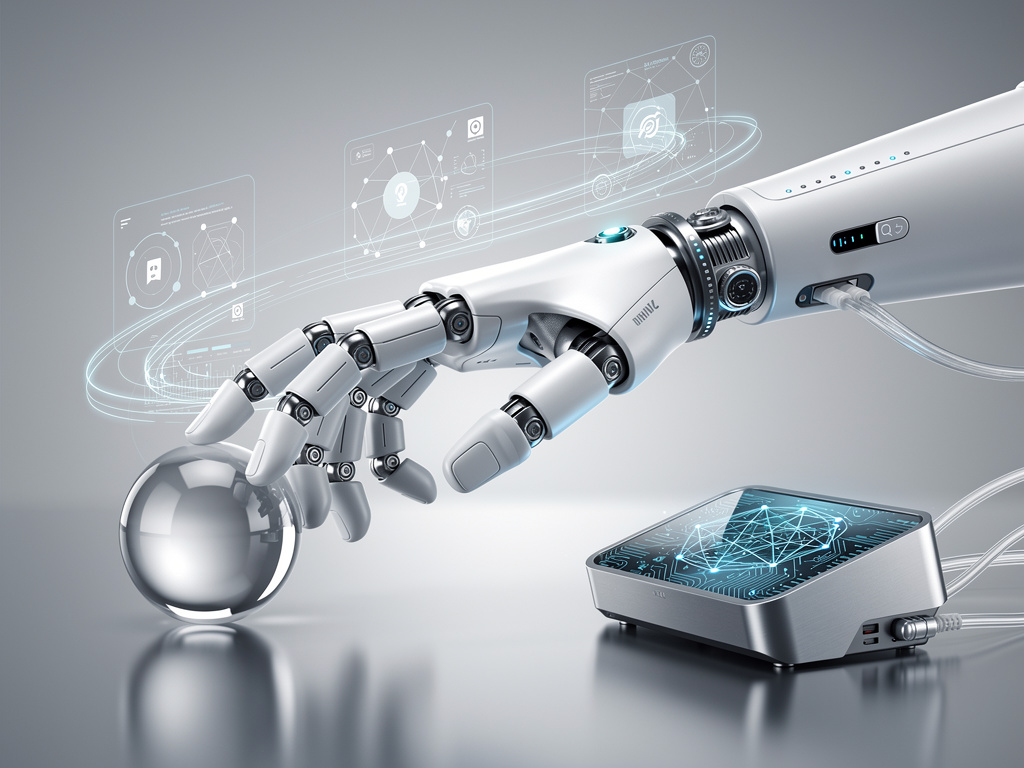
The AI Ally Inside Bionic Hands: Redefining Human-Machine Harmony
In the realm of biomedical engineering, a quiet revolution is unfolding, one that promises to transform the daily lives of amputees. Recent advancements in artificial intelligence are bridging the longstanding gap between human intention and mechanical execution in prosthetic limbs. At the forefront is a novel AI system acting as a “co-pilot” for bionic hands, enabling more natural and intuitive control. This innovation addresses a core challenge: the disconnect many users feel with their prosthetics, which often require conscious effort to operate each finger or grip.
Developed by researchers at Newcastle University and their collaborators, this AI co-pilot integrates sensors and machine learning to anticipate and assist with movements. Unlike traditional prosthetics that rely solely on muscle signals from the residual limb, this system shares control, allowing the device to adjust grip strength and finger positioning autonomously. Early tests show promising results, with users performing delicate tasks like picking up fragile objects without crushing them. The technology draws on principles from robotics and neuroscience, marking a significant step toward prosthetics that feel like extensions of the body.
The impetus for such developments stems from user feedback highlighting the limitations of current bionic hands. Amputees often report a sense of alienation, as if the hand is a tool rather than part of themselves. By incorporating AI, engineers aim to restore that sense of ownership, making interactions seamless. This isn’t just about functionality; it’s about psychological integration, reducing the cognitive load on users who otherwise must micromanage every motion.
Pioneering Shared Control in Prosthetics
The core of this AI co-pilot lies in its ability to manage individual fingers independently, a feat made possible by advanced sensors embedded in the prosthetic. These sensors detect pressure, position, and even subtle shifts in the user’s intent via electromyography (EMG) signals. According to a report in Ars Technica, the system eases control issues by allowing the AI to fine-tune grips, such as gently holding a paper cup or manipulating small items. This shared autonomy means the user initiates the action, but the AI handles the nuances, preventing slips or excessive force.
Testing involved both amputees and non-amputees, who performed tasks like drinking from a cup or handling utensils. The results, published in a recent study, indicate improved dexterity and reduced user fatigue. One participant noted that the hand “just knew” how to adjust, echoing sentiments from broader trials in the field. This builds on prior work in myoelectric prosthetics, where muscle signals trigger movements, but adds an intelligent layer that predicts and adapts.
Industry insiders point out that this technology could lower abandonment rates, as many amputees stop using prosthetics due to frustration. By making control more intuitive, the AI co-pilot addresses a market need, potentially expanding adoption. Companies like Össur and Ottobock, leaders in prosthetics, are watching closely, as integrating AI could differentiate their products in a competitive arena.
From Lab Prototypes to Real-World Applications
Beyond the lab, this innovation draws inspiration from parallel developments in robotics. For instance, posts on X highlight a 15-year-old inventor’s low-cost AI-driven prosthetic arm, built with a 3D printer and basic components, achieving high accuracy in grip control. Such grassroots efforts underscore the democratizing potential of AI in bionics, making advanced tech accessible beyond high-end labs.
Meanwhile, a feature in NPR’s Shots – Health News details how sensors and AI help prosthetics mimic natural hands, bridging the emotional disconnect for users. The article describes trials where participants manipulated fragile objects, with the AI adjusting in real-time to prevent damage. This aligns with findings from Newcastle’s team, emphasizing shared control as key to natural-feeling interactions.
Further afield, engineers at institutions like the University of Michigan have created AI bionic hands that grip like human ones, as reported in Interesting Engineering. Their design enables precise, intuitive grasps for everyday tasks, reducing the learning curve for users. These converging efforts suggest a broader shift toward AI-augmented prosthetics that prioritize user experience over mechanical complexity.
Integrating Brain-Computer Interfaces
Delving deeper, some prototypes incorporate brain-computer interfaces (BCI), allowing thought-controlled movements. A post on X about BrainCo’s wireless bionic hand showcases non-invasive BCI enabling tasks like typing with individual fingers, even when the hand is detached. This wireless capability hints at future prosthetics that respond to neural signals directly, bypassing muscle inputs entirely.
In a related vein, Startup News FYI covers testing where participants handled delicate items, demonstrating the AI’s role in shared manipulation. The system’s ability to manage each finger separately addresses a longstanding issue in prosthetics: coordinating multiple degrees of freedom without overwhelming the user. This is particularly vital for tasks requiring fine motor skills, like buttoning a shirt or playing an instrument.
Experts in neuroprosthetics argue that such integrations could extend to full-arm systems, potentially aiding those with higher-level amputations. By combining AI with BCI, the field is moving toward prosthetics that not only move but also provide sensory feedback, such as touch or temperature, enhancing the illusion of a natural limb.
Challenges in Scaling AI Prosthetics
Despite the excitement, hurdles remain in bringing these technologies to market. Cost is a primary barrier; advanced AI-integrated hands can exceed $50,000, limiting access. Posts on X from robotics enthusiasts discuss low-cost alternatives, like a $300 AI arm with impressive load capacity, suggesting pathways to affordability through open-source designs and 3D printing.
Regulatory approval also poses challenges. Devices must undergo rigorous FDA testing to ensure safety and efficacy, a process that can take years. As noted in KENW’s coverage of NPR content, the focus on natural-like actions requires extensive user trials to validate AI’s decision-making in varied scenarios.
Moreover, ethical considerations arise, such as data privacy in AI systems that learn from user behaviors. Insiders debate how to balance personalization with protecting sensitive neural data, especially as BCIs become more prevalent.
Evolving Ecosystems of Support and Innovation
Support ecosystems are evolving to accelerate progress. Collaborations between universities, startups, and tech giants like Google DeepMind—whose work on self-improving robotic agents is mentioned in X posts—are fostering rapid iteration. For example, teleoperation systems, akin to advanced joysticks, allow remote data collection for training AI models, as seen in projects from Stanford’s ALOHA initiative.
A piece in KEDM’s NPR affiliate reiterates the role of AI in making bionic hands feel connected, with sensors enabling adaptive responses. This is echoed in user testimonials from trials, where amputees report greater confidence in social settings, reducing the stigma associated with prosthetics.
Looking ahead, integration with wearable tech could enhance functionality. Imagine a bionic hand syncing with smartwatches for health monitoring or augmented reality glasses for guided tasks, creating a holistic assistive network.
The Human Element in Technological Leaps
At its heart, this AI co-pilot represents a fusion of human ingenuity and machine intelligence. Researchers emphasize user-centered design, incorporating feedback loops to refine algorithms. Posts on X from AI news accounts describe bionic hands that blend intention with precision, preventing mishaps like crushing a cup during a grasp.
In WUSF’s report, the technology is praised for sharing motion control, allowing users to focus on intent rather than mechanics. This shift could empower individuals in professions requiring manual dexterity, from artists to surgeons.
Broader implications extend to aging populations and injury recovery, where AI prosthetics might prevent isolation by restoring independence. As one engineer put it, “We’re not just building hands; we’re rebuilding lives.”
Pushing Boundaries with Dexterous Robotics
Advancements in dexterous robotics, as discussed in X threads about threading needles with AI hands, signal upcoming breakthroughs. Companies like Figure AI are developing models with high-rate finger control, potentially adaptable to prosthetics.
A KUOW article highlights how AI bridges gaps in user-prosthetic relationships, with research showing reduced disconnection feelings. This is crucial for long-term adherence.
Ultimately, these innovations are reshaping bionics, turning science fiction into everyday reality. With continued investment, AI co-pilots could become standard, offering hope to millions worldwide.
Global Perspectives and Future Trajectories
Internationally, similar efforts are underway. In Europe, projects funded by the EU focus on AI-enhanced limbs for rehabilitation. X posts from tech accounts note U.S. engineers’ grips mimicking human ones, as in TechAmerica’s updates, combining robotics and AI for natural responses.
NPR’s additional coverage explores AI’s role in improving bionic functionality, with scientists aiming for limbs that act instinctively.
As the field advances, interdisciplinary collaboration will be key, blending AI, materials science, and psychology to create truly symbiotic devices.
Refining the User Experience Through Iteration
Iterative design is central, with prototypes undergoing dozens of revisions. The low-cost arm mentioned on X, after 75 iterations, exemplifies how persistence yields robust solutions.
Neuroscience News, via an X share, reports on AI restoring intuitive grasping, aligning with user needs for seamless integration.
In essence, this era of AI co-pilots heralds a future where prosthetics enhance rather than replace human capability, fostering a more inclusive world.


 WebProNews is an iEntry Publication