
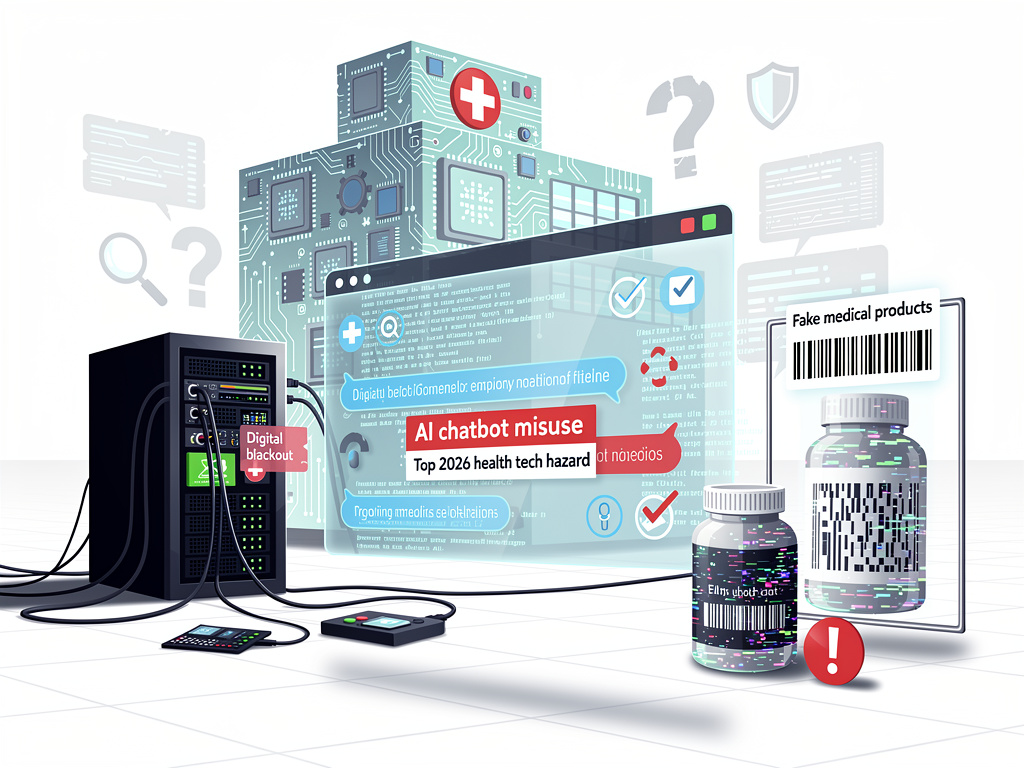
In its 18th annual assessment, ECRI, an independent patient safety organization, has pinpointed misuse of AI chatbots as the foremost health technology hazard for 2026, signaling escalating concerns over unregulated digital tools infiltrating clinical decisions. Released on January 21, 2026, the report draws from incident investigations, reporting databases, and device testing to rank risks that could imperil patients across hospitals, ambulatory centers, and home settings. “Medicine is a fundamentally human endeavor. While chatbots are powerful tools, the algorithms cannot replace the expertise, education, and experience of medical professionals,” stated Marcus Schabacker, MD, PhD, ECRI’s president and CEO, in a PR Newswire release.
Chatbots powered by large language models like ChatGPT, Claude, Copilot, Gemini, and Grok generate responses that mimic authority but often deliver hallucinations—fabricated facts that sound credible. ECRI experts documented instances where these tools proposed erroneous diagnoses, urged superfluous tests, endorsed inferior supplies, fabricated anatomy, and dispensed perilous guidance, such as deeming it safe to position an electrosurgical return electrode over a patient’s shoulder blade, risking burns. With over 40 million daily ChatGPT users querying health topics and 5% of its messages healthcare-related, the peril amplifies as care access shrinks amid rising costs and facility closures, per analyses cited by HIT Consultant.
Chatbot Hallucinations Ignite Top Warning
ECRI urges health systems to form AI governance committees, mandate clinician training on tool limits, audit outputs for drift, and verify all advice against expert sources. “AI models reflect the knowledge and beliefs on which they are trained, biases and all. If healthcare stakeholders are not careful, AI could further entrench the disparities that many have worked for decades to eliminate,” Dr. Schabacker warned. This tops a list blending novel digital threats with persistent device flaws, all deemed preventable through vigilance.
Ranking second is unpreparedness for a “digital darkness” event—a abrupt blackout of electronic systems and patient data that could paralyze care delivery. As providers grow tethered to digital infrastructure, outages from cyberattacks, power failures, or disasters threaten delays in treatment and safety breaches, according to MedTech Dive. ECRI stresses contingency planning to sustain operations sans screens.
Third place goes to substandard and falsified medical products, which evade supply chains and deliver inferior performance or outright harm. This perennial issue persists despite regulatory efforts, underscoring needs for robust vendor scrutiny and authentication protocols.
Digital Blackouts and Counterfeit Gear Demand Resilience
Fourth: Recall communication breakdowns for home diabetes technologies, like insulin pumps and continuous glucose monitors. Critical updates on overdosing risks or faulty readings often lag in reaching patients, ECRI notes in Advisory Board coverage. Manufacturers must simplify safety notices, while providers and suppliers proactively disseminate alerts.
Fifth involves misconnections of syringes or tubing to patient lines, hampered by sluggish uptake of ENFit enteral and NRFit neuraxial connectors designed to prevent wrong-route errors. GEDSA highlighted this in an X post, linking to conversion timelines, as reported via X searches.
Sixth: Failing to leverage medication safety tech in perioperative areas, where smart pumps and barcode systems could avert dosing mishaps but sit underused amid workflow hurdles.
Device Disconnects and Dosing Gaps Persist
Seventh is inadequate cleaning instructions for devices, fostering infection vectors if staff misinterpret protocols. Eighth targets cybersecurity vulnerabilities in legacy medical devices, which high replacement costs leave networked and exposed; disconnection emerges as a key mitigation.
Ninth cautions against health technology rollouts that spawn unsafe workflows, as hasty implementations override clinical safeguards. Rounding out tenth: Subpar water quality in instrument sterilization, which compromises reprocessing and invites microbial survival, per the ECRI ranking detailed in PR Newswire.
Legacy Vulnerabilities and Workflow Traps Exposed
ECRI’s selection process weighs severity, frequency, scope, subtlety, visibility, and mitigatability, nominated by engineers, clinicians, and analysts then vetted externally. Unlike vendor-specific alerts, these generic hazards span technologies. The full report, member-exclusive, offers mitigation blueprints; a public executive brief is at ECRI’s site.
Industry echoes urgency. Modern Healthcare notes AI’s climb: governance lapses fifth in 2024, broad AI risks first in 2025, now chatbot-specific. HealthLeaders Media infographics visualize the roster, warning of overreliance. On X, Modern Healthcare and GEDSA amplified the list, spurring discussions on enforcement.
For insiders, this signals a pivot: integrate safety into tech procurement and ops. As Dr. Schabacker put it, disciplined oversight unlocks AI’s potential sans peril, while shoring analog backups counters digital frailties. Hospitals face mandates to audit implementations, train amid bias pitfalls, and fortify supply chains—lest 2026 tally preventable harms.


 WebProNews is an iEntry Publication