
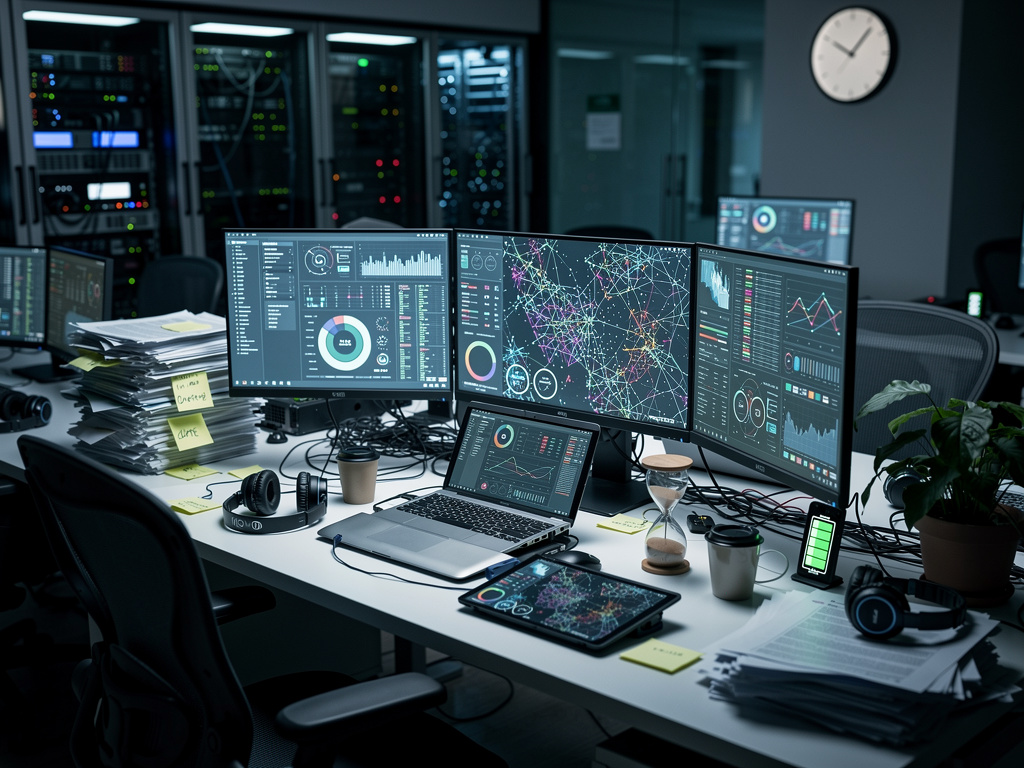
Artificial intelligence entered the workplace with a massive promise: to automate tedious tasks, accelerate output, and give employees their time back. Companies eagerly adopted generative text generators, image creators, and data analysis algorithms, expecting a sudden surge in efficiency. The vision was an office environment where workers could focus entirely on high-level strategy while machines handled the repetitive daily chores. However, the reality unfolding across corporate offices tells a starkly different story. Rather than experiencing relief, many professionals report feeling more overwhelmed than before these tools arrived on their desktops.
A recent study conducted by Harvard Business School’s Managing the Future of Work project in partnership with the Upwork Research Institute highlights this growing problem. Researchers discovered that the rush to adopt artificial intelligence is causing widespread mental fatigue, a phenomenon the report characterizes as “AI brain fry.” According to the findings covered by CNET, 77% of workers state that artificial intelligence has actually added to their workload rather than decreasing it. This widespread exhaustion points to a fundamental flaw in how organizations are integrating new technologies into their daily operations.
The Disconnect Between Executives and Employees
The root of this exhaustion often stems from a massive gap in expectations between the C-suite and the general workforce. The Upwork and Harvard Business School researchers found that 96% of executives expect artificial intelligence to increase productivity. Driven by the financial investments made in these subscriptions and software licenses, leadership teams are demanding immediate returns. They frequently assume that because a tool can generate a report in seconds, the employee responsible for that report can now produce five times the normal volume of work in a single day.
Employees, on the other hand, face the practical realities of making these tools function correctly. Nearly half of the workers surveyed—47%—admit they have no idea how to achieve the productivity gains their employers anticipate. Management often increases project quotas without providing additional time for the staff to learn the new software. Consequently, workers are caught in a stressful bind, forced to meet elevated output demands while simultaneously acting as beta testers for complex, unpredictable algorithms.
Why Artificial Intelligence is Adding to Workloads
One major factor contributing to “AI brain fry” is the steep learning curve associated with prompt engineering. Writing effective prompts requires a specific type of critical thinking and precision. Employees must figure out exactly how to instruct the software to get a usable result, which often involves trial and error. If a prompt is too vague, the output is useless; if it is too detailed, the system might focus on the wrong variables. This constant recalibration demands intense cognitive effort, draining mental energy that would otherwise go toward actual creative or analytical work.
Furthermore, the output generated by these models is rarely ready for immediate publication or use. The study notes that nearly 40% of employees feel they spend an excessive amount of time reviewing and adapting artificial intelligence content. Generative models frequently produce hallucinations—plausible but entirely false information—or adopt a tone that does not align with company standards. Staff members must carefully fact-check every claim, edit the phrasing, and reformat the text, which is often more tedious than writing the document from scratch.
The Hidden Costs of Technology Integration
Historically, the introduction of any major workplace technology requires an initial period of decreased productivity as users adapt. When businesses transitioned from typewriters to computers, or from physical filing cabinets to cloud storage, workers needed time to adjust their habits. However, the current transition is happening at an unprecedented speed. Companies are rolling out new software updates and algorithmic features weekly, giving staff almost no time to establish a comfortable routine before the interface or capabilities change again.
The cognitive load required to manage artificial intelligence is fundamentally different from previous technological shifts. Instead of simply learning a new physical process, employees are essentially managing a highly capable but unreliable digital assistant. They must constantly maintain a state of high alertness to catch errors, biases, or logical inconsistencies in the machine’s work. This sustained vigilance is exhausting and directly contributes to the mental fatigue identified by the Harvard Business School researchers.
The Threat of Employee Burnout and Frustration
The pressure to perform at an artificially inflated pace is pushing many professionals to the brink of burnout. When workers spend their days wrestling with software that is supposed to make their lives easier, the resulting frustration is profound. The Upwork study indicates that one in three employees is considering quitting their job in the next six months due to burnout and overwork. This statistic should serve as a stark warning to organizations that prioritize algorithmic efficiency over human well-being.
In an attempt to keep up with unrealistic demands, some employees resort to using unauthorized tools, creating security risks for their employers. Others engage in “quiet quitting,” doing only the bare minimum required to maintain their employment as a self-preservation tactic against mental exhaustion. When the tools designed to empower workers instead strip away their autonomy and increase their stress, the entire corporate culture suffers, leading to higher turnover rates and a loss of institutional knowledge.
Reevaluating Key Performance Indicators
To combat this widespread brain fry, companies must fundamentally rethink how they measure success. Traditional key performance indicators often focus on volume: the number of articles written, lines of code produced, or client emails sent. When executives apply these volume-based metrics to an AI-equipped workforce, they inadvertently encourage a race to the bottom regarding quality. Employees will use the tools to churn out massive amounts of mediocre work just to hit their new, inflated targets.
Instead, leadership needs to transition toward metrics that evaluate strategic impact and quality. If a generative tool saves an employee two hours on a data entry task, that time should not immediately be filled with more data entry. It should be redirected toward deep thinking, relationship building, or complex problem-solving—areas where human intellect remains vastly superior to machine output. Measuring the value of these human-centric tasks requires a more nuanced approach to performance reviews and goal setting.
Developing Effective Training Programs
A glaring issue highlighted by the CNET coverage of the study is the lack of formal support provided to workers. Many companies simply purchase enterprise licenses for popular generative applications, hand out the login credentials, and expect the staff to figure it out independently. This sink-or-swim approach guarantees that employees will spend countless hours making avoidable mistakes. Without proper guidance, workers develop inefficient habits that actually compound their daily stress levels.
Effective training programs must go beyond basic technical tutorials. Organizations need to teach their teams when to apply these tools and, equally importantly, when to avoid them entirely. A comprehensive training initiative should include standardized prompt libraries for common company tasks, clear guidelines on fact-checking protocols, and open forums where employees can share their successes and frustrations. By fostering a collaborative learning environment, companies can reduce the isolated anxiety that leads to brain fry.
Redesigning Workflows for Human and Machine Collaboration
Merely bolting artificial intelligence onto existing operational processes is a recipe for disaster. If a company’s workflow was designed entirely for human execution, inserting an algorithm into the middle of that chain disrupts the established rhythm. Organizations must take a step back and map out their entire production cycles, identifying specific bottlenecks where generative tools can genuinely alleviate pressure without creating secondary administrative burdens for the staff.
This redesign process requires active input from the employees who actually perform the daily tasks. Management cannot dictate workflow changes from the top down without understanding the granular details of the work. By involving the staff in the restructuring phase, companies can ensure that the technology serves the worker, rather than forcing the worker to serve the technology. This collaborative approach helps build systems that prioritize human strengths, such as empathy and ethical judgment, while delegating raw data processing to the machines.
Moving Forward with Realistic Expectations
The findings from the Harvard Business School and Upwork study serve as a necessary reality check for the corporate world. The transition to a highly automated workplace will not happen overnight, and it certainly will not happen without friction. Executives must practice patience and adjust their financial and productivity forecasts to reflect the human cost of adoption. Acknowledging that the current phase of integration is difficult and messy is the first step toward creating a healthier work environment.
Ultimately, the success of these new technologies depends entirely on the people operating them. If the workforce is mentally depleted, cynical, and overwhelmed by “AI brain fry,” the promised efficiency gains will never materialize. By prioritizing employee well-being, offering comprehensive support, and setting reasonable goals, businesses can eventually realize the benefits of artificial intelligence without sacrificing the mental health of their most valuable asset: their people.


 WebProNews is an iEntry Publication