
The Erosion of Expertise: How AI Tools Are Quietly Undermining Worker Skills in 2025
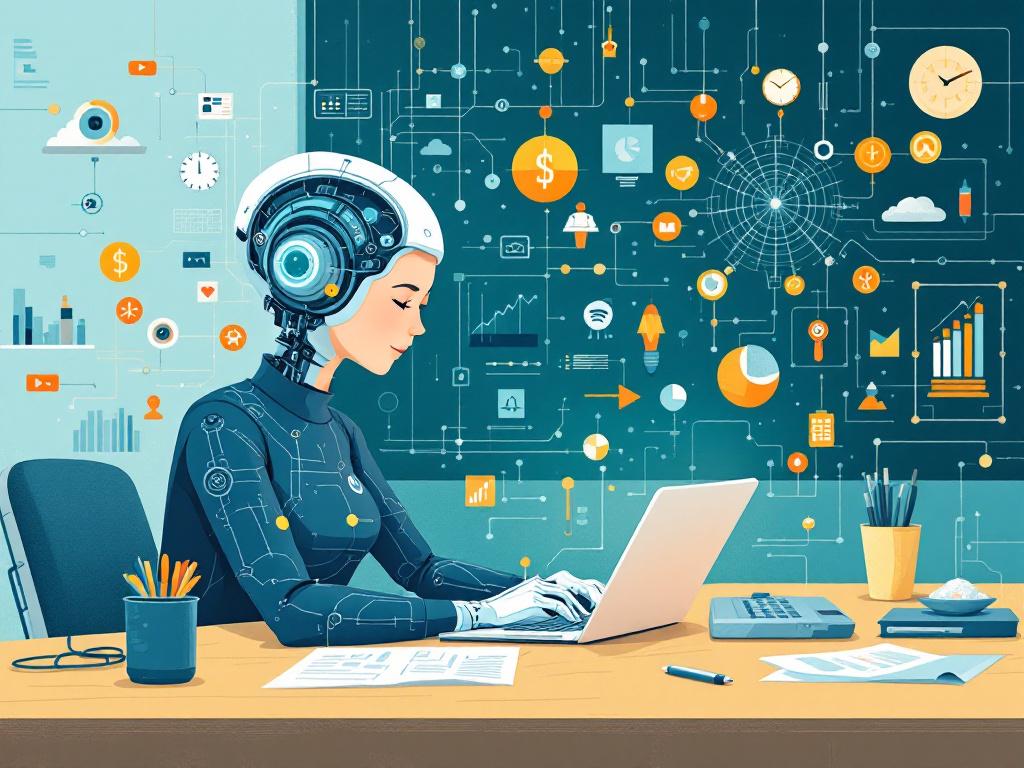
In the bustling offices of tech giants and startups alike, artificial intelligence tools promise unparalleled productivity. Yet, beneath the surface of these efficiency gains lies a troubling trend: the gradual deskilling of the workforce. Anastasia Berg, an assistant professor of philosophy at the University of California, Irvine, has sounded the alarm on this issue, arguing that overreliance on AI is eroding essential human abilities like judgment, creativity, and problem-solving. As Berg explains in a recent interview, when workers lean too heavily on AI for tasks such as drafting reports or analyzing data, they risk losing the very skills that make them indispensable.
This concern isn’t isolated to academia. Across industries, from finance to creative fields, professionals are witnessing a shift where AI handles routine cognitive work, leaving humans to oversee but not deeply engage. For instance, in graphic design, tools like automated image generators can produce visuals in seconds, but designers who rely on them exclusively may forget the nuances of composition and color theory honed through years of practice. Berg’s perspective draws from historical parallels, such as the deskilling seen in manufacturing during the Industrial Revolution, where machines replaced artisanal craftsmanship.
The implications extend beyond individual workers to entire organizations. Companies adopting AI tools often see short-term boosts in output, but at the cost of long-term innovation. Without workers exercising their full cognitive range, firms might stagnate, unable to adapt to unforeseen challenges that AI can’t predict. Berg warns that this could create a workforce of overseers rather than creators, diminishing the human element that drives breakthroughs.
AI’s Double-Edged Sword in Job Transformation
Recent analyses underscore Berg’s cautions. According to a report from Goldman Sachs, AI innovations may displace jobs in the near term while generating new opportunities elsewhere, potentially affecting up to 300 million positions globally. This displacement isn’t just about job loss; it’s about the reconfiguration of roles, where high-skill tasks are augmented, but lower-level skills atrophy from disuse.
On social media platform X, users echo these sentiments, with posts highlighting how entry-level positions in software development and customer support are vanishing as AI takes over basic functions. One thread notes a 13% drop in employment for young workers in AI-exposed fields, attributing it to automation of foundational tasks that once served as training grounds. These online discussions reflect a growing anxiety among professionals, who fear that without deliberate upskilling, entire generations could enter the job market ill-equipped.
Industry leaders are beginning to respond. At Meta, for example, employee performance reviews are set to incorporate AI proficiency starting in 2026, signaling a pivot toward evaluating how well workers integrate these tools without losing core competencies. This move, detailed in reports from Business Insider, aims to balance adoption with skill preservation, but critics argue it’s a band-aid on a deeper wound.
Sector-Specific Impacts and Emerging Data
Delving into specific sectors reveals stark patterns. In the tech industry, layoffs have surged in 2025, with over 180,000 jobs cut as companies like Microsoft, Amazon, and Google restructure around AI. A piece from Editorialge attributes this to efficiency drives, where AI replaces roles in data entry and basic coding, leading to a deskilling effect as remaining employees focus on higher-level oversight rather than hands-on execution.
The service sector faces similar upheavals. Posts on X describe a dramatic rise in AI-bot interactions for customer service, jumping from 15% in 2024 to 85% in 2025, putting low-skilled jobs at risk of extinction. This aligns with findings from the World Economic Forum, which points out that industries with abundant data, such as finance and healthcare, are most susceptible to disruption because AI thrives on pattern recognition, often sidelining human intuition.
Education and training programs are scrambling to adapt. Universities like Nexford are forecasting job shifts through 2030, emphasizing that while AI might eliminate some positions, it will create others in areas like AI ethics and system integration. Their insights, available in an online publication, suggest workers must cultivate “durable skills” – human-centric abilities like critical thinking – to complement AI, countering the deskilling narrative.
Philosophical Underpinnings and Ethical Dilemmas
Berg’s philosophical lens adds depth to the debate. She posits that AI’s allure lies in its ability to mimic human output without the effort, but this shortcuts the learning process integral to skill development. In her view, shared in the original Business Insider article, true expertise comes from grappling with complexity, not delegating it to algorithms. This echoes broader ethical concerns about AI integration, where the rush for productivity overlooks workforce well-being.
Ethical considerations also surface in projections from Gartner, as reported in ETHRWorld, which predicts that by 2027, AI will net more jobs created than lost, with a focus on transformation rather than elimination. However, this optimism hinges on proactive reskilling, which many companies are slow to implement, exacerbating deskilling risks.
X users amplify these ethics discussions, with threads debating the moral imperative for businesses to invest in employee development amid AI adoption. One post highlights how AI’s impact on white-collar jobs earning around $80,000 could widen inequality, as those without access to upskilling fall behind.
Strategies for Mitigating Deskilling Risks
To combat deskilling, experts advocate for hybrid approaches where AI serves as a tool, not a crutch. For example, in creative industries, professionals are encouraged to use AI for ideation but refine outputs manually to maintain skills. This strategy is gaining traction, as seen in reports from Exploding Topics, which compiles statistics showing AI’s potential to enhance rather than erode capabilities when properly managed.
Corporate training initiatives are pivotal. Companies like those profiled in National University resources are integrating AI literacy into curricula, ensuring workers understand both the technology’s strengths and limitations. This education fosters a balanced dynamic, where human judgment overrides AI suggestions in ambiguous scenarios.
Moreover, policy interventions could play a role. Governments are urged to support lifelong learning programs, drawing from predictions in AIMultiple research that outline expert views on AI-induced job losses. By subsidizing retraining, societies might preserve the skill base essential for economic resilience.
Future Trajectories and Industry Adaptations
Looking ahead, the trajectory of AI’s influence on skills depends on adoption patterns. In critical sectors like healthcare and transportation, where human oversight is non-negotiable, deskilling could pose safety risks if workers become too dependent on AI diagnostics or automation. The World Economic Forum’s analysis reinforces this, noting that jobs combining tech with human elements will thrive.
On X, forward-looking posts discuss the rise of “supercharged” roles, where AI boosts efficiency for 25% of positions, while 75% face obsolescence without adaptation. This sentiment aligns with broader data from Goldman Sachs, indicating a net positive if industries prioritize skill evolution.
Ultimately, the challenge is to harness AI’s power without sacrificing the human ingenuity that propels progress. As Berg and others argue, fostering environments where workers actively engage with AI, rather than passively rely on it, could turn potential pitfalls into opportunities for growth.
Balancing Innovation with Human Capital
Innovative companies are already experimenting with safeguards. For instance, some firms mandate “AI-free” days to encourage manual problem-solving, preserving cognitive muscles. This tactic, inspired by philosophical critiques like Berg’s, aims to keep creativity alive amid technological advances.
Statistical overviews from sources like Exploding Topics reveal that while 59% of workers may need reskilling by 2030, according to World Economic Forum data, the payoff could be substantial in terms of job creation. ETHRWorld’s report further supports this, projecting 12 to 78 million net new roles globally.
In the end, the deskilling debate underscores a fundamental tension: AI’s promise of efficiency versus the irreplaceable value of honed human skills. Industry insiders must navigate this carefully, ensuring that technological progress enhances, rather than diminishes, the workforce’s potential.
Voices from the Front Lines
Frontline workers share mixed experiences. In tech layoffs chronicled by Editorialge, survivors describe heightened pressure to adapt, often at the expense of deeper expertise. Yet, optimists on X point to AI creating niches like prompt engineering, where understanding AI intricacies becomes a new skill set.
Philosophers like Berg remind us that skills aren’t just tools for productivity; they’re core to human fulfillment. Ignoring this could lead to a devalued workforce, as highlighted in National University’s statistics on automation risks.
As 2025 unfolds, the true measure of AI’s impact will be how well industries preserve the essence of work amid rapid change.


 WebProNews is an iEntry Publication