
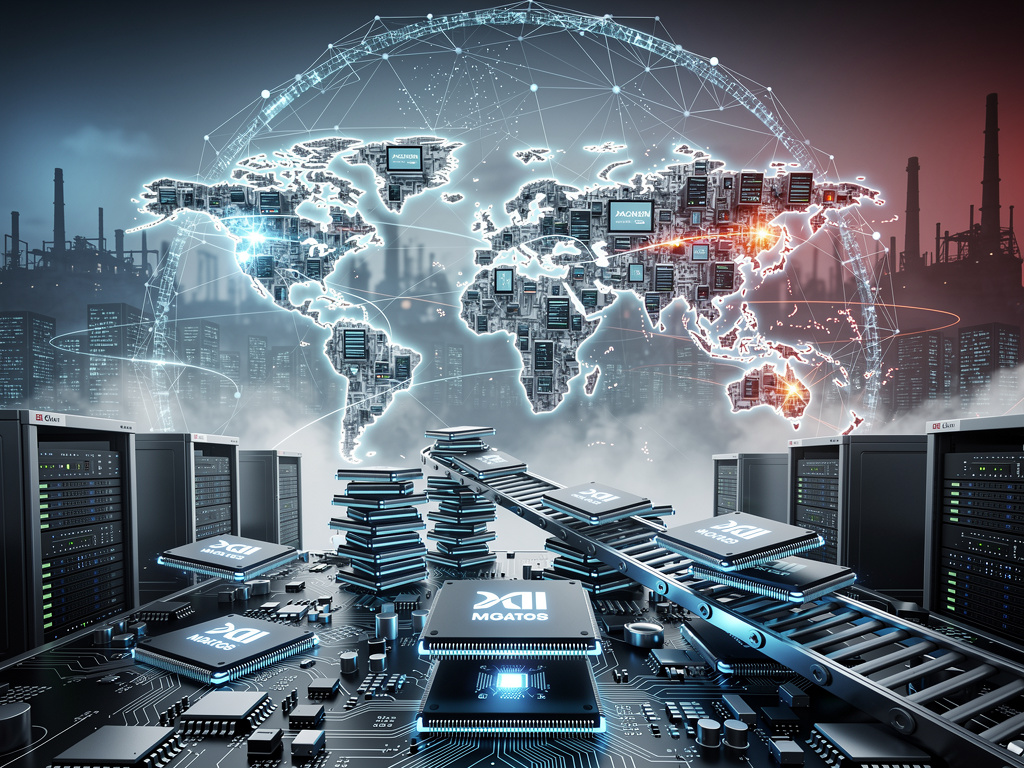
The Silicon Squeeze: AI’s Insatiable Hunger for Memory Upends Global Tech Dynamics
In the heart of the technology sector, a quiet revolution is unfolding, driven by artificial intelligence’s voracious appetite for memory chips. As AI models grow more complex, demanding unprecedented amounts of data storage and processing power, the global supply chain for memory components like DRAM and NAND is straining under the pressure. This surge in demand isn’t just a blip; it’s a fundamental shift that’s rippling through consumer electronics, data centers, and even geopolitical strategies. Industry analysts are warning that without swift expansions in production capacity, prices for everything from smartphones to servers could skyrocket, potentially slowing innovation across multiple sectors.
The roots of this crisis trace back to the explosive growth of AI applications, particularly in generative tools and machine learning. Companies like Nvidia and OpenAI are deploying massive data centers that require high-bandwidth memory (HBM) to handle the intense computational loads. According to a recent report from Reuters, an acute global shortage of memory chips is forcing AI firms and consumer-electronics makers to compete fiercely for limited supplies, with prices soaring as a result. This competition is exacerbating tensions in an already tight market, where supply chains were still recovering from pandemic-era disruptions.
Beyond the immediate price hikes, the memory crunch is influencing investment decisions at the highest levels. Semiconductor giants such as Samsung and SK Hynix are ramping up production of advanced HBM chips, prioritizing AI needs over traditional consumer demands. This pivot is evident in market forecasts, which predict that AI-driven demand could double the size of the memory market by 2030. Yet, as supplies dwindle, smaller players in the ecosystem are left scrambling, highlighting a growing divide between tech titans and the rest of the industry.
Escalating Costs and Market Ripples
The fallout from AI’s memory demands is most visible in the consumer space, where everyday devices are feeling the pinch. Personal computers and smartphones, which rely on standard DRAM and NAND flash, are facing potential price increases of up to 20% in the coming year, per insights from NPR. Analysts point out that as AI data centers gobble up high-end memory, manufacturers are reallocating resources, leaving less for mainstream products. This reallocation isn’t just about quantity; it’s about quality, with premium chips being funneled into AI infrastructure at the expense of broader availability.
On the enterprise side, the implications are even more profound. Cloud providers like Amazon Web Services and Microsoft Azure are investing billions to secure memory supplies for their AI services. A post on X from industry observer Deedy highlighted that modern GPUs for AI require HBM, with market forecasts showing a 150% growth to $46 billion in 2025, dominated by Korean firms SK Hynix and Samsung, alongside U.S.-based Micron. This concentration of production raises concerns about supply chain vulnerabilities, especially amid ongoing trade tensions between the U.S. and China.
Geopolitically, the memory shortage is becoming a flashpoint. Governments are stepping in to bolster domestic production, with the U.S. pushing initiatives like the CHIPS Act to reduce reliance on Asian suppliers. Recent news from IDC warns that rising DRAM and NAND costs could threaten smartphone and PC market growth in 2026, potentially shrinking shipments by up to 9% if shortages persist. Such forecasts underscore how AI’s needs are not isolated but interconnected with global economic stability.
Supply Chain Strains and Innovation Hurdles
Delving deeper, the production challenges for memory chips reveal a complex web of technical and logistical hurdles. Fabricating HBM involves intricate processes that can’t be scaled overnight, leading to bottlenecks that AI’s rapid advancement only intensifies. As noted in an analysis by IntuitionLabs, the 2025 RAM shortage stems from massive AI demand straining DRAM supplies, causing surges in prices for PCs, gaming, and servers. This strain is prompting chipmakers to innovate, but at a pace that lags behind demand.
Investors are taking note, pouring capital into memory-focused companies. Stocks for firms like Micron have surged, buoyed by announcements of new facilities, such as a $7 billion plant in Singapore aimed at boosting HBM output. Posts on X from users like The Kobeissi Letter emphasize that AI compute demand is growing twice as fast as Moore’s Law, necessitating $500 billion annual investments in data centers through 2030. This investment frenzy is reshaping financial markets, with AI-related spending seen as a key driver for stock performance in 2026, according to Reuters coverage of market outlooks.
However, this boom comes with risks. Environmental concerns are mounting as data centers’ energy consumption skyrockets, paralleling the memory demand. Critics argue that the push for AI infrastructure could exacerbate climate issues, with power grids struggling to keep up. In Asia, where much of the production occurs, factories are operating at full tilt, yet supply forecasts from Nikkei Asia suggest ongoing constraints could delay consumer electronics launches well into next year.
Strategic Shifts in Corporate Strategies
Corporate strategies are evolving in response to these pressures. Tech behemoths are forging exclusive deals with suppliers to lock in memory allocations, sidelining smaller competitors. For instance, Microsoft’s $80 billion capital expenditure for fiscal 2025, as shared in X posts by Shay Boloor, signals aggressive AI investments that ripple through the semiconductor space, benefiting players like Nvidia. This hoarding behavior is creating a tiered market, where only the largest firms can afford premium memory.
Innovation in alternatives is gaining traction as a countermeasure. Researchers are exploring next-generation memory technologies, such as phase-change memory or advanced NAND variants, to alleviate shortages. Yet, as TechInsights outlines in its 2025 outlook, AI-driven demand and tight supplies are driving resurgence in DRAM and NAND markets, with projected revenue growth that could redefine industry hierarchies.
The consumer impact extends to pricing and product specifications. With memory costs rising, manufacturers might opt for lower-spec devices to maintain affordability, potentially stifling advancements in areas like 5G and edge computing. IDC’s analysis reinforces this, noting that the global memory shortage is reshaping smartphone and PC markets, with costs threatening overall growth.
Geopolitical and Economic Undercurrents
Beneath the surface, geopolitical maneuvers are intensifying. China’s push in open-source AI, like the DeepSeek R1 model, is challenging Western dominance, as detailed in The Economic Times year-end review. This competition is fueling a race for memory resources, with nations viewing semiconductor self-sufficiency as a national security imperative.
Economic forecasts paint a mixed picture. While AI spending bolsters corporate profits and stock markets, as per Reuters’ insights on 2026 prospects, the memory crunch could introduce volatility. X posts from Navroop Singh describe the “Memory Wars,” where AI has turned DRAM into strategic infrastructure, compounded by energy and power grid constraints.
For industry insiders, the key takeaway is adaptability. Companies must diversify suppliers and invest in R&D to navigate this era. As Z2Data explains, AI forces are spurring the shortage, with prices surging over recent months, and the crisis shows no signs of abating soon.
Future Trajectories and Adaptive Measures
Looking ahead, the memory market’s trajectory hinges on production expansions and technological breakthroughs. Firms like Micron are positioning themselves as U.S. alternatives to Asian dominance, potentially shifting global balances. X sentiments from The Acorn Investor highlight shortages driving memory stocks to all-time highs, with outlooks for 2026 emphasizing high-bandwidth memory’s role.
The broader tech ecosystem is responding with calls for sustainable practices. As AI integrates deeper into daily life, from agentic systems to on-device processing, the demand for efficient memory will only grow. LEAPTRADER’s X post notes the AI computer market exploding to $282 billion by 2030, driven by edge AI and generative tools.
Ultimately, this memory squeeze is a testament to AI’s transformative power, forcing a reevaluation of supply chains and priorities. Industry leaders who anticipate these shifts will thrive, while laggards risk being left behind in an increasingly memory-constrained world. With ongoing investments and innovations, the sector may yet balance AI’s ambitions with practical realities, ensuring sustained growth amid these challenges.


 WebProNews is an iEntry Publication