
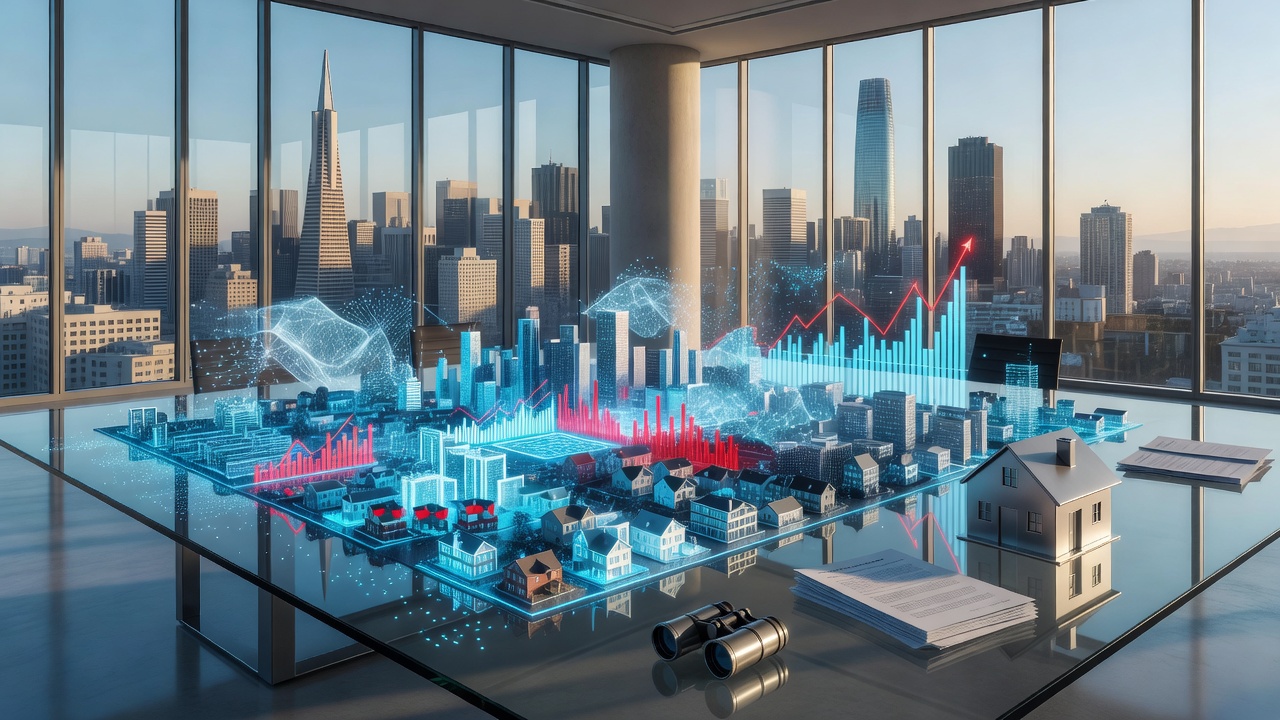
The tech industry’s rapid expansion in San Francisco has begun to reshape the city’s housing market in visible and surprising ways. According to a recent report from The New York Times, home sales in certain neighborhoods have climbed sharply as employees from prominent artificial intelligence companies prepare for major financial events, including initial public offerings. OpenAI and Anthropic stand at the center of this activity, with their anticipated stock market debuts expected to create thousands of new millionaires among staff members who hold equity stakes.
Real estate agents across the Bay Area describe a noticeable increase in buyer inquiries from individuals connected to these firms. Many of these prospective buyers already live in rental units but now seek to purchase properties before their paper wealth converts into liquid assets. The pattern echoes earlier cycles when companies such as Google and Facebook went public, yet the scale appears larger this time because of the enormous valuations attached to the leading AI developers. OpenAI’s valuation has exceeded $150 billion in recent funding rounds, while Anthropic has drawn heavy investment from Amazon and Google, pushing its worth into similar territory.
This surge arrives at a moment when San Francisco’s housing inventory remains tight. Years of underbuilding, combined with stringent zoning rules and community opposition to new construction, have kept supply low even as demand fluctuates. During the pandemic, prices dipped temporarily as remote work allowed some residents to leave the city. Now the pendulum swings back. Agents report multiple offers on single-family homes in districts like Noe Valley, Pacific Heights, and the Marina, with AI company employees often submitting bids above asking price and waiving contingencies to stand out.
Data compiled by local brokerage firms shows median sale prices in these areas rising more than 18 percent year over year. Condominiums in newer buildings near the waterfront have seen even steeper gains. One three-bedroom unit in South Beach that lingered on the market for weeks in early 2025 sold within days after news of Anthropic’s IPO preparations circulated among tech circles. The buyer, a senior engineer who joined the company in 2023, used a combination of savings and a bridge loan backed by expected stock proceeds.
The connection between AI company milestones and housing activity extends beyond simple wealth creation. Many employees received stock options years ago at modest strike prices. A successful public offering could transform those options into cash windfalls measured in seven or eight figures. Financial advisers who work with tech professionals say clients in this position often follow a familiar sequence: pay off student loans, establish trusts for children, and then buy real estate as both a home and an investment. San Francisco’s limited inventory amplifies the effect, since even a few dozen newly wealthy buyers can move the market when supply stays constrained.
Economists tracking the region caution that the current wave carries risks. Housing prices that climb too quickly on the back of concentrated wealth can widen inequality and push out middle-income families who work in education, healthcare, and small business. City officials have watched similar dynamics play out before. During the first dot-com boom, neighborhoods transformed almost overnight. When the bust arrived in 2001, prices fell, but the long-term pattern favored continued appreciation because of the city’s enduring appeal to high-earning professionals.
OpenAI’s path toward an IPO has drawn particular attention. The company, which began as a nonprofit research laboratory, restructured itself to attract the massive capital required to train ever-larger models. Its ChatGPT product brought artificial intelligence into daily use for millions of people, generating both excitement and concern about job displacement. As the firm moves closer to public markets, employees who joined during its early years stand to benefit enormously. Some have already begun touring properties with agents, focusing on homes with space for home offices and proximity to good schools.
Anthropic follows a parallel track. Founded by former OpenAI researchers, the company emphasizes constitutional AI and safety measures designed to align systems with human values. Its rapid growth and partnerships with major cloud providers have positioned it as a strong contender in the race to develop advanced models. Employees there report similar anticipation about an eventual public listing. Real estate professionals note that both companies’ workforces tend to favor certain parts of the city, creating micro-clusters of demand that drive localized price spikes.
Not every aspect of this trend benefits the broader community. Rental prices, which had moderated after the pandemic exodus, have begun climbing again. Landlords cite the return of high-income tenants willing to pay premium rates for modern amenities. At the same time, some longer-term residents express frustration that the latest tech wave repeats familiar stories of displacement. Community groups have called for stronger inclusionary zoning requirements and more aggressive efforts to build affordable housing near transit corridors.
City planners face difficult choices. San Francisco has approved several large housing projects in recent years, yet actual construction often lags because of high costs, labor shortages, and regulatory hurdles. The prospect of another influx of wealth from AI IPOs could provide tax revenue to fund public initiatives, but only if local government manages the windfall wisely. Proposals under discussion include accelerating permitting for multifamily buildings, offering density bonuses for projects that reserve units for teachers and city workers, and exploring public-private partnerships to convert underused commercial space into residences.
Financial markets have priced in high expectations for both OpenAI and Anthropic. Investors anticipate strong demand for their shares, given the transformative potential of generative AI across industries. Yet analysts also warn of volatility. Regulatory scrutiny over energy consumption, data privacy, and market concentration could affect valuations after the companies go public. Employees who time their home purchases around IPO dates may face uncertainty if share prices fluctuate more than anticipated in the early trading period.
Despite these risks, the immediate effect on the housing market appears clear. Agents describe a sense of urgency among tech workers who want to secure properties before their colleagues do the same. Some buyers are purchasing investment units in addition to primary residences, betting that San Francisco’s role as an AI hub will support long-term price growth. Others focus on single properties chosen for lifestyle reasons, such as views of the bay or short commutes by bicycle to offices in the Mission District.
The trend also influences related sectors. Mortgage lenders have developed specialized products for clients with substantial equity compensation. These loans often feature flexible terms that account for vesting schedules and expected liquidity events. Interior designers and contractors report increased workloads as new owners renovate homes to suit hybrid work patterns that blend professional and personal spaces.
Broader economic indicators suggest the AI boom extends beyond housing. Local restaurants near company headquarters have seen revenue growth, while specialized recruiting firms and venture capital operations continue to expand. The question remains whether this expansion can occur without repeating past mistakes of boom-and-bust cycles that left parts of the city struggling during downturns.
As OpenAI and Anthropic move through the regulatory steps required for public listings, their employees’ housing decisions will likely accelerate. The New York Times article highlights how these choices already ripple through neighborhoods, affecting everything from school enrollment projections to small business viability. Whether the city can absorb this latest wave of wealth while preserving diversity and affordability will test its governance and planning capabilities in the years ahead.
Real estate professionals expect the momentum to continue at least through the end of next year. With both companies potentially reaching public status within months of each other, the combined effect could sustain elevated demand. At the same time, developers who have secured approvals for new projects may accelerate construction timelines to meet the apparent appetite for additional units. The outcome will shape not only property values but also the social fabric of a city long defined by its uneasy balance between innovation and livability.


 WebProNews is an iEntry Publication