
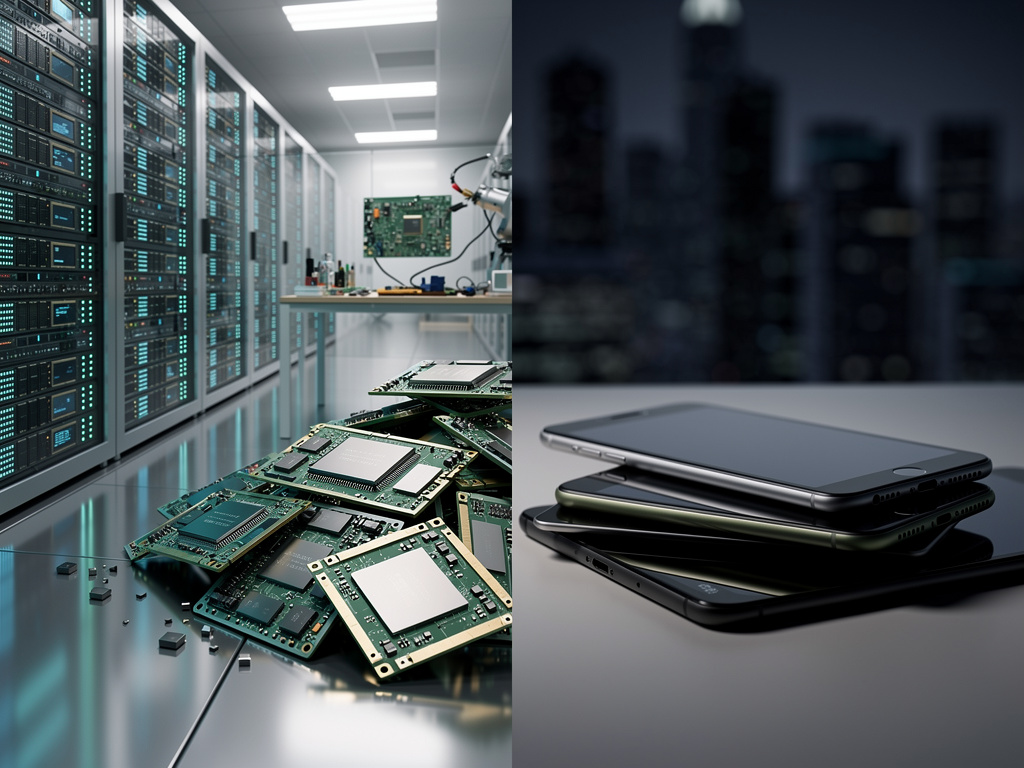
AI’s Insatiable Hunger: Why Your Next Smartphone Might Cost a Fortune
The artificial intelligence revolution is reshaping industries, but it’s also poised to hit consumers where it hurts: their wallets. As AI technologies demand ever-greater computing power, a critical component in everyday devices—memory—is becoming scarce and expensive. This surge in costs could drive up prices for smartphones, tablets, and other gadgets as early as next year, according to recent analyses. Industry experts warn that the boom in AI data centers is diverting memory supplies away from consumer electronics, creating a ripple effect that might force manufacturers to pass on higher expenses to buyers.
At the heart of this issue is the explosive growth in AI applications, particularly those requiring high-bandwidth memory (HBM) and dynamic random-access memory (DRAM). Companies like Nvidia and other AI chipmakers are gobbling up vast quantities of these components to fuel data centers that power generative AI models. This demand has led to shortages, pushing memory prices skyward. For instance, a report from CNN Business highlights how memory, a once-routine part of device assembly, is now a premium commodity that could inflate the cost of phones and tablets.
Smartphone makers such as Apple and Samsung rely heavily on these memory chips for features like advanced cameras, large storage capacities, and on-device AI processing. With AI features becoming standard—think real-time photo editing or voice assistants that learn user habits—the need for robust memory has intensified. Yet, as AI firms prioritize their massive server farms, consumer device producers are left scrambling for supplies, potentially leading to production delays or price hikes.
The Memory Crunch Unfolds
Analysts predict that memory prices could rise by 20% or more in the coming year, directly impacting retail costs. A piece from Gadget Hacks suggests this could translate to smartphones costing 20% more by 2025’s end, with effects spilling into 2026. The reasoning is straightforward: AI data centers require specialized memory that overlaps with what’s used in mobile devices, and production capacity isn’t expanding fast enough to meet both needs.
This isn’t just about raw materials; it’s a supply chain bottleneck exacerbated by geopolitical tensions and manufacturing constraints. Key memory producers like Samsung, SK Hynix, and Micron are ramping up output, but much of it is earmarked for AI infrastructure. Posts on X, formerly Twitter, reflect growing industry chatter about this shift, with users noting how AI investments are prioritizing enterprise over consumer markets, potentially stifling affordability in personal tech.
Moreover, the integration of AI into devices themselves adds another layer. Phones like the latest Google Pixel or Samsung Galaxy models already boast AI-driven features, requiring more onboard memory. As these become ubiquitous, the competition for components intensifies, making it harder for budget-friendly options to remain viable.
Broader Economic Ripples
The implications extend beyond individual purchases. For the global economy, this memory shortage could slow innovation in consumer electronics, as companies might delay releases or cut corners on features to manage costs. In emerging markets, where price sensitivity is high, higher gadget prices could widen the digital divide, limiting access to AI-enhanced tools that are increasingly essential for education and work.
Industry insiders point to historical parallels, such as the chip shortages during the pandemic, which drove up prices for everything from cars to consoles. This time, however, the driver is not a temporary disruption but a sustained AI-fueled demand. A news item from KVIA details how any device relying on memory—from smartwatches to tablets—faces similar pressures, potentially affecting a wide array of products.
On the investment side, memory manufacturers are seeing stock boosts, but at what cost to the broader tech ecosystem? Venture capitalists and analysts are debating whether this boom will lead to a bubble, with some warning of a potential pop if AI hype cools. Recent discussions on X highlight sentiments that the frenzy in AI capital spending, exceeding $2.5 trillion in 2024 projections, mirrors past tech bubbles, raising questions about long-term sustainability.
Strategies for Mitigation
Device makers aren’t standing idle. Some are exploring alternative suppliers or investing in their own memory production to hedge against shortages. For example, Apple has been known to secure long-term contracts with chipmakers, which could shield it from the worst of the price spikes. However, smaller players might not have that leverage, leading to a market where premium brands maintain dominance while budget segments suffer.
Consumers, too, might adapt by opting for older models or refurbished devices, but that could hinder the adoption of new AI features that promise enhanced productivity and entertainment. Industry reports suggest that while prices may rise, innovation in memory efficiency—such as denser chips or software optimizations—could offset some increases over time.
Looking ahead, regulatory interventions might play a role. Governments concerned about tech monopolies and supply chain vulnerabilities could encourage diversified production, perhaps through incentives for new factories in regions like the U.S. or Europe. This aligns with broader efforts to reduce dependence on Asian manufacturing hubs.
Voices from the Field
Insights from tech leaders underscore the urgency. Posts on X from figures in the AI space describe a “frenzy phase” where capital pours into data centers, sidelining consumer needs. One such post envisions a future where devices rely on local AI for customized interfaces, potentially reducing dependence on massive memory but requiring even more advanced chips.
Analysts at firms like TrendForce have forecasted specific price jumps: HBM costs could double, trickling down to consumer DRAM. This is echoed in a report from StartupNews.fyi, which questions whether the hikes will be modest or substantial, depending on how quickly suppliers scale up.
For tablet makers, the stakes are similar. Devices like iPads, used for creative work and education, incorporate AI for tasks such as handwriting recognition or augmented reality. A shortage could delay updates, frustrating professionals who rely on these tools.
Potential Silver Linings
Amid the gloom, there are opportunities. The push for AI might accelerate advancements in memory technology, leading to more efficient, cheaper alternatives in the long run. Quantum computing or novel materials could disrupt the current paradigm, though that’s likely years away.
In the software realm, developers are optimizing AI models to run on less memory, which could mitigate hardware demands. Companies like Microsoft, as noted in a piece from The Register, are already adjusting prices for their AI-enhanced services, signaling a broader trend of monetizing the tech wave.
Furthermore, consumer awareness might drive demand for sustainable practices, pressuring companies to recycle materials or design longer-lasting devices. This could foster a more resilient supply chain, less prone to such disruptions.
Navigating the Future
As 2026 approaches, stakeholders must balance AI’s promise with its practical costs. For manufacturers, diversifying suppliers and investing in R&D will be key. A report from Mezha emphasizes how AI data center demand is the primary driver, urging a reevaluation of priorities.
Consumers might see bundled deals or financing options to soften the blow, but the underlying issue remains: AI’s growth is outpacing infrastructure. Industry forums on X buzz with predictions of a “golden age” for AI post-frenzy, suggesting that current pains could lead to breakthroughs.
Ultimately, this memory squeeze highlights the interconnectedness of tech sectors. What starts in AI labs ends up in our pockets, reminding us that innovation’s benefits come with trade-offs. As the industry adapts, the hope is for a equilibrium where AI enhances lives without pricing out the masses.
Echoes of Past Booms
Reflecting on similar cycles, the dot-com era saw overhyped investments lead to corrections, much like warnings in a Business Insider article about AI’s bubble risks. If interest rates rise, as some economists predict, the unwind could be sharp, potentially easing memory pressures but at the cost of slowed AI progress.
In consumer tech, adaptability has always been key. From the smartphone revolution to now, each wave brings challenges and evolutions. This AI-driven shift might redefine value, where devices aren’t just faster but smarter in resource use.
For insiders, monitoring supply chain reports and AI investment trends will be crucial. The coming year could mark a turning point, where the costs of progress become starkly visible, prompting smarter strategies across the board.


 WebProNews is an iEntry Publication