
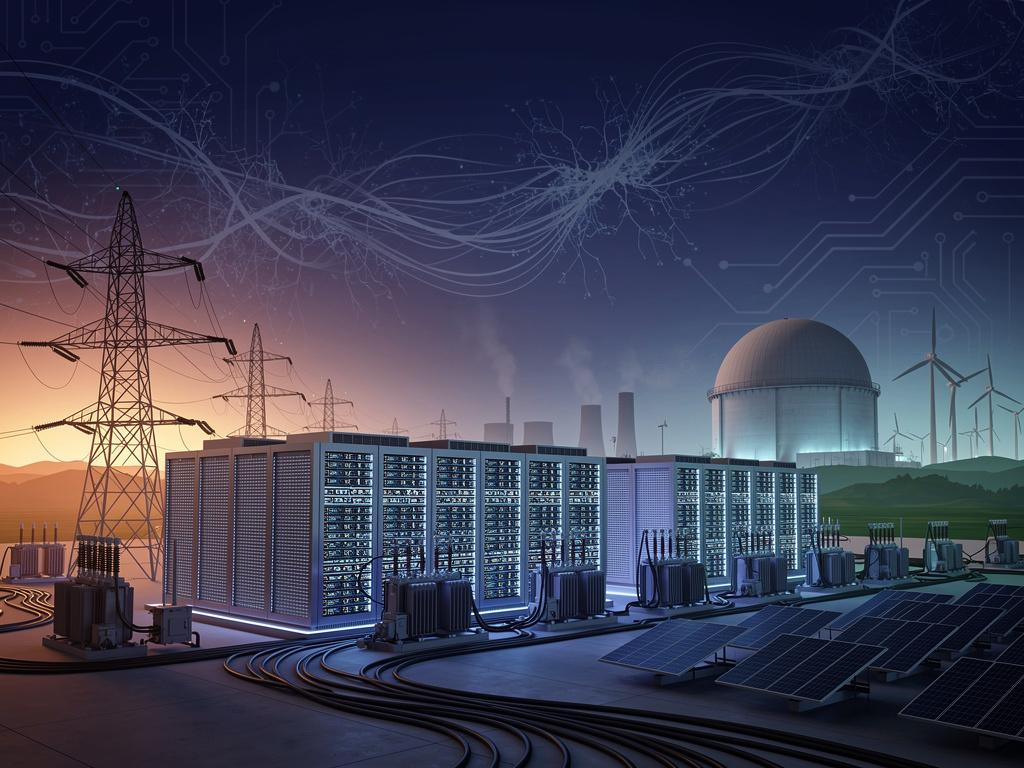
The Electric Abyss: Big Tech’s AI Power Crunch and the Looming Energy Void
In the relentless march of technological progress, artificial intelligence stands as both a beacon of innovation and a voracious consumer of resources. As companies like Google, Microsoft, and Amazon pour billions into AI development, the hidden cost is emerging in stark relief: an unprecedented demand for electricity that threatens to strain global power grids to their breaking point. Recent analyses reveal that AI data centers could soon rival entire nations in energy use, forcing Big Tech to scramble for solutions in a world where sustainable power sources are finite.
The scale of this challenge is immense. Training a single large language model, such as those powering chatbots like ChatGPT, can consume as much electricity as thousands of households over a year. Multiply that by the exponential growth in AI applications—from autonomous vehicles to personalized medicine—and the numbers become dizzying. Industry insiders whisper about a potential crisis, where the quest for smarter machines collides with the physical limits of our planet’s energy infrastructure.
This isn’t mere speculation. Reports from leading energy agencies paint a picture of escalating demands. For instance, the International Energy Agency has projected that data centers, driven largely by AI, could account for up to 8% of global electricity by 2030, a figure that underscores the urgency for strategic pivots in how tech giants source their power.
Surging Demands and Hidden Costs
Delving deeper, the energy footprint of AI isn’t just about raw consumption; it’s about the inefficiency baked into the systems. Each query on an AI platform, whether generating text or images, sips power in ways that add up quickly. According to a detailed examination by MIT Technology Review, individual AI tasks may seem negligible, but when scaled to billions of users, they contribute to emissions that rival industrial sectors. The article highlights how untracked aspects, like the energy for cooling massive server farms, amplify the problem.
Big Tech’s response has been a frenzy of investments in data centers, with spending surpassing $50 billion annually in the U.S. alone, outpacing all other commercial building expenditures combined. This boom, as noted in a report from the National Center for Energy Analytics, signals a structural shift in the economy, where AI infrastructure is reshaping energy priorities. Yet, this expansion comes at a cost: older, dirtier power plants are being revived to meet immediate needs, complicating efforts to reduce carbon footprints.
Take the case in Chicago, where an outdated oil-fired plant in the Pilsen neighborhood has been pressed back into service to fuel nearby data centers. As detailed in a Reuters piece, these “peaker” plants, designed for short bursts of energy, are now running longer to handle AI’s constant draw, raising environmental concerns in communities already burdened by pollution.
Grid Strains and Regional Impacts
The ripple effects extend beyond urban areas, challenging national grids. In the U.S., AI data centers consumed around 4% of total electricity in 2023, a figure projected to triple by 2030, equivalent to powering countries like Norway or Sweden. Posts on X from energy analysts and investors echo this sentiment, warning of an impending shortage where AI’s needs could consume up to 1,600 terawatt-hours globally by 2035—roughly 4.4% of worldwide electricity.
This surge isn’t uniform; regions with abundant renewable energy, like the Pacific Northwest, are becoming hotspots for new facilities. However, even there, the intermittent nature of solar and wind poses reliability issues for always-on AI operations. A International Energy Agency report emphasizes that without advancements in energy storage, AI’s growth could hinder decarbonization goals, potentially forcing a reliance on fossil fuels during peak demands.
Moreover, the economic implications are profound. As demand spikes, questions arise about who bears the cost. An investigation by NPR explores how AI’s power hunger might inflate residential electricity bills, with utilities passing on infrastructure upgrades to consumers. In states like Pennsylvania, where grid innovations are underway, the Washington Examiner notes that surging AI needs are testing the limits of existing systems, potentially leading to blackouts if not addressed.
Big Tech’s Pivot to Diverse Energy Sources
Faced with these hurdles, tech behemoths are diversifying their energy portfolios. No longer content with renewables alone, companies are eyeing an “all of the above” strategy, including natural gas and nuclear power. Reuters reports that investments in gas and nuclear plants are accelerating to support data center expansions, marking a pragmatic shift from earlier green pledges.
Nuclear energy, in particular, is gaining traction as a reliable baseload option. Enthusiasts on X, including market tacticians and research firms, highlight headlines from Yahoo Finance and MIT Technology Review praising nuclear’s role in taming AI’s “insatiable energy demand.” Small modular reactors, like those developed by companies such as Oklo and NuScale Power, are being touted as game-changers, capable of providing consistent power without the intermittency of renewables.
Yet, this pivot isn’t without controversy. Critics argue that reviving nuclear or gas infrastructure could undermine sustainability efforts. A World Economic Forum analysis warns that with global AI spending set to exceed $2 trillion in 2026, the energy-AI nexus will define the technology’s trajectory, demanding balanced approaches to avoid ecological backlash.
Innovations in Efficiency and Sustainability
Amid the gloom, glimmers of innovation offer hope. Researchers are focusing on making AI more energy-efficient through optimized algorithms and hardware. For example, Penn State’s Institute for Energy and the Environment discusses steps like advanced cooling techniques and edge computing to reduce central data center loads, as outlined in their blog on AI’s energy demands.
Best practices from leading sources, compiled in a AIMultiple Research overview, include shifting computations to off-peak hours and integrating AI with smart grids for better demand management. These measures could curb consumption by significant margins, potentially aligning AI growth with environmental goals.
On the policy front, governments are stepping in. In the U.S., incentives for clean energy are encouraging tech firms to invest in sustainable infrastructure. However, as Boston Consulting Group projections shared on X indicate, AI data centers might soon match the energy use of 40 million homes, underscoring the need for international cooperation to prevent a fragmented response.
Geopolitical Ramifications and Future Trajectories
The energy crunch has geopolitical undertones, with nations vying for control over rare earth minerals essential for batteries and chips. China’s dominance in these supply chains adds another layer of complexity, as Big Tech seeks to secure resources amid trade tensions.
Looking ahead, the integration of AI with emerging technologies like fusion energy could provide long-term relief. While still nascent, fusion promises unlimited clean power, potentially revolutionizing how data centers operate. Industry voices on X, from investors to analysts, speculate that without such breakthroughs, AI’s expansion might stall, forcing a reevaluation of priorities.
In Europe, stricter regulations on data center emissions are pushing companies toward greener alternatives. The European Union’s push for carbon-neutral tech, as discussed in various forums, contrasts with the U.S.’s more laissez-faire approach, highlighting divergent paths in managing AI’s energy appetite.
Corporate Strategies and Market Shifts
Within boardrooms, strategies are evolving rapidly. Microsoft’s deal to restart the Three Mile Island nuclear plant exemplifies bold moves to secure dedicated power sources. Similarly, Amazon’s investments in wind and solar farms aim to offset its AI operations, though critics question the net impact given the scale.
Market dynamics are shifting too. Energy stocks, particularly in nuclear and renewables, are surging as investors bet on AI-driven demand. Posts from financial accounts on X, like those from Katusa Research and The Kobeissi Letter, underscore this trend, with predictions of quadrupled power needs fueling a boom in utility sectors.
However, not all views are optimistic. Some analysts, citing Reason magazine, debunk myths that data centers are solely responsible for rising electricity prices, attributing costs more to regulatory hurdles than demand alone. This nuance is crucial for insiders navigating investment decisions.
Environmental Imperatives and Ethical Considerations
The environmental toll cannot be ignored. AI’s water usage for cooling—often overlooked—exacerbates strains in drought-prone areas. A post on X from sustainability advocates points to global data centers consuming 415 terawatt-hours in 2024, with AI as the primary driver, threatening water security.
Ethically, the disparity between AI’s benefits and its costs raises questions. While AI promises advancements in healthcare and climate modeling, its energy demands could hinder progress in those very areas by diverting resources.
Advocates call for transparency, urging tech firms to disclose full energy footprints. The MSN article that inspired this deep dive, titled “AI Needs More Power, and Big Tech Is Running Out of Earth” on MSN, vividly illustrates how companies are “running out of Earth” in their quest for power, pushing for innovative solutions like orbital solar farms or undersea data centers.
Pathways to Resolution
As we navigate this electric abyss, collaboration between tech, energy sectors, and policymakers will be key. Initiatives like the AI-energy nexus forums aim to foster dialogue, ensuring that AI’s potential isn’t derailed by resource constraints.
Emerging startups are pioneering AI chips that consume less power, potentially reducing needs by orders of magnitude. Combined with global efforts to expand renewable capacity, these could mitigate the crisis.
Ultimately, the story of AI’s power hunger is one of adaptation. By addressing these challenges head-on, Big Tech can transform a potential void into a catalyst for sustainable innovation, powering a future where intelligence amplifies, rather than depletes, our world’s resources.


 WebProNews is an iEntry Publication