
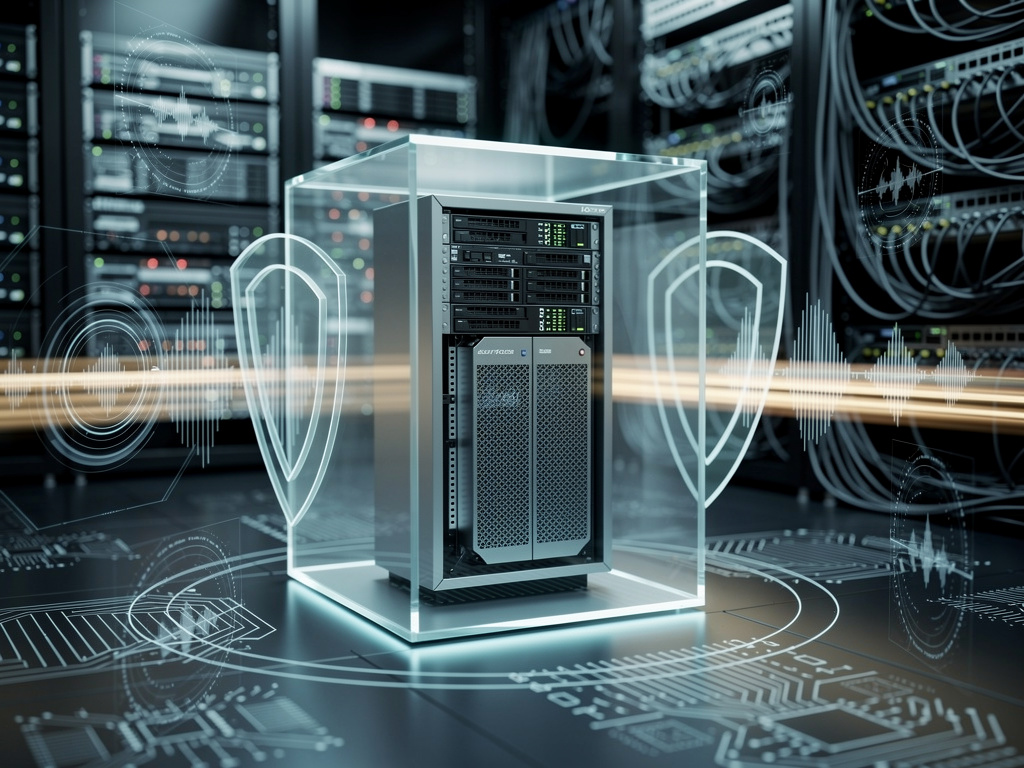
Air-gapped systems once stood as the gold standard for protecting sensitive information from digital threats. In an age where artificial intelligence models process vast quantities of data and generate sophisticated outputs, maintaining that isolation has grown far more complex. The article at sauleau.com/notes/airgap-security-for-the-modern-ai-age.html examines how organizations can adapt traditional air-gapping practices to counter risks introduced by modern AI technologies.
Air-gapping refers to the complete physical separation of a computer or network from any external connections. No cables, no wireless signals, no shared devices. Data moves only through human hands, typically via removable media that is carefully scanned and transferred under strict protocols. Governments, defense contractors, and research laboratories have relied on this approach for decades to safeguard classified materials and proprietary research.
The arrival of large language models and multimodal AI systems has changed the equation. These tools require enormous training datasets, frequent updates, and constant interaction with users who expect immediate responses. When such systems handle sensitive information, the temptation arises to connect them to broader networks for improved performance or easier maintenance. That connection, however, creates pathways for data exfiltration or malicious injection that traditional perimeter defenses cannot fully address.
One primary concern involves data leakage through seemingly innocent channels. AI models can inadvertently memorize fragments of training data and reproduce them when prompted in specific ways. If an air-gapped system trains on confidential documents, those models might later reveal pieces of that information when queried from an external network. Researchers have demonstrated multiple techniques for reconstructing training data from model outputs, making the isolation of the training environment only the first step in a longer protection process.
Another challenge stems from the hardware supply chain. Modern processors, memory modules, and storage devices often contain embedded controllers and management engines that operate outside the main CPU. These components can potentially communicate through radio frequencies, power fluctuations, or thermal variations even when the system appears completely disconnected. The sauleau.com article highlights how AI-enhanced monitoring tools can detect and interpret these subtle signals with increasing accuracy.
Physical transfer of data between air-gapped and connected systems remains a persistent vulnerability. USB drives, optical discs, and other removable media have historically served as vectors for malware such as Stuxnet, which crossed air gaps to damage industrial equipment. AI systems amplify this risk because they can analyze files at a semantic level, potentially identifying and extracting sensitive patterns that signature-based antivirus tools might miss. A single infected document containing embedded prompts could cause an AI model to behave in unexpected ways once loaded into an isolated environment.
Model extraction attacks present yet another dimension of risk. An adversary with limited access to an AI system can query it repeatedly to reconstruct a functional copy of the model on external hardware. This capability threatens intellectual property and could allow attackers to study the model’s weaknesses without ever breaching the physical perimeter. Organizations running sensitive AI workloads must therefore consider not only what data enters the air-gapped environment but also what information might leave through model behavior.
Temperature-based attacks illustrate the creativity of modern threats. By monitoring thermal patterns on a computer’s exterior, sophisticated equipment can infer processing activity and even reconstruct portions of the data being handled. AI algorithms excel at pattern recognition in noisy environments, turning what once seemed like random heat fluctuations into meaningful signals. Similar techniques apply to acoustic emissions from hard drives, power consumption variations, and electromagnetic radiation from cables or screens.
Defending against these vectors requires a layered approach that begins with hardware selection. Systems intended for true air-gapping should use older processors without active management engines when possible, or implement strict firmware controls that disable unnecessary components. Memory and storage devices need vetting for hidden communication channels. Some organizations opt for custom hardware designs that physically remove or disable wireless capabilities at the circuit level.
Network architecture plays an equally vital role. True air gaps mean no shared infrastructure whatsoever, including electrical systems that might conduct signals between isolated and connected environments. Separate power sources, distinct facilities, and physical barriers become necessary considerations. The notes from sauleau.com emphasize that many purported air-gapped systems fail these basic tests because they share facilities or maintenance procedures with connected networks.
Data transfer protocols demand equal attention. Rather than relying on standard USB drives, organizations might implement one-way optical data diodes that physically prevent any return traffic. Cryptographic signing of all transferred files, combined with rigorous inspection by multiple independent reviewers, adds necessary checks. Some facilities maintain entirely separate teams for handling air-gapped systems, ensuring that personnel with network access never touch isolated equipment.
AI-specific controls require new thinking. Models operating in air-gapped environments should undergo differential privacy training to reduce the likelihood of memorizing individual data points. Output filtering becomes essential, with additional models checking responses for potential leakage before they reach users. Regular auditing of model weights and behavior can detect unauthorized modifications or unexpected capabilities that might indicate compromise.
The human element cannot be overlooked. Personnel who work with air-gapped AI systems need comprehensive training on both traditional security practices and the unique risks posed by machine learning. This includes understanding how seemingly harmless prompts might extract information from models and recognizing signs of potential tampering. Background checks, strict access controls, and the principle of least privilege apply with particular force in these environments.
Monitoring and logging present their own complications in isolated settings. Without network connectivity, security teams must rely on local collection and periodic physical transfer of log data for analysis. This creates windows during which attacks might go undetected. Some organizations deploy secondary monitoring systems that record physical parameters like temperature, power draw, and electromagnetic activity to establish baselines and detect anomalies.
Emerging standards attempt to address these challenges. Various government and industry bodies have begun publishing guidelines specifically for securing AI systems in high-security environments. These documents stress the need for comprehensive threat modeling that accounts for both conventional cyber attacks and novel extraction techniques enabled by the AI systems themselves.
Despite these complications, air-gapping retains significant value for certain applications. Organizations handling the most sensitive data, whether related to national security, critical infrastructure, or groundbreaking research, continue to find that physical isolation provides a level of protection unmatched by software controls alone. The key lies in adapting the approach to account for the specific characteristics of modern AI rather than assuming that traditional methods will suffice without modification.
Implementation requires careful planning and substantial resources. Facilities must be designed or modified to support truly isolated operations. Equipment needs specialized configuration and ongoing maintenance by dedicated staff. Procedures for data transfer, model updates, and system monitoring must be documented, tested, and regularly reviewed. The investment is considerable, but for organizations where compromise could have catastrophic consequences, few alternatives offer comparable assurance.
Looking ahead, the relationship between air-gapping and AI will likely grow more intricate. As models become more capable and data grows more valuable, the pressure to find secure ways to combine isolation with advanced analytics will increase. New technologies such as optical computing or quantum-based systems may eventually change the fundamental assumptions underlying current air-gap practices. Until then, security teams must work with existing tools while maintaining constant vigilance against both known and emerging threats.
The sauleau.com notes make clear that effective air-gap security in the AI era demands more than simply unplugging computers. It requires a comprehensive rethinking of system design, operational procedures, and threat assessment methodologies. Organizations that approach this challenge systematically, with attention to both technical details and human factors, stand the best chance of protecting their most sensitive AI systems from compromise. The techniques may evolve, but the fundamental principle remains: when the stakes are highest, physical separation continues to serve as a powerful, if demanding, form of defense.


 WebProNews is an iEntry Publication