
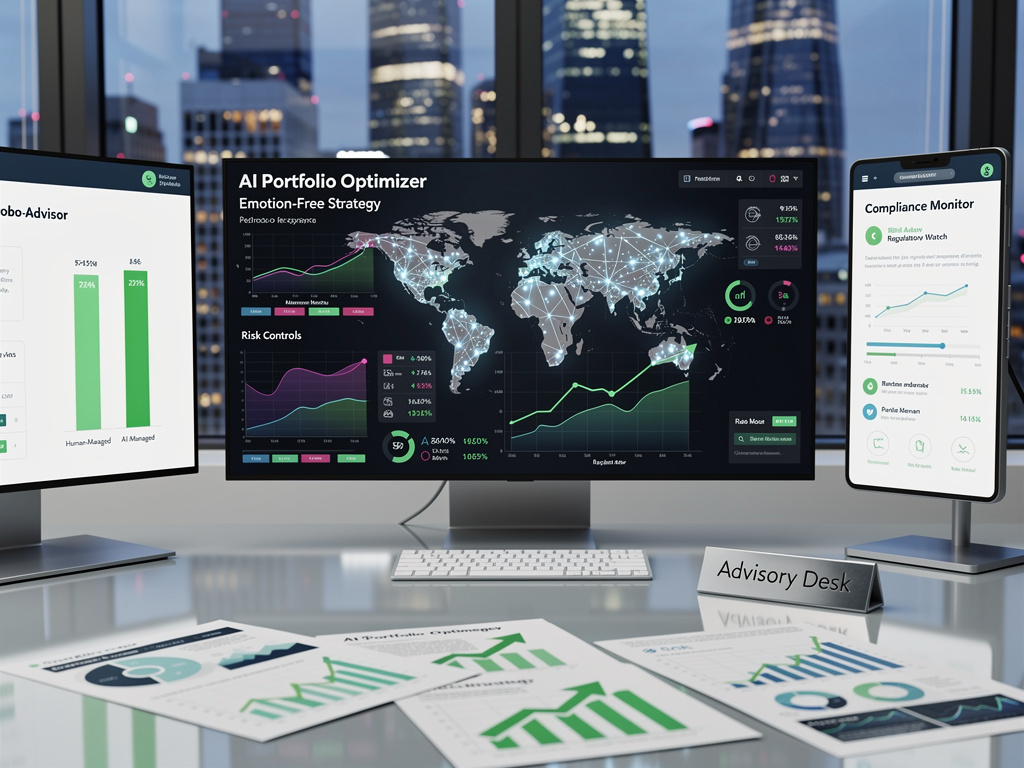
In the high-stakes world of personal finance, a veteran advisor with 34 years of experience is betting on artificial intelligence to deliver superior results. Kevin S. Gray, managing director at Gray Wealth Management, predicts AI tools will soon surpass human advisors by sidestepping emotional pitfalls that erode client portfolios. His views, shared in a recent Fox Business article, highlight a shift where algorithms could redefine how Americans manage their nest eggs.
Gray points to investor behavior as the Achilles’ heel of traditional advising. ‘Emotional decision-making destroys wealth,’ he states, arguing that humans often panic-sell during downturns or chase hot trends, leading to suboptimal returns. AI, by contrast, adheres strictly to data-driven strategies, potentially boosting long-term gains. This perspective gains traction amid robo-advisor advancements, with platforms like Betterment and Wealthfront already managing billions in assets through automated portfolios.
Recent web searches reveal accelerating momentum. A Vanguard Advisors analysis from October 2025 notes AI excels at automating routine tasks like rebalancing and tax-loss harvesting, freeing humans for complex emotional support. Yet Gray insists pure AI could dominate even there, processing vast datasets without fatigue or bias.
Robo-Advisors Evolve into Full-Service Engines
Robo-advisors have matured beyond basic indexing. Platforms now incorporate machine learning for personalized risk assessments and predictive analytics. For instance, Vanguard reports AI-driven tools achieving risk-adjusted returns competitive with human-managed funds, often at fractions of the cost—0.15% annual fees versus 1% or more for traditional advisors.
Posts on X echo this sentiment. Fox Business recently tweeted about AI financial advisors ‘coming and they may outperform the humans guarding your money,’ linking to Gray’s insights and garnering quick engagement. Meanwhile, a Forbes Advisor UK review from December 2025 ranks top robo-advisors, praising their algorithm-driven personalization amid UK market volatility.
Industry data supports the outperformance claim. A World Economic Forum piece from March 2025 questions if AI can replace human trust in wealth management but acknowledges algorithms’ edge in consistency. ‘AI financial advisers may soon outperform humans in wealth management decisions,’ Fox Business reiterated hours ago, citing Gray’s expertise.
Human Flaws Under the Microscope
Gray’s critique centers on behavioral finance. Investors underperform benchmarks by 1.5% to 4% annually due to emotions, per studies he references. AI eliminates this by executing predefined rules, such as dollar-cost averaging through market crashes. His firm already integrates AI for portfolio optimization, blending tech with oversight.
Counterviews exist. A CNBC article from early December quotes a top-ranked advisor warning that ‘turning to AI for money advice has risks… It’s ignoring the personal and emotional part of it.’ This underscores a hybrid future, where AI handles analytics and humans provide empathy.
Yet advancements tilt toward AI dominance. Microsoft’s industry blog predicts agentic AI—autonomous agents managing client requests—will transform services by 2026. Banking’s AI reckoning, per a PR Newswire report, forecasts synthetic data enabling hyper-accurate predictions.
Regulatory and Adoption Hurdles
Regulatory scrutiny looms. The SEC monitors AI in finance for transparency, especially after revelations of coordinated climate rules with benefiting AI firms, as Fox Business reported in 2023. New tools must prove fiduciary compliance, with explainable AI becoming mandatory.
Adoption surges regardless. Insight Partners notes financial services AI spending nearing $100 billion by 2027, driven by startups tackling legacy systems. In the UK, Forbes highlights robo-advisors’ hassle-free management suiting varied risk tolerances.
A World Economic Forum exploration from March probes trust: Can machines replicate advisor bonds? Early evidence from AI pilots suggests yes, with retention rates matching humans when returns excel.
Hybrid Models Gain Ground
Firms experiment with hybrids. ASU News details AI reshaping planning, emphasizing human judgment for nuances like estate goals. Palantir’s CTO, in a Fox Business segment, calls AI a ‘blue-collar revolution’ expanding workforces.
Predictions for 2026 abound. American Banker opines AI might make markets ‘boring’ by curbing speculation, while FTAdviser urges advisors not to ignore the shift. Musk’s vision of AI enabling ‘universal high income,’ tweeted by Fox Business, adds futurism.
Gray’s firm exemplifies integration. By leveraging AI for real-time stress testing, they mitigate downturn risks better than peers. Vanguard stresses thriving in this model requires embracing AI efficiency alongside client interactions.
Performance Metrics Tell the Tale
Hard numbers validate claims. Robo-advisors like Wealthfront report 2025 returns outpacing S&P 500 in volatile periods, per platform disclosures. A Alden Investment Group post explores adaptation, keeping human connection core while AI handles scale.
World Economic Forum’s June piece sees AI democratizing advice, aiding holistic plans for underserved clients. Microsoft’s predictors for success include scalable AI infrastructure, positioning leaders ahead.
As 2025 closes, the debate intensifies. Fox Business’s timely coverage captures a pivotal moment: AI not just competing, but poised to lead in safeguarding wealth.


 WebProNews is an iEntry Publication