
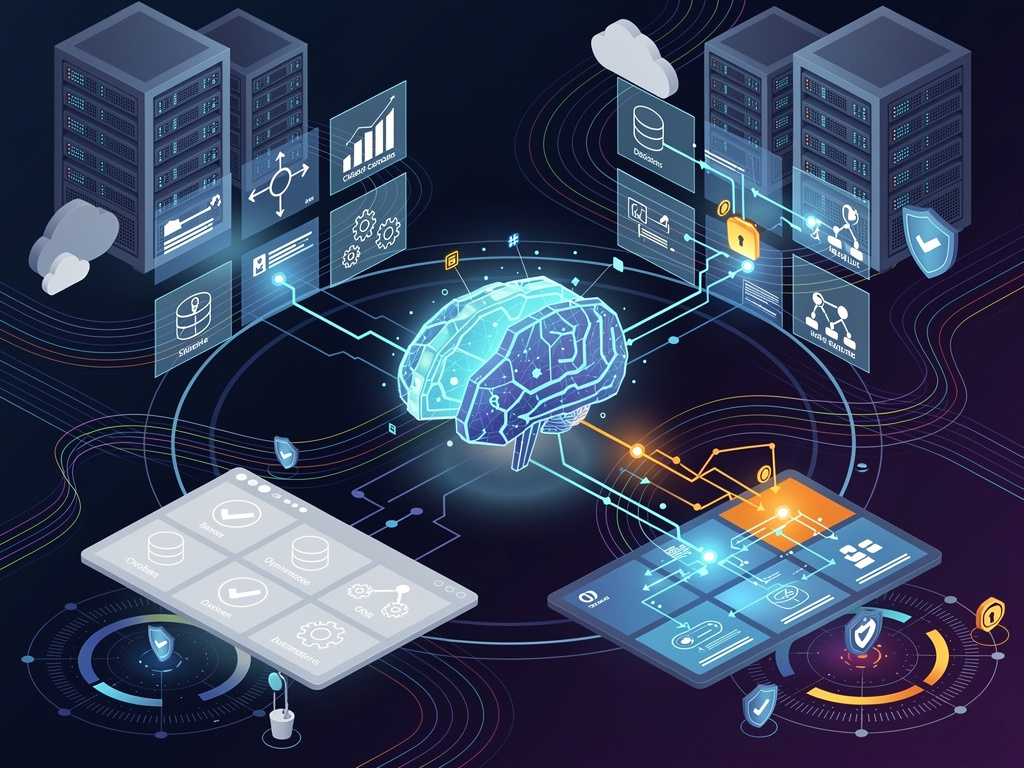
For years, enterprise resource planning software has been the unglamorous backbone of global business operations — tracking inventory, processing invoices, managing customer relationships, and keeping supply chains humming. Now, a new breed of artificial intelligence is poised to reshape how companies interact with these systems, and Microsoft is betting heavily that its Dynamics 365 platform will be at the center of the transformation.
The concept is called agentic AI, and it represents a fundamental departure from the chatbot-style AI assistants that have dominated enterprise software marketing over the past two years. Rather than simply answering questions or summarizing data, agentic AI systems are designed to act autonomously — making decisions, executing multi-step workflows, and even collaborating with other AI agents to complete complex business processes with minimal human oversight.
From Copilots to Autonomous Agents: A Structural Shift in Enterprise Software
According to ERP Software Blog, agentic AI matters for Dynamics 365 users because it moves beyond the passive assistance model that defined the first wave of AI integration into business applications. Where Microsoft’s Copilot features introduced in 2023 and 2024 could draft emails, generate reports, and surface insights when prompted, agentic AI takes the next step: it can monitor business conditions, identify when action is needed, formulate a plan, and carry it out across multiple systems.
The distinction is not merely academic. Consider a procurement scenario. A traditional AI assistant might alert a purchasing manager that a supplier’s lead time has increased. An agentic AI system, by contrast, could detect the delay, evaluate alternative suppliers based on historical performance data, draft a purchase order, route it for approval, and update downstream production schedules — all without waiting for a human to initiate each step. As ERP Software Blog notes, this kind of autonomous orchestration is what separates agentic AI from the generation of tools that preceded it.
Microsoft’s Strategic Positioning and the Copilot Studio Platform
Microsoft has been laying the groundwork for this shift for some time. The company’s Copilot Studio platform, which allows organizations to build and customize AI agents, has become a central piece of its Dynamics 365 strategy. Through Copilot Studio, businesses can create agents tailored to specific roles and processes — a collections agent that follows up on overdue invoices, a customer service agent that resolves common issues without human intervention, or a supply chain agent that continuously optimizes inventory levels.
The architecture Microsoft has chosen is notable for its modularity. Rather than delivering a single monolithic AI that attempts to handle everything, the company is encouraging customers to deploy specialized agents that can communicate with one another. This multi-agent approach mirrors how human organizations work: different specialists handle different tasks, coordinating through shared systems and protocols. For Dynamics 365 users, this means that agentic AI is not a single feature to be toggled on, but rather a design philosophy that will increasingly permeate every module of the platform.
Real-World Applications Across Finance, Supply Chain, and Customer Service
The practical applications of agentic AI within Dynamics 365 span virtually every business function. In finance, agents can automate the end-to-end accounts payable process — matching invoices to purchase orders, flagging discrepancies, processing payments, and updating general ledger entries. In customer service, agents powered by Dynamics 365 Customer Service can handle tier-one support requests, pulling data from CRM records, knowledge bases, and order management systems to resolve issues in real time.
Supply chain management may be where the impact is felt most acutely. ERP Software Blog highlights that agentic AI can continuously monitor demand signals, supplier performance, logistics data, and inventory positions to make proactive adjustments. Instead of relying on weekly planning cycles or manual exception management, organizations can deploy agents that respond to disruptions as they occur — rerouting shipments, adjusting safety stock levels, or escalating critical issues to human decision-makers when the situation warrants it.
The Governance Question: Autonomy Without Accountability Is a Liability
For all the enthusiasm surrounding agentic AI, enterprise technology leaders are raising pointed questions about governance, control, and risk. Granting AI agents the authority to execute transactions, modify records, and interact with external parties introduces a new category of operational risk. What happens when an agent makes a poor decision based on incomplete data? Who is accountable when an autonomous process produces an error that cascades through interconnected systems?
Microsoft has acknowledged these concerns by building approval workflows and human-in-the-loop checkpoints into its agent framework. Organizations can configure agents to operate fully autonomously for low-risk, high-volume tasks while requiring human approval for decisions above certain thresholds — a purchase order exceeding a dollar amount, for example, or a credit memo for a key account. The challenge, as many enterprise architects recognize, is calibrating these controls correctly. Too many checkpoints defeat the purpose of automation; too few create unacceptable exposure.
Data Quality and Integration: The Unsexy Prerequisites That Will Make or Break Adoption
Industry analysts and implementation consultants have been quick to point out that agentic AI is only as effective as the data it operates on. An autonomous agent that draws from incomplete, outdated, or siloed data will produce autonomous mistakes — at scale and at speed. For Dynamics 365 customers, this means that the prerequisite for successful agentic AI deployment is not just licensing the right software, but investing in data hygiene, master data management, and system integration.
This is where the reality of enterprise IT often collides with the promise of AI marketing. Many organizations running Dynamics 365 still contend with fragmented data across multiple instances, legacy integrations held together with custom code, and business processes that vary by region or division. Before an AI agent can autonomously manage order-to-cash or procure-to-pay, the underlying data and process standardization must be in place. As ERP Software Blog emphasizes, organizations that have already invested in cleaning up their Dynamics 365 environments and establishing strong data governance will be best positioned to adopt agentic AI quickly and effectively.
Competitive Dynamics: SAP, Oracle, and Salesforce Are Not Standing Still
Microsoft is not operating in a vacuum. SAP has been aggressively integrating its Joule AI assistant across its S/4HANA and Business Technology Platform offerings, with its own agentic capabilities under development. Oracle has embedded AI agents into its Fusion Cloud applications, particularly in financial planning and human capital management. Salesforce, meanwhile, has positioned its Agentforce platform as a direct competitor to Microsoft’s Copilot Studio, targeting the same enterprise customers who want AI agents that can act, not just advise.
The competitive pressure is accelerating the pace of development across the industry. For Dynamics 365 customers, this means that the agentic AI features available today are likely just the beginning. Microsoft’s quarterly release cadence for Dynamics 365 has already brought a steady stream of AI enhancements, and the company’s massive investment in OpenAI and its Azure AI infrastructure suggests that the pace will only increase. The question for enterprise buyers is not whether agentic AI will become a standard part of their ERP and CRM systems, but how quickly they can prepare their organizations to take advantage of it.
What Dynamics 365 Customers Should Be Doing Now
For organizations currently running Dynamics 365 — whether Business Central, Finance and Operations, or Customer Engagement — the strategic imperative is clear. First, assess the state of your data. Agentic AI amplifies whatever it finds: clean, well-governed data produces intelligent automation; messy data produces automated chaos. Second, identify the business processes where autonomous agents could deliver the highest return — typically high-volume, rules-based workflows with clear success criteria. Third, invest in change management. The introduction of AI agents that can act independently will require new operating models, new skills, and new ways of thinking about human-machine collaboration.
The shift toward agentic AI in enterprise software is not a distant possibility — it is happening now, release by release, agent by agent. For the tens of thousands of organizations that depend on Microsoft Dynamics 365 to run their operations, the window to prepare is narrowing. Those that treat agentic AI as merely another feature update risk falling behind competitors who recognize it for what it is: a structural change in how enterprise software works, and in what it can do without being asked.


 WebProNews is an iEntry Publication