
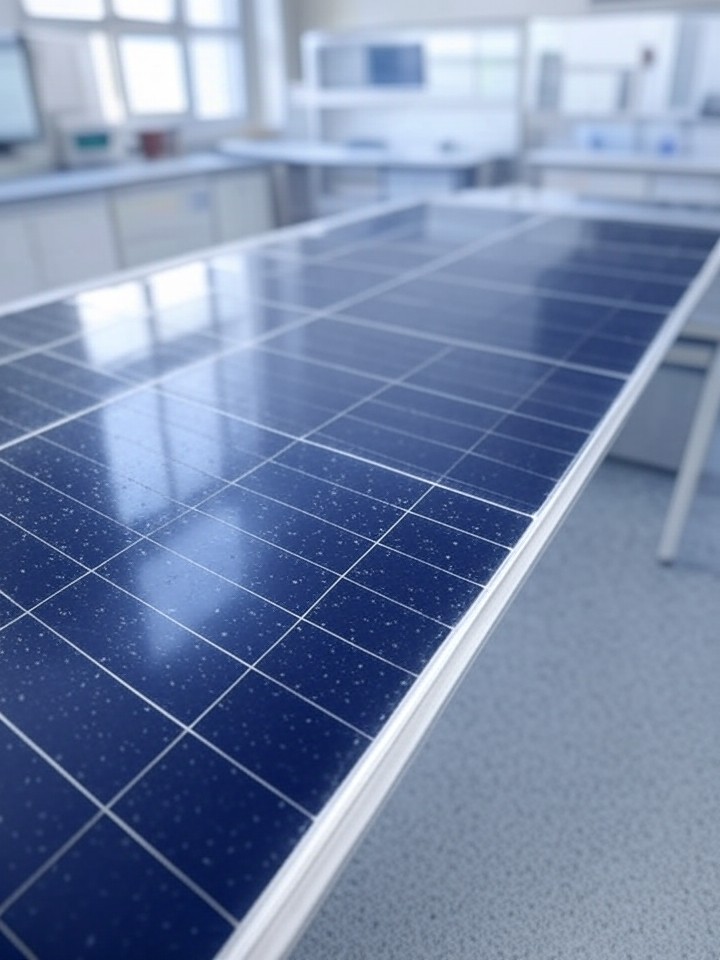
Revolutionizing Energy: The Dawn of Next-Gen Materials
In the relentless pursuit of cleaner energy, scientists are unveiling materials that could transform how we harness and store power. A recent study published in Advanced Sustainable Systems highlights breakthroughs in nanomaterials designed for efficient solar cells and batteries, promising to slash costs and boost performance. These innovations stem from interdisciplinary efforts combining chemistry, physics, and engineering, addressing the urgent need for sustainable alternatives to fossil fuels.
Researchers at leading institutions have developed perovskite-based materials that exhibit remarkable stability under harsh conditions, a key hurdle in renewable tech. The paper details how doping these materials with rare earth elements enhances their photovoltaic efficiency, potentially increasing energy conversion rates by up to 25%. This isn’t just theoretical; prototypes tested in lab settings show real-world applicability, drawing interest from industry giants eager to scale up production.
Beyond solar, the focus extends to energy storage. Advanced composites incorporating graphene and metal-organic frameworks (MOFs) are being engineered to create batteries with higher energy density and faster charging times. According to the study, these materials could double the lifespan of lithium-ion batteries while reducing reliance on scarce resources like cobalt, making electric vehicles more viable for mass adoption.
Bridging Lab Discoveries to Industrial Scale
Scaling these materials from lab benches to factories presents formidable challenges, yet progress is accelerating. The Advanced Energy Materials journal reports on similar advancements, where AI-driven simulations predict material behaviors, cutting development time significantly. By integrating machine learning, teams can iterate designs rapidly, identifying optimal compositions without exhaustive physical testing.
One standout example involves bio-inspired materials mimicking natural structures, such as lotus leaves for self-cleaning solar panels. This approach, detailed in recent publications, enhances durability in dusty environments, a common issue in desert solar farms. Industry insiders note that such innovations could lower maintenance costs by 30%, making renewable projects more economically attractive.
Collaboration between academia and corporations is fueling this momentum. Partnerships with companies like Doosan, as covered in a PR Newswire release, showcase integrated energy solutions that incorporate these advanced materials into AI-optimized systems, promising seamless transitions to green grids.
Unveiling the Role of AI in Material Innovation
Artificial intelligence is reshaping material science, with tools like SCIGEN enabling the design of substances with precise quantum properties. Posts on X from users like Dr. Singularity highlight how AI identifies material traits with minimal data, accelerating discoveries that once took years. This aligns with findings in Science magazine, which named renewable energy’s rise as the 2025 breakthrough, emphasizing China’s lead in deploying clean infrastructure at unprecedented scales.
In energy storage, AI-optimized thin-film dielectrics from the University of Houston, as reported on X by Tech Signals, reduce heat in chips, boosting efficiency for AI-driven energy management. These developments echo the Wiley study’s emphasis on covalent organic frameworks, which offer lightweight alternatives to traditional components, potentially revolutionizing portable power sources.
Moreover, magnetic transistors developed at MIT, spotlighted in MIT Technology Review, promise faster, more energy-efficient semiconductors. By integrating these with sustainable materials, the field is poised for semiconductors that consume less power, aligning with global efforts to curb electronic waste.
Overcoming Barriers in Material Durability
Durability remains a critical concern, as many advanced materials degrade over time. The Wiley paper addresses this by proposing hybrid composites that combine ceramics with flexible metals, enabling 3D-printed structures that absorb energy without defects. This mirrors a TechXplore post on X about a new composite merging ceramic strength with metal flexibility, ideal for industrial applications.
Environmental impacts are also under scrutiny. Researchers are exploring microporous materials like zeolites and activated alumina for carbon capture, as outlined in a market analysis from OpenPR. These substances not only store energy but also sequester emissions, offering dual benefits in the fight against climate change.
Frontiers in thermal energy storage, detailed in a Frontiers journal article, review emerging trends in phase-change materials that maintain efficiency across temperature fluctuations. Such innovations are crucial for stabilizing renewable sources like wind and solar, which vary with weather patterns.
Market Dynamics and Investment Surge
The advanced materials market is booming, with projections of a 4.6% compound annual growth rate driven by technological strides. An OpenPR report underscores this growth across sectors including aerospace and energy, where composites and ceramics lead the charge. Investors are pouring funds into startups focused on these technologies, recognizing their potential to disrupt traditional energy markets.
Geopolitical factors play a role too. China’s dominance in rare earth mining influences material availability, prompting Western nations to invest in alternatives. The Science magazine piece notes how this has spurred innovations in recycling and synthetic substitutes, reducing dependency on volatile supply chains.
Additive manufacturing is another game-changer, with 3D printing enabling custom material designs. An Engineering.com article reviews 2025’s progress, highlighting optimism amid challenges like material consistency. By addressing these, the industry could produce on-demand components for energy systems, slashing waste and costs.
Case Studies from Global Leaders
Real-world applications are emerging rapidly. In South Korea, Doosan’s CES 2026 showcase integrates advanced materials into AI-era energy solutions, blending nuclear and renewable tech for comprehensive portfolios. This builds on the PR Newswire coverage, illustrating how conglomerates are commercializing research findings.
MIT’s Evelyn Wang, as profiled in MIT Technology Review, is spearheading efforts to marshal expertise against climate challenges. Her role as VP for energy and climate underscores the institutional commitment to translating lab innovations into practical solutions, including advanced materials for efficient power grids.
On the materials front, self-healing polymers and high-performance alloys, mentioned in X posts by J_Grant_C, are gaining traction. These include aluminum-lithium alloys and graphene composites, which enhance strength while minimizing weight, ideal for wind turbine blades and solar frames.
Future Trajectories and Emerging Trends
Looking ahead, the integration of quantum computing with material design could unlock unprecedented capabilities. The Korean research team’s AI method, as shared on X by Dr. Singularity, uses scant data to predict properties, potentially leading to “sci-fi level” materials by the 2030s. This visionary outlook aligns with the broader push for sustainable energy.
Bio-based materials are another frontier, drawing from nature to create biodegradable alternatives. The Advanced Sustainable Systems study touches on this by advocating for eco-friendly synthesis methods that minimize environmental footprints during production.
International collaborations are vital, as seen in IMEC’s advanced packaging techniques from X posts by 포시포시, which enable denser, more efficient energy devices. By fostering global partnerships, the field can accelerate adoption and standardize best practices.
Sustainability at the Core of Innovation
Sustainability isn’t an afterthought; it’s embedded in these developments. The Wiley paper emphasizes lifecycle assessments to ensure materials contribute net positives to the environment. This holistic view is echoed in AZoM’s long read on collaboration in materials science, stressing interdisciplinary efforts for 2025’s keyword: teamwork in innovation.
Energy harvesting from ambient sources, like vibrations or heat, is gaining ground with piezoelectric materials. Frontiers’ comprehensive review explores these mechanisms, highlighting applications in wearable tech and remote sensors, expanding the scope of sustainable energy beyond large-scale grids.
As we navigate these advancements, ethical considerations arise. Ensuring equitable access to these technologies is crucial, preventing a divide between developed and developing nations. Industry leaders must prioritize inclusive strategies to democratize benefits.
Pushing Boundaries with Hybrid Approaches
Hybrid materials combining organics and inorganics are pushing boundaries. The Science magazine breakthrough article details how such fusions enhance renewable deployment, with China installing gigawatts of capacity annually. This scale inspires global emulation, driving down costs through economies of scale.
In additive manufacturing, AI-guided 3D printing yields ultra-light yet strong metals, as per Brian Roemmele’s X post referencing University of Toronto research published in Advanced Materials. These “impassable” metals could redefine infrastructure, from bridges to energy storage tanks.
Finally, the convergence of AI, materials science, and energy policy heralds a transformative era. With ongoing investments and research, as seen in LCGC International’s X post on 2025’s chromatographic innovations, analytical tools will further refine material purity, ensuring reliability in energy applications. This multifaceted progress positions advanced materials as the cornerstone of a sustainable future, where energy is abundant, clean, and accessible to all.


 WebProNews is an iEntry Publication