
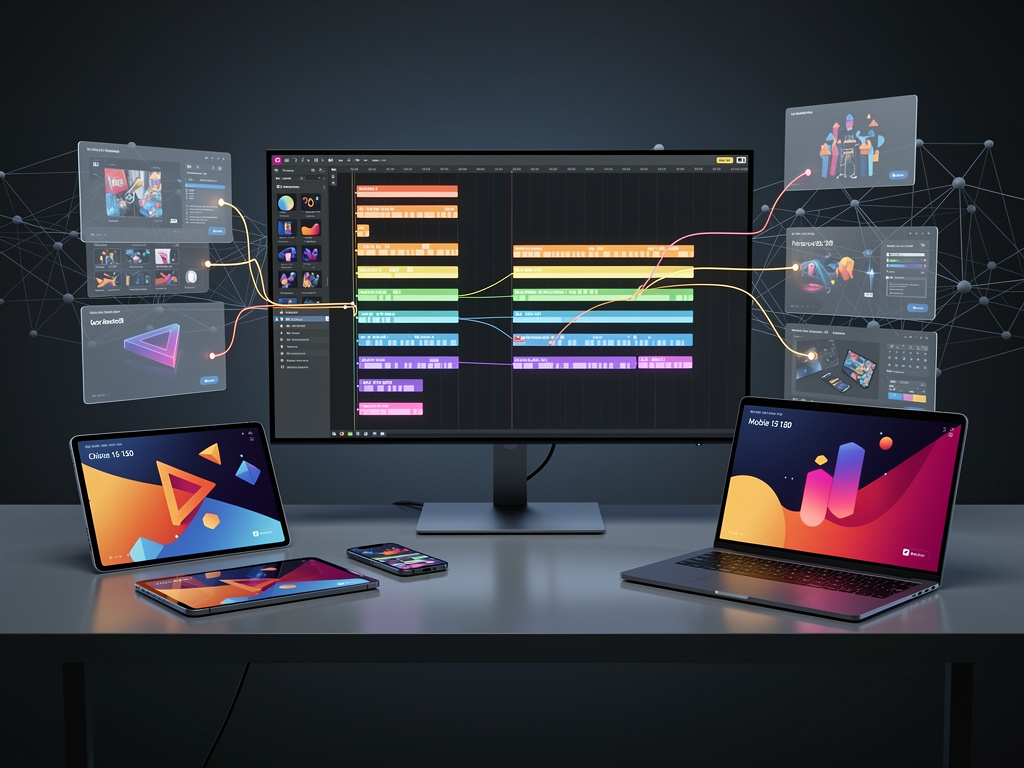
In an era where technology platforms rise and fall with dizzying speed, Adobe Animate stands as a remarkable testament to strategic evolution and market adaptation. Once known as Flash Professional, the software that powered an entire generation of web animation has not merely survived the death of its parent technology—it has thrived, carving out an indispensable niche in contemporary digital content creation.
The transformation of Adobe Animate from Flash Professional represents one of the most successful pivots in software history. When Adobe announced the end-of-life for Flash Player in 2017, industry observers predicted the demise of its authoring tool. Instead, Adobe executed a strategic repositioning that has seen Animate become increasingly relevant in an animation ecosystem dominated by HTML5, WebGL, and emerging platforms. According to TechRepublic, the software has found new life serving animators, game developers, and content creators who require a versatile tool capable of exporting to multiple modern formats.
The software’s resilience stems from Adobe’s decision to transform Animate into a format-agnostic animation platform rather than a Flash-specific tool. This strategic shift began in earnest around 2016, when Adobe rebranded Flash Professional to Animate CC, signaling a fundamental change in the product’s direction. The company invested heavily in developing export capabilities for HTML5 Canvas, WebGL, SVG, and video formats, effectively future-proofing the platform against the inevitable decline of Flash. This diversification strategy has proven prescient, as Animate now serves markets that didn’t exist during Flash’s heyday, including mobile game development, social media content creation, and interactive educational materials.
Market data suggests that Animate’s user base has not only stabilized but grown in specific segments. The rise of web-based animation for advertising, the explosion of animated content on social media platforms, and the continued demand for 2D game assets have all contributed to sustained demand. Professional animators particularly value Animate’s timeline-based workflow, which offers a more intuitive approach than code-heavy alternatives for certain types of projects. The software bridges the gap between simple GIF creators and complex 3D animation suites, occupying a sweet spot for creators who need sophisticated 2D animation capabilities without the overhead of learning entirely new paradigms.
The HTML5 Transition and Technical Renaissance
Adobe’s engineering teams faced a monumental challenge in transitioning Animate from a Flash-centric tool to a modern, multi-format authoring environment. The technical debt accumulated over Flash’s two-decade reign required careful unwinding while maintaining backward compatibility for the millions of existing Flash files. Engineers had to rebuild core rendering engines to support HTML5 Canvas output while preserving the familiar authoring experience that made Flash Professional popular. This balancing act required simultaneous innovation and preservation—a technical tightrope walk that few software companies have successfully navigated.
The HTML5 Canvas export feature has become Animate’s flagship capability, enabling creators to produce animations that run natively in modern browsers without plugins. This functionality extends beyond simple frame-by-frame animation to include interactive elements, complex vector graphics, and responsive designs that adapt to different screen sizes. Adobe implemented a JavaScript library called CreateJS that interprets Animate’s timeline and ActionScript-like code into browser-compatible JavaScript, effectively translating the Flash paradigm into modern web standards. This technical bridge has allowed countless animators to leverage their existing skills while producing contemporary, standards-compliant content.
Gaming Industry Adoption and Mobile Development
The mobile gaming sector has emerged as an unexpected stronghold for Adobe Animate, particularly among indie developers and small studios. The software’s ability to export sprite sheets, texture atlases, and animation data in formats compatible with Unity, Unreal Engine, and proprietary game engines has made it invaluable for 2D game asset creation. Developers appreciate Animate’s efficient workflow for creating character animations, UI elements, and particle effects that can be easily integrated into game development pipelines. The software’s vector-based approach also ensures that assets remain crisp across different screen resolutions, a critical requirement in the fragmented mobile device market.
Major gaming studios have incorporated Animate into their asset production workflows, though often alongside other specialized tools. The software excels at rapid prototyping and iteration, allowing artists to quickly test animation concepts before committing to final production. Its timeline-based interface enables traditional animators to work in familiar ways while producing assets optimized for real-time rendering engines. This versatility has positioned Animate as a complementary tool in sophisticated production pipelines rather than a comprehensive solution, but this niche role has proven sustainable and profitable.
Educational Markets and Accessibility
Educational institutions have maintained their investment in Adobe Animate, recognizing its value in teaching fundamental animation principles. The software’s relatively gentle learning curve compared to professional 3D packages makes it ideal for introducing students to concepts like timing, easing, and keyframe animation. Universities and vocational schools continue to include Animate in their curricula, particularly in programs focused on web design, digital media, and game development. This educational presence ensures a steady pipeline of new users familiar with the platform, creating a self-reinforcing cycle of adoption.
The accessibility features Adobe has integrated into Animate also deserve recognition. The software supports screen readers, keyboard navigation, and other assistive technologies, making animation creation more inclusive. Additionally, the relatively modest hardware requirements compared to 3D animation suites mean that Animate remains accessible to creators in developing markets and those with limited budgets. This democratization of animation tools has contributed to a diverse global user base that continues to find innovative applications for the software.
Social Media Content and the Creator Economy
The explosion of short-form video content on platforms like Instagram, TikTok, and YouTube has created unexpected demand for Animate’s capabilities. Content creators and social media managers use the software to produce eye-catching animated graphics, explainer videos, and branded content that stands out in crowded feeds. Animate’s ability to export directly to video formats while maintaining small file sizes makes it particularly well-suited for social media workflows where quick turnaround times and platform-specific optimization are paramount.
Marketing agencies have integrated Animate into their creative arsenals for producing animated advertisements, infographics, and interactive web experiences. The software’s vector-based approach ensures that branded content maintains visual consistency across different platforms and screen sizes. As businesses increasingly recognize the engagement benefits of animated content, demand for tools that can efficiently produce such materials has grown. Animate’s position in the Adobe Creative Cloud ecosystem also facilitates integration with other industry-standard tools like Photoshop, Illustrator, and After Effects, streamlining creative workflows.
Competition and Market Positioning
Adobe Animate faces competition from multiple directions, including open-source alternatives like Synfig Studio, specialized tools like Toon Boom Harmony, and web-based platforms like Rive. Each competitor offers distinct advantages: Toon Boom provides more sophisticated rigging and animation features for professional studios, while web-based tools offer collaborative features and lower barriers to entry. However, Animate’s integration with the broader Adobe ecosystem, combined with its versatility across output formats, provides competitive moats that have proven difficult for rivals to breach.
The pricing model for Animate, tied to Adobe’s Creative Cloud subscription service, has generated mixed reactions. While some users appreciate the continuous updates and cloud storage benefits, others lament the shift from perpetual licenses to recurring payments. This tension reflects broader industry debates about software monetization, but Adobe’s market position has allowed it to maintain its subscription approach despite criticism. The company periodically adds new features—including improved brush engines, advanced rigging tools, and enhanced export options—to justify ongoing subscription costs and maintain user engagement.
Future Trajectories and Emerging Technologies
Adobe continues to invest in Animate’s development, suggesting confidence in its long-term viability. Recent updates have focused on performance improvements, expanded export options, and integration with emerging technologies like augmented reality platforms. The company has also enhanced Animate’s scripting capabilities, allowing more sophisticated interactivity and procedural animation. These investments indicate that Adobe views Animate not as a legacy product to be maintained but as an active platform with growth potential.
The rise of WebAssembly, progressive web applications, and new web standards presents both opportunities and challenges for Animate. As browser capabilities expand, the potential applications for web-based animation grow correspondingly. Adobe’s challenge will be ensuring that Animate remains relevant as new technologies emerge and creator expectations evolve. The software’s track record of adaptation—from Flash to HTML5 and beyond—suggests that it possesses the organizational DNA necessary for continued evolution. Whether Animate can maintain its relevance for another decade remains uncertain, but its survival and growth in the post-Flash era demonstrate that well-executed strategic pivots can extend product lifecycles far beyond initial expectations.
The story of Adobe Animate illustrates broader lessons about technology adaptation and market evolution. Products that successfully navigate platform transitions typically share common characteristics: they solve enduring problems rather than exploiting temporary technological advantages, they maintain flexibility in implementation while preserving core value propositions, and they cultivate ecosystems that create switching costs for users. Animate embodies all these principles, having transformed from a tool for creating Flash content into a versatile animation platform that serves diverse markets and use cases. Its continued vitality in 2025 stands as a testament to strategic foresight and technical execution in an industry where obsolescence often arrives swiftly and mercilessly.


 WebProNews is an iEntry Publication