
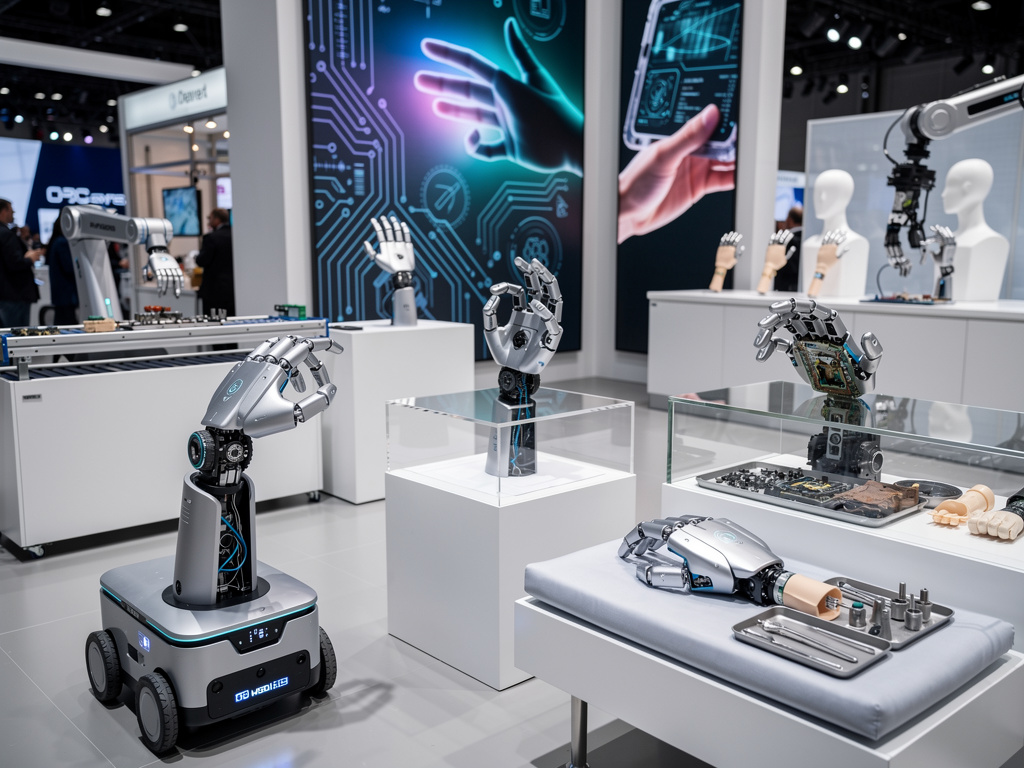
From Screen to Lab: The Rise of Thing-Inspired Robotic Hands in 2026
In the whimsical world of the Addams Family, Thing is more than a disembodied hand—it’s a clever, autonomous helper that scuttles across tables, snaps fingers, and performs tasks with eerie efficiency. Fast-forward to 2026, and this fictional appendage has inspired real-world robotics breakthroughs. Engineers and researchers are channeling Thing’s dexterity and mobility into robotic hands that promise to revolutionize industries from manufacturing to healthcare. This surge in innovation, highlighted at events like CES 2026, reflects a broader push toward more versatile, human-like manipulation in machines.
The catalyst for this trend is a new prototype unveiled earlier this year, dubbed the “WanderHand” by its creators at a Silicon Valley startup. Drawing directly from Thing’s roaming capabilities, WanderHand isn’t attached to a larger robot body. Instead, it operates independently, using tiny wheels and sensors to navigate surfaces while grasping objects with precision. According to reports, this device can pick up items from both sides, adjust grip strength on the fly, and even collaborate with other robots in swarm-like formations. Industry experts see it as a game-changer for tasks requiring fine motor skills in confined spaces.
But the inspiration goes beyond mere mobility. Developers have incorporated advanced tactile sensors that mimic human touch, allowing the hand to “feel” textures, weights, and movements in real time. This technology echoes posts from robotics enthusiasts on X, where users have shared videos of similar prototypes detecting subtle shifts in object positions. Such features address long-standing challenges in robotics, where rigid grippers often fail with delicate or irregularly shaped items.
Evolution of Dexterous Grippers
The journey to Thing-like robots began years ago, but 2026 marks a pivotal acceleration. At CES 2026, companies from China and South Korea showcased competing dexterous hand technologies, turning the event into a battleground for manipulation supremacy. One standout was AgiBot’s latest model, which integrates six-axis force and torque sensors in its fingertips. These allow the hand to adapt to objects of varying shapes and sizes, including slippery or round ones, much like Thing effortlessly handling props in the Addams Family films.
Coverage from Digitimes highlights the challenges still facing these innovations, such as high production costs and component reliability. Despite progress in degrees of freedom and control, scaling these hands for commercial use remains tricky. AgiBot’s team admitted that while their hand excels in lab settings, real-world durability—especially in dusty or humid environments—needs refinement. This candid assessment underscores the gap between prototype hype and practical deployment.
Meanwhile, social media buzz on X amplifies the excitement. Posts describe bioinspired designs, like flexible robotic fingers using internal cameras and multi-mirror optical systems to “see” around corners for better touch sensitivity. These innovations draw from nature, blending biology with engineering to create hands that not only grasp but also sense and adjust intuitively.
Applications in Everyday and Industrial Settings
Imagine a robotic hand scurrying across a hospital room to deliver medications or assisting in assembly lines by fetching small parts. That’s the vision propelling these developments. In manufacturing, Thing-inspired hands could reduce downtime by operating autonomously in hard-to-reach areas, such as inside machinery. A report from Bloomberg detailed how robots at CES 2026 demonstrated tasks like folding laundry and dealing cards, showcasing the potential for domestic and service industries.
Healthcare stands to benefit immensely. Prosthetic advancements, as noted in recent X discussions, combine machine learning with cameras and sensors to enhance grip strength for users. One innovative biohybrid hand, powered by biological neural networks, integrates touch and motor control for human-like sensitivity. This could transform lives for amputees, offering prosthetics that feel more natural and responsive than ever before.
Beyond individual applications, these hands are being integrated into full humanoid robots. For instance, Unitree’s models at CES featured advanced grippers that mimic human dexterity, complete with tactile sensors for fine manipulation. Such integrations, as explored in BGR, blend entertainment with utility, where one robot entertains while another handles chores.
Technical Hurdles and Breakthroughs
Delving deeper into the engineering, the core challenge lies in embodied intelligence—the ability of a robot to interact with its environment intelligently. CES 2026 emphasized standalone dexterous hands as the “last mile” in humanoid performance, per insights from Digitimes. South Korean firm Aidin Robotics unveiled a hand with built-in sensors that adapt grips dynamically, a feat praised in X posts for its real-time adjustments.
Breakthroughs in AI play a crucial role. Algorithms now enable robots to learn from simulations and transfer skills to the real world with zero-shot accuracy. An X post highlighted Cross-Embodied Co-Design, where robots design their own hands and refine control simultaneously. This self-optimizing approach accelerates development, reducing the need for human intervention in training phases.
Material science advancements also contribute. Soft robotics, inspired by biological structures, allow for flexible fingers that conform to objects without damage. A recent X share mentioned a soft robotic hand that “sees” what it touches via optical systems, enabling it to navigate complex scenarios like grasping around obstacles—reminiscent of Thing’s mischievous antics.
Market Dynamics and Competitive Pressures
The competitive arena is heating up, with Asia leading the charge. CES 2026 turned into a showdown between Chinese and South Korean innovators, as reported in Digitimes. Companies like Daimon Robotics from Hong Kong are pushing boundaries with hands that combine vision and tactile sensing for unprecedented precision. Their DM-Hand1, lauded in X discussions, detects textures and weight shifts, fundamentally altering robotic capabilities.
Economic factors influence this race. High costs of components, as noted in Digitimes coverage, pose barriers to widespread adoption. Startups are seeking partnerships with tech giants to scale production, while governments invest in robotics to boost automation in aging populations. In the U.S., firms are catching up, inspired by cultural icons like Thing to create marketable, user-friendly devices.
Consumer sentiment, gauged from X posts, mixes awe with caution. Videos of crawling robot hands grasping multiple objects evoke both delight and unease, echoing the creepy charm of the Addams Family. Yet, this fascination drives investment, with venture capital flowing into startups promising Thing-like autonomy.
Ethical Considerations and Future Trajectories
As these technologies mature, ethical questions arise. Who bears responsibility if an autonomous hand causes damage? Regulatory bodies are scrambling to address safety standards for roaming robots. Industry insiders, drawing from Bloomberg’s CES recap, emphasize the need for robust fail-safes to prevent mishaps in critical sectors like healthcare.
Looking ahead, integration with AI companions could see Thing-inspired hands becoming household staples. Imagine a device that not only picks up items but anticipates needs through machine learning. X buzz suggests evolving grippers for education and research, versatile enough for labs or classrooms.
Collaboration across borders might accelerate progress. Events like CES foster knowledge exchange, as seen in Engadget’s coverage of the show’s robots, from lovable to confusing. Engadget captured the spectrum, including AI-powered pets and chore assistants, hinting at a future where robotic hands blur lines between tool and companion.
Innovation Inspired by Fiction
The Addams Family’s Thing, once a Hollywood gimmick, now symbolizes robotics’ creative spark. Developers at startups, as per The New York Times, have created a “very capable robotic picker-upper” that grasps from both sides and roams freely, directly nodding to the iconic hand.
This fusion of pop culture and tech isn’t new, but 2026’s advancements make it tangible. From Atlas’s dexterous mimics, shared on X, to biohybrid systems in journals like Biomimetics, the field is expanding rapidly. Challenges persist, yet the momentum suggests Thing-inspired hands will soon be as commonplace as smartphones.
In manufacturing hubs, these hands could optimize workflows, reducing human error in repetitive tasks. Healthcare applications might include surgical assistants that navigate tight spaces with precision, enhancing outcomes. The New York Times article underscores this potential, portraying a life resembling the Addams Family’s quirky household.
Global Impact and Adoption Strategies
Globally, adoption varies. In Asia, where labor shortages loom, governments subsidize robotic integration. Europe focuses on ethical AI, ensuring hands comply with data privacy laws. The U.S. leverages cultural appeal, marketing these devices as fun, functional gadgets.
Training programs are emerging to prepare workforces for robot-assisted environments. Universities incorporate dexterous hand tech into curricula, fostering the next generation of engineers. X posts from educators highlight versatile grippers for research, bridging theory and practice.
Ultimately, the trajectory points to ubiquitous integration. As costs drop and reliability improves, Thing-like hands could redefine interaction with machines, making autonomy a everyday reality. Bloomberg’s insights from CES illustrate this shift, with robots performing mundane tasks effortlessly.
Pushing Boundaries in Robotics Design
Design philosophies are evolving too. Emphasis on modularity allows hands to attach to various bodies or operate solo, increasing versatility. Innovations like those from Sharpa, mentioned in BGR, feature advanced hands for humanoid entertainment robots, blending utility with spectacle.
Sustainability enters the equation, with eco-friendly materials reducing environmental impact. Researchers explore recyclable polymers for fingers, aligning with global green initiatives.
The road ahead involves iterative improvements, informed by user feedback and real-world testing. As X sentiment indicates, the public’s mix of excitement and skepticism will shape refinements, ensuring these hands are not just capable but also trustworthy.
In reflecting on this wave of innovation, it’s clear that fiction like the Addams Family has ignited practical genius. The robotic hands of 2026, roaming and grasping with newfound intelligence, herald a era where machines assist in ways once imagined only in stories.


 WebProNews is an iEntry Publication