
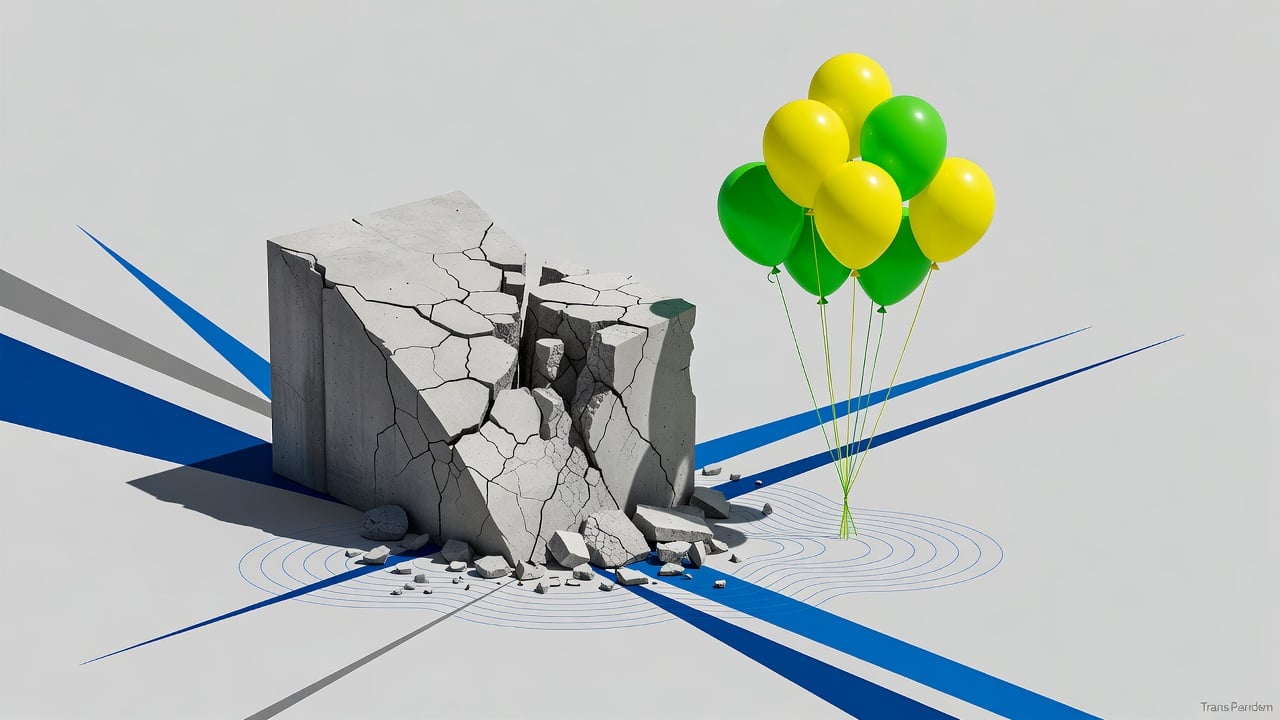
Early on the morning of July 17, construction crews at a Microsoft data center site in Amsterdam’s port area discovered something unusual. Balloons filled with a corrosive mix had been hurled over the perimeter fence overnight. The liquid seeped into freshly poured concrete foundations. Steel rebar began to show early signs of accelerated rust.
Extinction Rebellion claimed responsibility. The group didn’t hack servers or breach networks. They attacked the physical structure itself. With balloons. Filled with hydrogen peroxide, acetic acid, salt and acrylic paint. The combination, they said, weakens concrete and speeds corrosion of embedded steel.
This wasn’t random vandalism. It forms part of a widening resistance to the explosive growth of data centers that power artificial intelligence systems. And it happened on the very day when news outlets began reporting the details. Techwerkers broke the story, quoting Extinction Rebellion spokesperson Martijn Dekker directly.
“I think it shows how the movement evolves,” Dekker told the publication. “You need to keep looking for what resonates with people. What’s effective. To target Microsoft in this way, it’s something that many people can understand.”
Simple words. Yet they capture a shift. From highway blockades against fossil fuel subsidies to direct intervention at tech construction sites. Extinction Rebellion Netherlands had blocked the A12 motorway more than 40 times since 2022. Now they target the infrastructure behind AI development.
The timing feels deliberate. A separate group, Geef Tegengas, had already disrupted the same site in June. They occupied entrances and machinery. Construction halted for much of the day. The acid attack builds on that momentum. It raises the stakes.
One Microsoft facility in the Dutch town of Middenmeer already consumes 1% of the entire country’s electricity supply. NRC reported the figure this week. The numbers stun. A single building. Such a massive draw. And nearly all of it tied to the AI boom.
Water scarcity compounds the problem. The Netherlands faces an acute shortage. Data centers require enormous volumes for cooling. Residents see the trade-off clearly. Resources diverted to generate what many call meaningless output. Training models that produce slop. While workers face layoffs.
The AI hype cycle gets blamed for much of this. Companies cite massive compute needs. They justify new facilities. They also cite those needs when cutting staff. The pattern repeats across the industry. Build more. Employ fewer. Consume greater shares of power and water.
But the opposition isn’t limited to the Netherlands. A global movement gains strength. In the United States, local groups have disrupted at least 75 data center projects worth around $130 billion so far in 2026. The Data Center Watch Q1 2026 report tracks these actions. It shows organized resistance spreading.
Construction sites prove vulnerable. Perimeter fences. Open foundations before buildings rise. Nighttime offers cover. Balloons deliver chemicals without direct entry. Low-tech. Yet potentially effective. The mixture doesn’t destroy overnight. It compromises long-term integrity. Repair costs could run high. Delays mount.
Microsoft has remained quiet on the incident. No immediate statement appeared in Dutch or international coverage. The company continues aggressive expansion. AI demands it. Hyperscale facilities multiply. Each one pushes energy grids and water systems harder.
Workers inside the tech sector voice similar concerns. Many oppose the direction. Layoffs linked to AI efficiencies feel particularly bitter. The same technology that replaces them also drives the need for more data centers. A strange loop.
Dekker senses the public mood changing. Open BlueSky or local forums. Complaints about data centers fill feeds. Water waste. Power consumption. Environmental toll. The conversation accelerates.
“The discussion is picking up fast,” he noted. “Everyone seems to be complaining about them.”
His group sees an opportunity. Direct action that people understand. Not abstract policy debate. Concrete results. Or in this case, damaged concrete.
The chemical recipe bears mention. Hydrogen peroxide promotes rapid oxidation of steel. Acetic acid etches concrete. Salt accelerates both processes. Acrylic paint might help the mixture stick or mark targets. Activists threw the balloons from outside the fence. No breach. No confrontation with security.
Experts in materials science recognize the threat. Such attacks could shorten a structure’s lifespan significantly. Foundations matter most. Compromise them and the entire project faces redesign or reinforcement. Expensive. Time-consuming.
This incident differs from typical cybersecurity threats. No code exploited. No ransomware. Physical sabotage instead. It exposes another dimension of risk for AI infrastructure. One that companies may have underestimated.
Construction security often focuses on theft or trespassing. Not chemical attacks from a distance. Fences and cameras offer limited protection against balloons. New protocols may emerge. Guards. Night patrols. Chemical sensors. Yet the bar for entry stays low.
Broader questions surface. How far will activists go? Will similar actions spread to other countries? The US already sees significant pushback. Europe follows. Asia could come next as hyperscalers build everywhere.
Public sentiment appears to tilt against unchecked expansion. Environmental costs feel immediate. Power prices rise. Water restrictions tighten. AI benefits seem distant or trivial by comparison. Chatbots. Image generators. Tools that many view as novelties rather than necessities.
Tech workers themselves grow restless. The Tech Workers Coalition, which published the original report, represents part of that unease. Their coverage links the environmental fight with labor concerns. Two sides of the same coin.
Microsoft’s plans in the Netherlands extend beyond this one site. Multiple facilities are in development or operation. Each faces potential scrutiny. Each draws resources that locals increasingly question.
The acid attack succeeds on a symbolic level at minimum. It forces conversation. It demonstrates vulnerability. And it joins a pattern of escalating tactics. From protests to occupations to material sabotage.
Whether it materially delays the project remains unclear. Testing would be needed to assess damage depth. Microsoft might simply pour new foundations. Or they might not. The uncertainty itself creates friction.
One thing looks certain. The era of unchallenged data center construction is ending. Communities push back. Activists take risks. Governments may soon face pressure to regulate or restrict new builds.
AI development won’t stop. Demand for compute continues rising. But the physical infrastructure that supports it has become a battleground. Foundations are literal and figurative targets now.
Extinction Rebellion plans further actions. Dekker’s comments suggest evolution, not retreat. Other groups watch closely. The playbook spreads.
For an industry racing toward artificial general intelligence, these interruptions might seem minor. Yet they accumulate. Costs rise. Timelines slip. Public license erodes.
So the balloons fly. The mixture spreads. And the foundations of the AI boom show their first visible cracks.


 WebProNews is an iEntry Publication