
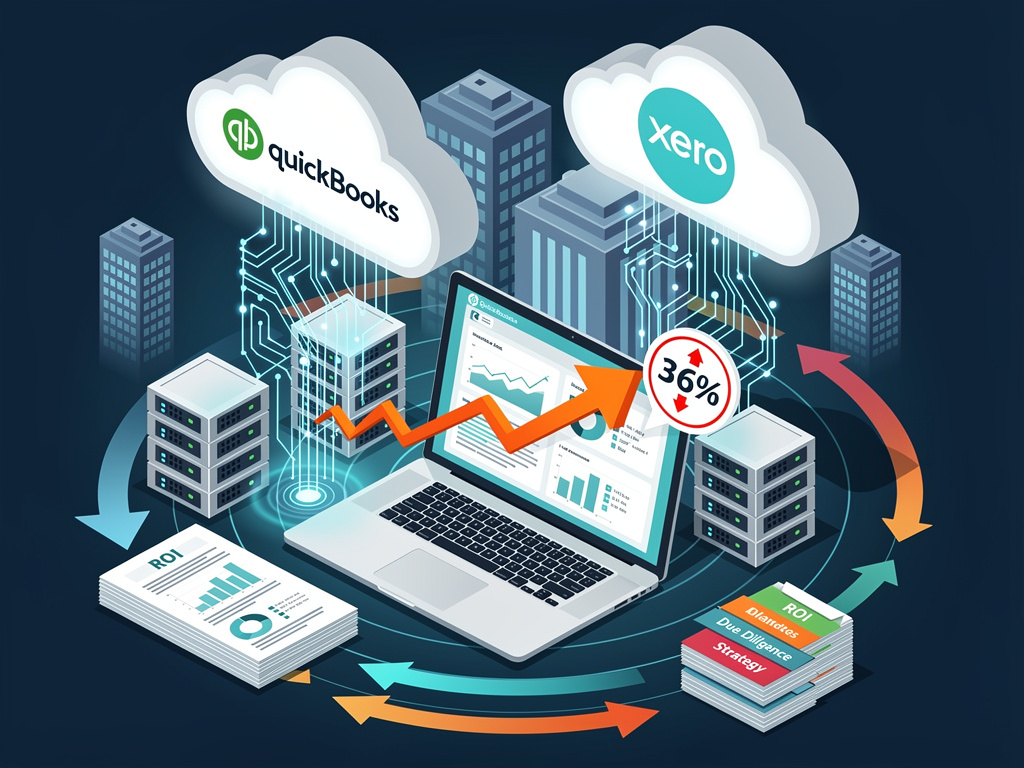
Small and medium-sized businesses face a pivotal moment in financial management as economic pressures, talent shortages, and artificial intelligence reshape purchasing decisions. A survey of 3,385 software buyers across 11 countries reveals accountants are uniquely prone to post-purchase regret, with 36% discovering better fits after initial investments, far exceeding other sectors. Inflation hit 55% of accountants hardest in 2025, while interest rates, market swings, and tariffs affected about 40%, per Software Advice.
Over half of accounting buyers anticipate client acquisition hurdles and staff skills gaps in 2026, with 45% citing talent management and shifting customer demands as top worries. Yet, 49% are recalibrating operations around technology, especially AI, where 36% earmark it for major spending. As many as 94% plan AI-inclusive software buys, and 24% aim for bold integration of generative AI, predictive analytics, and automation tools.
Navigating Economic Turbulence
External forces demand sharper financial oversight. Buyers should prioritize platforms offering analytical insights, expense monitoring, budgeting, forecasting, and tax tools to spot cost shifts early. Sales management features like enablement, tracking, and forecasting can counter revenue squeezes amid rising expenses, according to Capterra.
Marketing and CRM adoption stands at 55% among accountants, with 53% eyeing HR software and 26% targeting learning management systems for 2026. These investments address internal voids, but rushed selections amplify risks in a field where only 56% report satisfactory outcomes.
Internal frictions compound the strain. More than 50% foresee client wins and training deficits as barriers, pushing firms toward centralized customer tools for retention and streamlined communications. Thorough preparation—defining objectives, budgets, and risks—cuts mismatch odds.
AI’s Bold Surge
Artificial intelligence moves from experiment to necessity. “Accountants have been early tech adopters for decades, but it has resulted in constantly growing tech stacks—clunky, fragmented tools that create more work than they eliminate,” notes Accounting Today. Consolidation favors versatile platforms with embedded AI over standalone gimmicks.
Tammy Coley, chief transformation officer at BlackLine, predicts heavy governance focus: “In 2026, AI must pay for itself, just like any other capital investment.” Davis Bell, CEO of Canopy, dubs it “ambient AI,” seamlessly enhancing workflows without fanfare.
Jarrod Randall of Xero adds, “I think that will come to fruition across the industry.” Predictive tools like Intuit’s QuickBooks Predict leverage machine learning for cash flow forecasts, vital as the SMB accounting market swells from $17.38 billion in 2024 to $31.76 billion by 2033 at 7.3% CAGR, reports Business Research Insights.
Market Momentum Builds
Global accounting software hits $23.1 billion in 2026, surging to $50.79 billion by 2035 at 9.15% CAGR, fueled by cloud and AI, per Precedence Research. Cloud commands 68% share, prized for remote access and updates. Small business variants grow from $24.45 billion in 2026 to $58.08 billion by 2035 at 11.4% CAGR.
QuickBooks Online dominates SMB picks for balancing power and ease, per ZDNet and PCMag. Its bank-feed automation excels at categorization and duplicate detection. Xero shines for novices with step-by-step guides and multi-currency support, ideal for global operations.
FreshBooks suits service firms with invoicing and project tracking, while Wave offers free basics for microbusinesses. Zoho Books provides affordable automation, and Sage Intacct scales for growth. Integrations with Shopify, PayPal, and Salesforce unify stacks, notes ERP Peers.
Buyer Pitfalls and Safeguards
Accountants lag global averages in goal-setting, budgeting, and risk checks, per Software Advice charts. This underpreparation fuels 36% regret rates. “Members of the accounting sector are more likely to misjudge a software purchase compared to buyers from other industries,” warns Capterra.
Compatibility checks ensure AI meshes with legacy systems, securing data flows and staff readiness. Mobile access, real-time reporting, and predictive analytics trend upward, with over 70% of pros using smartphones for tasks, says amnis.
Over 80% of SMBs now run cloud systems, ditching on-premise for flexibility and savings. Embedded finance—lending, payments—emerges in platforms, boosting advisory roles. X posts echo QuickBooks and Xero as staples, with AI bookkeeping tools like Zoho and Tally gaining traction.
Strategic Plays Ahead
For volatility, deploy expense and tax trackers; for talent woes, LMS and HR suites; for AI, verify interconnectivity. “AI will put CAS on every accountant’s menu in 2026,” predicts Adam Orentlicher of Wolters Kluwer in Accounting Today, freeing pros for advisory.
Justin Pulgrano of Crunchafi foresees stack shrinkage: “AI will hasten the consolidation… from a host of standalone point solutions to core work platforms.” Gartner pegs financial management software at $24.4 billion by 2026.
Success hinges on diligence. Define needs, assess integrations, train teams, and pilot options. As 90% of finance teams adopt AI by year-end per Gartner, proactive buyers will thrive amid disruption.


 WebProNews is an iEntry Publication