
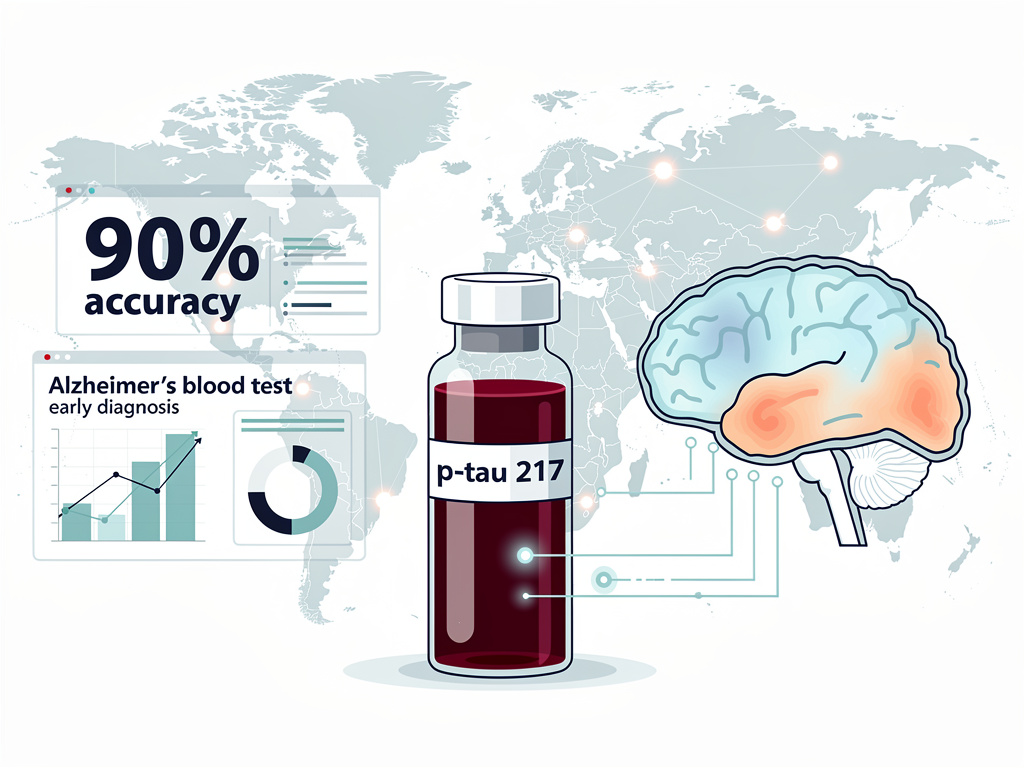
For decades, diagnosing Alzheimer’s disease with confidence has required either an expensive PET brain scan costing upward of $5,000 or an invasive lumbar puncture to collect cerebrospinal fluid. Both procedures are uncomfortable, costly, and often inaccessible to patients in rural or underserved communities. Now, a growing body of research suggests that a straightforward blood test—combined with basic clinical information—can match or even exceed the diagnostic accuracy of these gold-standard methods, potentially transforming how the disease is detected and treated across the globe.
A major study published in February 2026 in Nature Medicine found that blood-based biomarkers, when paired with readily available patient data such as age, sex, and the presence of the APOE4 genetic risk factor, achieved diagnostic accuracy rates above 90% in identifying Alzheimer’s pathology. The research, reported by Medical Xpress, represents one of the largest validation efforts to date and could accelerate the shift away from expensive imaging and invasive testing toward accessible, scalable screening tools.
The Science Behind the Blood-Based Approach
The study centered on a blood biomarker known as the phosphorylated tau 217 (p-tau217) ratio, which measures specific forms of the tau protein associated with Alzheimer’s pathology. Elevated levels of p-tau217 in the blood have been shown in multiple studies to correlate strongly with the amyloid plaques and tau tangles that define the disease at a molecular level. When researchers combined p-tau217 measurements with basic demographic and genetic information—specifically, patient age, sex, and APOE4 carrier status—they found that the resulting diagnostic model performed with remarkable precision.
According to the findings reported by Medical Xpress, the combined approach correctly identified patients with Alzheimer’s pathology more than 90% of the time across multiple independent cohorts, including diverse populations from the United States, Europe, and Asia. This level of accuracy is comparable to what PET scans and cerebrospinal fluid analysis deliver, but at a fraction of the cost and without the procedural burden. The researchers noted that the inclusion of APOE4 status was particularly important, as carriers of this genetic variant are known to have significantly higher lifetime risk for developing the disease.
Why Cost and Accessibility Matter Now More Than Ever
The timing of these findings is not incidental. The U.S. Food and Drug Administration has approved several anti-amyloid therapies in recent years, including lecanemab (marketed as Leqembi) and donanemab (marketed as Kisunla), both of which target the amyloid plaques that accumulate in the brains of Alzheimer’s patients. These drugs require confirmation of amyloid pathology before they can be prescribed, meaning that accurate, accessible diagnostic tools are now a clinical necessity rather than merely a research aspiration.
Currently, the bottleneck is stark. PET scan capacity is limited, with many regions lacking the specialized facilities and radiotracer supply chains needed to perform amyloid imaging. Lumbar punctures, while less expensive than PET scans, require trained specialists and carry risks that make many patients reluctant to undergo the procedure. A validated blood test that can be administered in a primary care office and processed by a standard clinical laboratory would dramatically expand the pool of patients who can be screened, diagnosed, and, where appropriate, treated with the new generation of disease-modifying therapies.
The Scale of the Alzheimer’s Diagnostic Challenge
The numbers underscore the urgency. The Alzheimer’s Association estimates that more than 6.9 million Americans aged 65 and older are living with Alzheimer’s dementia, a figure projected to reach nearly 13 million by 2050 absent a major therapeutic breakthrough. Globally, the World Health Organization places the number of people living with dementia at more than 55 million, with Alzheimer’s accounting for 60% to 70% of cases. The vast majority of these individuals have never received a biomarker-confirmed diagnosis.
In many clinical settings today, Alzheimer’s is still diagnosed primarily on the basis of cognitive testing and clinical judgment—methods that are subjective, often late in the disease course, and prone to misdiagnosis. Studies have shown that clinical diagnosis alone can be wrong in 20% to 30% of cases, with conditions such as frontotemporal dementia, vascular dementia, and depression frequently confused with Alzheimer’s. A blood-based biomarker test that can be deployed early and widely has the potential to reduce these errors substantially and ensure that patients receive appropriate care sooner.
Industry and Investor Implications
The commercial stakes are significant. Several diagnostics companies are racing to bring validated Alzheimer’s blood tests to market. C2N Diagnostics, based in St. Louis, already offers a commercially available p-tau217 blood test called PrecivityAD2, which has been used in clinical trials and is available to physicians by prescription. Roche Diagnostics and Fujirebio have also developed assays targeting p-tau217 and related biomarkers, and both companies have been working with regulatory agencies to secure broader clinical approval.
For pharmaceutical companies marketing anti-amyloid therapies, the availability of a low-cost screening tool could dramatically expand the addressable patient population. Eisai and Biogen, co-developers of Leqembi, have acknowledged that diagnostic access is one of the primary barriers to uptake of their drug. Eli Lilly, which markets Kisunla, faces similar constraints. If blood tests can reliably identify patients with amyloid pathology, the commercial potential of these therapies—already projected to generate billions in annual revenue—could grow substantially.
Challenges and Caveats That Remain
Despite the promising results, several important questions remain unanswered. One concern is how well blood-based biomarkers perform in populations that have historically been underrepresented in Alzheimer’s research, including Black and Hispanic patients, who are disproportionately affected by the disease. The study reported by Medical Xpress included diverse cohorts, which is encouraging, but experts caution that further validation in real-world clinical settings is essential before these tests can be universally adopted.
Another challenge is standardization. Different assay platforms may produce slightly different results, and the field has not yet settled on universal cutoff values that define a positive or negative test. The Alzheimer’s Association and the Global Biomarker Standardization Consortium have been working to address this issue, but harmonization across laboratories and manufacturers will take time. Additionally, there are questions about how blood biomarker results should be communicated to patients, particularly in cases where a positive result indicates elevated Alzheimer’s risk but the individual is not yet symptomatic.
What Primary Care Physicians Need to Know
For the primary care physicians who will ultimately be responsible for ordering and interpreting these tests, the shift represents a fundamental change in practice. Alzheimer’s diagnosis has traditionally been the province of neurologists and geriatric specialists, but a blood test that can be drawn in any doctor’s office will push screening and early detection into the front lines of medicine. Professional societies, including the American Academy of Neurology and the Alzheimer’s Association, are expected to update their clinical guidelines as the evidence base for blood-based biomarkers continues to grow.
Education and training will be essential. Primary care providers will need to understand not only how to interpret p-tau217 results in the context of patient demographics and genetic risk factors, but also how to counsel patients about the implications of a positive result—including the availability of disease-modifying therapies, the importance of advance care planning, and the psychological impact of an Alzheimer’s diagnosis. The integration of blood-based biomarkers into routine clinical workflows will require investment in both infrastructure and physician education.
The Road Ahead for Alzheimer’s Diagnostics
The convergence of effective therapies and accessible diagnostics represents a turning point in the fight against Alzheimer’s disease. For the first time, there is a realistic pathway to identifying patients early, confirming their diagnosis with a simple blood draw, and initiating treatment that may slow the progression of cognitive decline. The study published in Nature Medicine and reported by Medical Xpress adds substantial weight to the argument that blood-based biomarkers are ready for clinical prime time.
Still, the transition from research validation to widespread clinical deployment will not happen overnight. Regulatory approvals, insurance coverage decisions, laboratory standardization, and physician education all represent hurdles that must be cleared. But the direction of travel is clear: the era of diagnosing Alzheimer’s disease through costly, invasive, and inaccessible procedures is drawing to a close. In its place, a new model of early, affordable, and accurate detection is emerging—one that could reshape not only clinical practice but the broader economics of dementia care for decades to come.


 WebProNews is an iEntry Publication