
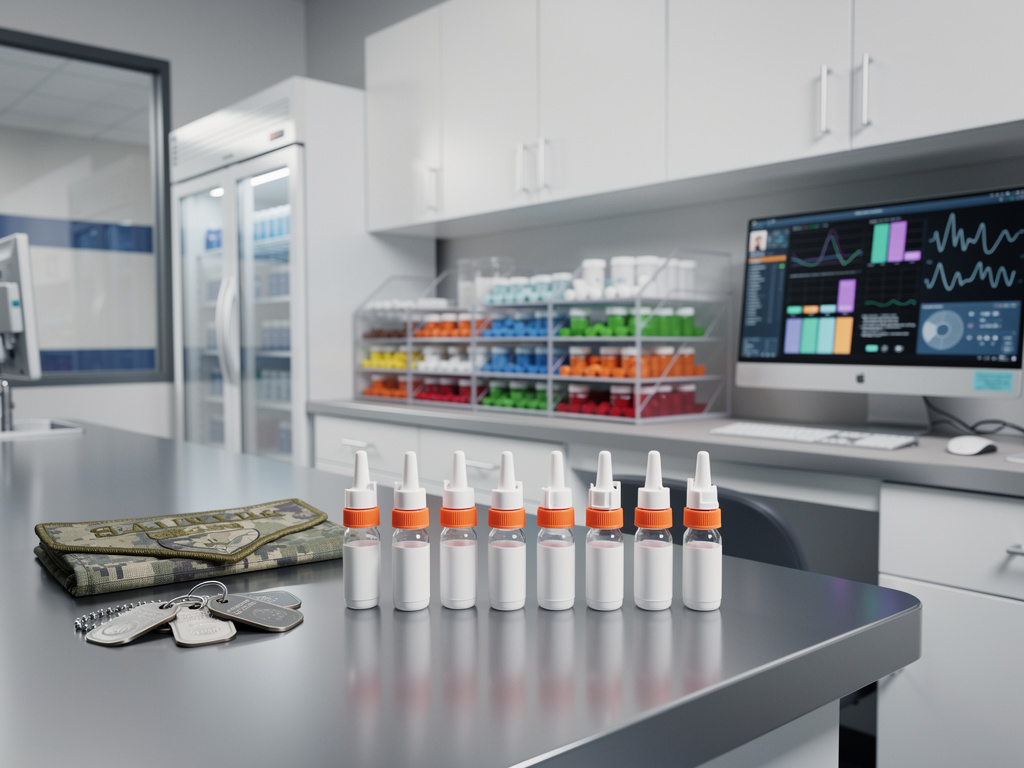
The opioid epidemic has claimed the lives of tens of thousands of Americans each year, but among the populations most devastated — and most overlooked — are the nation’s military veterans. Now, a bipartisan push in Congress aims to ensure that every Department of Veterans Affairs medical facility in the country stocks naloxone, the life-saving opioid overdose reversal drug, by 2026. The legislation represents a rare moment of cross-aisle agreement on a public health crisis that has quietly ravaged veteran communities for more than a decade.
The effort, as reported by Business Insider, would mandate that VA clinics maintain adequate supplies of naloxone — commonly known by the brand name Narcan — and that staff be trained to administer it in emergency situations. The bill has attracted support from lawmakers on both sides of the aisle, a reflection of the grim statistics that underscore the urgency of the problem. Veterans are significantly more likely than the general population to die from opioid overdoses, a reality shaped by years of aggressive pain management protocols, combat-related injuries, and the psychological toll of military service.
Veterans and the Opioid Epidemic: A Disproportionate Toll
The relationship between veterans and opioid use is deeply rooted in the way the military and VA health systems have historically treated pain. For decades, opioids were prescribed liberally to service members and veterans dealing with chronic pain from injuries sustained during combat or training. The VA itself has acknowledged that veterans are twice as likely as non-veterans to die from accidental opioid overdoses. According to data from the National Institute on Drug Abuse, opioid prescriptions among VA patients surged dramatically during the wars in Iraq and Afghanistan, as hundreds of thousands of service members returned home with debilitating injuries and post-traumatic stress disorder.
The consequences have been staggering. Studies published by the VA’s own research arm have found that veterans receiving care through the VA system are prescribed opioids at higher rates than the civilian population. While the VA has taken steps in recent years to reduce opioid prescribing — including implementing alternative pain management strategies and expanding access to non-pharmacological treatments — the damage from years of overprescription continues to reverberate. Many veterans who were initially prescribed opioids through legitimate medical channels have since transitioned to illicit substances, including heroin and fentanyl, as prescriptions became harder to obtain.
The Bipartisan Bill: What It Would Require
The proposed legislation, as detailed by Business Insider, would require every VA medical center and community-based outpatient clinic to stock naloxone and ensure that clinical and non-clinical staff alike are trained in its administration. The bill also calls for the VA to develop standardized protocols for naloxone distribution and to make the drug available to veterans and their family members for take-home use. This last provision is particularly significant, as many overdose deaths occur outside of clinical settings — in homes, cars, and public spaces where immediate medical intervention is not readily available.
Supporters of the bill argue that having naloxone universally available at VA facilities is a common-sense measure that could save hundreds of lives each year. Naloxone works by rapidly binding to opioid receptors in the brain, reversing the effects of an overdose within minutes. The drug has been widely credited with preventing countless deaths since it became more broadly available in recent years. In 2023, the Food and Drug Administration approved Narcan nasal spray for over-the-counter sale, making it accessible without a prescription for the first time. But advocates for veterans say that access alone is not enough — the drug must be integrated into the care infrastructure that veterans rely on most.
Why the VA Has Lagged Behind
Despite the VA’s massive footprint — it is the largest integrated health care system in the United States, serving more than nine million enrolled veterans — the department’s adoption of naloxone has been uneven. Some VA medical centers have robust naloxone distribution programs, while others have minimal supplies and limited staff training. This inconsistency has frustrated veterans’ advocates, who argue that the patchwork approach has cost lives. The proposed legislation seeks to eliminate that variability by establishing a uniform national standard.
The VA has not been entirely idle on the issue. In recent years, the department has expanded its Opioid Safety Initiative, which includes naloxone distribution as one component of a broader strategy to reduce opioid-related harms. The VA has also invested in medication-assisted treatment programs, which use drugs like buprenorphine and methadone to help veterans manage opioid use disorder. But critics say these efforts have been insufficient given the scale of the crisis. According to data from the Centers for Disease Control and Prevention, more than 107,000 Americans died from drug overdoses in 2023, with opioids involved in the vast majority of those deaths. Veterans account for a disproportionate share of that toll.
The Political Dynamics Behind Bipartisan Support
In an era of deep partisan division, the naloxone bill’s bipartisan backing is notable. Lawmakers from both parties have long viewed veterans’ issues as a rare area of potential cooperation, and the opioid crisis has only intensified that dynamic. Republican and Democratic sponsors of the bill have framed it as a matter of honoring the nation’s commitment to those who served, rather than as a partisan health care debate. The framing has helped insulate the legislation from the ideological battles that have derailed other public health initiatives.
The bill also arrives at a moment when broader public attitudes toward harm reduction have shifted. Naloxone, once viewed with suspicion by some who argued it enabled drug use, has gained widespread acceptance as a critical tool in the fight against overdose deaths. Law enforcement agencies, schools, and community organizations across the country now routinely carry the drug. The bipartisan support for the VA bill reflects this broader cultural shift, as well as a growing recognition that punitive approaches to drug use have failed to stem the tide of overdose deaths.
Voices From the Veteran Community
Veterans’ service organizations have been vocal in their support for the legislation. Groups including the Veterans of Foreign Wars, the American Legion, and Iraq and Afghanistan Veterans of America have all called for expanded naloxone access within the VA system. These organizations have pointed to the unique risk factors that veterans face — including higher rates of chronic pain, traumatic brain injury, PTSD, and substance use disorders — as evidence that the VA must do more to protect the population it serves.
The personal stories behind the statistics are harrowing. Across the country, families of veterans who died from opioid overdoses have shared accounts of loved ones who struggled to access adequate treatment, who were prescribed opioids for years before being abruptly cut off, or who died in settings where naloxone could have saved their lives. These narratives have provided powerful fuel for the legislative effort, putting human faces on a crisis that is too often discussed in abstract terms.
What Comes Next for the Legislation
The bill still faces the gauntlet of the legislative process, including committee markups, potential amendments, and floor votes in both chambers of Congress. But its bipartisan sponsorship and the broad support it has garnered from veterans’ organizations and public health advocates give it a stronger path forward than many pieces of health care legislation. If enacted, the requirement that all VA facilities stock naloxone by 2026 would represent one of the most concrete federal mandates aimed at combating the opioid crisis within the veteran population.
The stakes could hardly be higher. Every day, veterans die from overdoses that are medically preventable. Naloxone is cheap, effective, and safe — a combination that makes the case for universal availability at VA facilities difficult to argue against. As Congress weighs the bill, the question is not whether naloxone saves lives — the evidence on that point is overwhelming — but whether the political will exists to ensure that every veteran who walks through the doors of a VA clinic has access to a drug that could mean the difference between life and death. For the millions of veterans who depend on the VA for their care, the answer cannot come soon enough.


 WebProNews is an iEntry Publication