
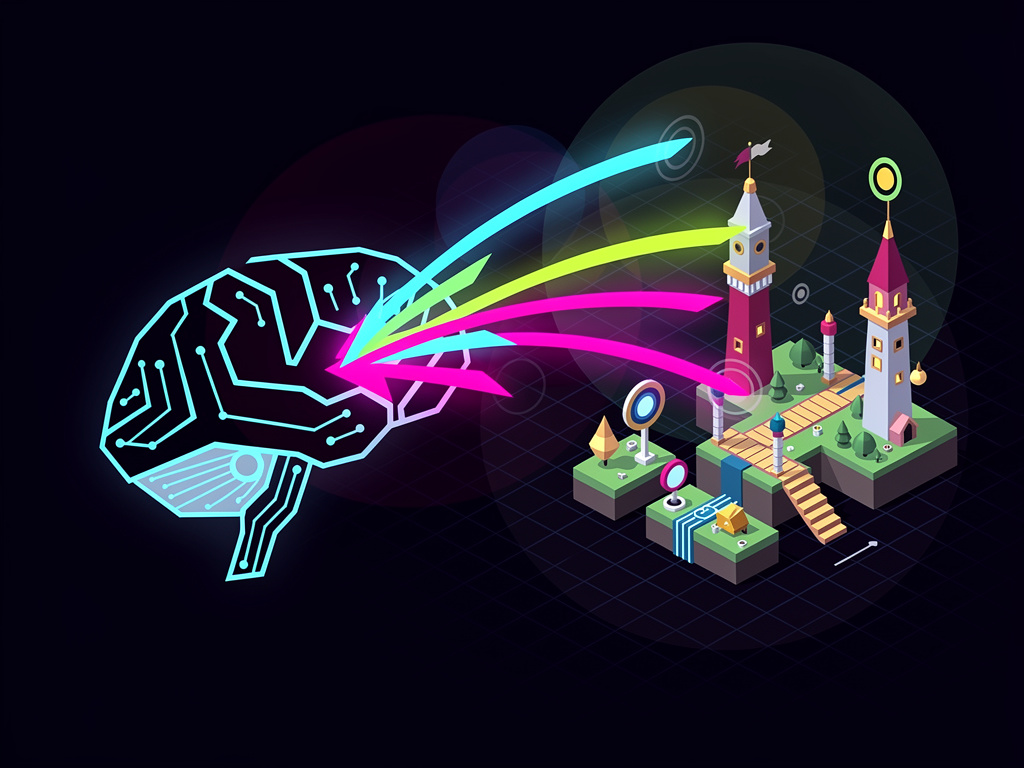
Alex, the second person ever to receive a Neuralink brain-computer interface implant, is playing World of Warcraft. Not with his hands. With his thoughts.
The 45-year-old, who suffered a spinal cord injury that left him paralyzed, demonstrated the feat during a Neuralink livestream that has since ricocheted across social media and gaming forums. He navigated the iconic MMORPG — one of the most complex, input-heavy games ever made — using nothing but neural signals interpreted by the small device embedded in his skull. Moving a character through Azeroth, casting spells, managing inventory. All of it, hands-free. As reported by Futurism, the demonstration marks a significant expansion of what Neuralink’s technology has publicly shown it can do.
This isn’t a simple cursor-on-screen trick. World of Warcraft demands simultaneous management of movement, combat rotations, communication, and spatial awareness. It requires rapid switching between dozens of keybinds. The fact that a brain-computer interface can handle even a fraction of that complexity signals something meaningful about where the technology stands — and where it’s headed.
Neuralink’s first human patient, Noland Arbaugh, made headlines in early 2024 when he used the implant to play chess and Mario Kart on a computer screen. Arbaugh, a 30-year-old quadriplegic, became the public face of the company’s PRIME trial, an FDA-approved study designed to test the safety and initial functionality of the N1 implant. His case was a proof of concept. Alex’s case is something more: a proof of capability.
The difference matters. Chess involves clicking discrete squares. Mario Kart, while faster-paced, still relies on relatively limited directional inputs. World of Warcraft is a different animal entirely. The game has been running for two decades, and its control scheme has only grown more elaborate over time. Veteran players routinely use 30 or more keybindings in combat alone. That Alex can operate within this environment — even at a basic level — suggests the Neuralink implant’s signal decoding has advanced considerably since Arbaugh’s early demonstrations.
Elon Musk’s brain-chip company has been characteristically bold in its public communications about the progress. During the livestream, Neuralink engineers discussed improvements to the implant’s ability to interpret intended movements and translate them into multi-axis digital commands. The company has not yet published peer-reviewed data on Alex’s case, a point critics have been quick to raise. But the visual evidence is hard to dismiss.
And the timing isn’t accidental. Neuralink is in the middle of recruiting for a broader clinical trial and needs to demonstrate that its device does more than enable parlor tricks. Showing a paralyzed man independently operating one of the world’s most demanding PC games is a powerful recruiting tool — and an equally powerful fundraising signal. The company was valued at roughly $5 billion as of its last funding round, according to Reuters, and demonstrations like this one help justify that number to investors who are betting on a future where brain-computer interfaces become mainstream medical devices.
The broader BCI field is watching closely. Competitors like Synchron, which has taken a less invasive approach by threading its device through blood vessels rather than drilling into the skull, have also been making progress. Synchron’s implant has allowed patients to send text messages and browse the web, and the company secured FDA approval for its own human trials. But Neuralink’s approach — placing an array of ultra-thin electrodes directly into brain tissue — captures far more neural data, which theoretically allows for more complex and precise control.
That theoretical advantage is now becoming a practical one. The World of Warcraft demonstration is the clearest evidence yet that high-electrode-count implants can decode rich, multidimensional intentions from the brain in something approaching real time. For neuroscientists and engineers working in the space, this is the data point that shifts the conversation from “can it work” to “how far can it go.”
Not everyone is celebrating. Bioethicists have raised persistent concerns about Neuralink’s pace of development, its animal testing record, and the long-term safety implications of embedding hardware in human brains. The company faced a federal probe in 2023 over its animal testing practices, as reported by Wired, and questions about electrode retraction — where the tiny threads pull away from brain tissue over time — have dogged the PRIME trial. Arbaugh himself experienced some signal degradation in the weeks after his surgery, though Neuralink said it addressed the issue through software adjustments.
Alex’s implant appears to be performing more reliably, at least based on what the company has shown publicly. Whether that’s because of hardware revisions, better surgical placement, or improved decoding algorithms remains unclear. Neuralink hasn’t said.
The gaming angle, while attention-grabbing, is really a proxy for something larger. If a brain-computer interface can handle World of Warcraft, it can likely handle a computer workstation. Email. Spreadsheets. Video calls. The implications for people with severe paralysis are enormous — not just for entertainment, but for employment, independence, and social connection. The disability community has responded with cautious optimism, recognizing the potential while remaining wary of a company that has historically overpromised on timelines.
So where does this leave us? Neuralink has now demonstrated two successful human implantations with increasingly impressive functionality. The technology is real. It works. But it’s still in the earliest phase of clinical testing, with only a handful of patients and no long-term safety data. The gap between a compelling livestream and an FDA-approved commercial product remains vast — measured in years, billions of dollars, and thousands of patients who will need to be enrolled in trials before any regulatory body signs off on widespread use.
The World of Warcraft moment is a milestone. A genuine one. But milestones are markers on a road, not the destination. For Alex, the destination is simpler and more profound than any game: it’s the ability to interact with the digital world on his own terms, using nothing but the electrical patterns of his own mind. That he’s doing it by raiding dungeons in Azeroth is, in some ways, beside the point.
In other ways, it’s exactly the point. Gaming has always been the proving ground for new interface technologies — from joysticks to touchscreens to motion controls. Brain-computer interfaces are following the same path. And if a paralyzed man can tank a dungeon boss with his thoughts, the rest of the computing world should be paying very close attention.


 WebProNews is an iEntry Publication