
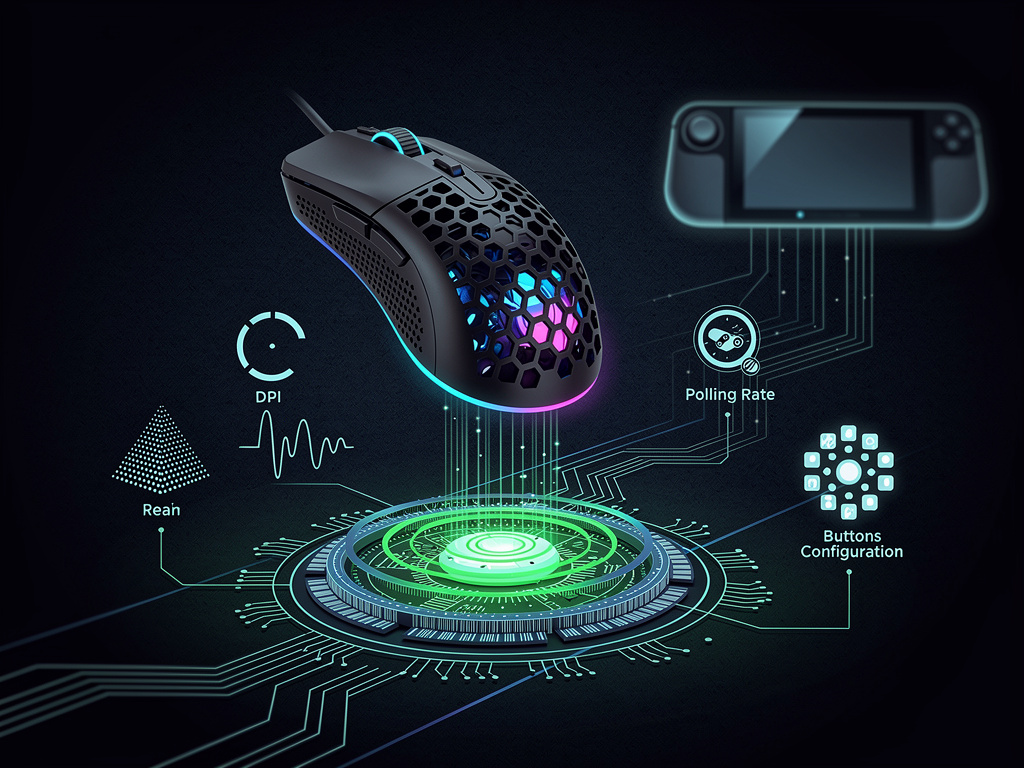
Pulsar Gaming Gears, a peripheral company that has carved out a devoted following among competitive FPS players, is about to get native Linux kernel driver support. The patch, submitted by engineer Oscar Shiang, adds a dedicated HID driver for Pulsar mice to the upstream Linux kernel. It’s a small code contribution with outsized implications for how Linux handles high-performance gaming hardware.
The driver specifically targets Pulsar’s gaming mice, enabling proper configuration of hardware features like adjustable DPI, polling rate, button remapping, and lift-off distance — all from within the Linux kernel itself, without relying on proprietary Windows-only software. According to Phoronix, which first reported on the patch, the new driver handles HID reports specific to Pulsar’s protocol and exposes the configuration interface through sysfs, the virtual filesystem Linux uses to expose kernel device information to userspace.
This matters.
For years, gaming on Linux meant accepting that your mouse would work — technically — but that you’d lose access to most of the features you paid for. DPI switching? Only if you’d set it in Windows first and the mouse remembered the profile in onboard memory. Polling rate adjustment? Same story. Custom button assignments? Forget it, unless a reverse-engineered userspace tool happened to exist for your specific model. The situation has improved dramatically with projects like libratbag and its graphical front-end Piper, which support mice from Logitech, SteelSeries, and others. But kernel-level drivers remain rare for niche gaming brands.
Why Kernel-Level Support Changes the Equation
There’s a meaningful distinction between a userspace daemon that talks to a mouse over USB and a driver baked into the kernel. Kernel drivers load automatically. They don’t require the user to install additional software, configure permissions, or troubleshoot udev rules. They’re present from the moment the system boots, which means the mouse works correctly even in early boot environments, display managers, and recovery consoles. For competitive gamers — the exact audience Pulsar targets — that kind of reliability isn’t optional.
Pulsar has built its reputation on the X2 and X2V2 series, ultralight mice that regularly appear in the setups of professional esports players. The company competes directly with Razer, Logitech, and Zowie in the high-performance segment, but with a more focused product line and a hardware-enthusiast ethos. Its mice have earned praise for sensor accuracy, shape design, and low click latency. What they haven’t had, until now, is any official Linux story.
The patch from Oscar Shiang is not a massive undertaking in terms of lines of code. HID drivers for mice tend to be compact. But the work involves correctly parsing vendor-specific HID reports, which are often undocumented or poorly documented. Shiang’s submission suggests either cooperation from Pulsar or significant reverse-engineering effort — or both. The driver exposes DPI settings, polling rate configuration, button mapping, motion sync, lift-off distance, and angle snapping through sysfs nodes, giving users and front-end tools granular control over the hardware.
Motion sync is a particularly interesting inclusion. It’s a feature Pulsar has promoted heavily, designed to synchronize sensor data transmission with the host system’s USB polling interval to reduce input latency jitter. Exposing this toggle through the kernel driver means Linux users will be able to enable or disable it without touching Windows.
And lift-off distance — the height at which the sensor stops tracking when you lift the mouse — is a setting competitive players obsess over. Having it accessible natively on Linux removes one more reason to keep a Windows partition around.
The Broader Trend: Gaming Hardware Vendors Are Starting to Take Linux Seriously
This isn’t happening in isolation. The Linux gaming market has expanded significantly since the launch of Valve’s Steam Deck in early 2022, which runs a custom Arch-based Linux distribution. Steam’s monthly hardware surveys now regularly show Linux desktop usage above 2%, a number that doesn’t capture the millions of Steam Deck units in circulation. Valve’s Proton compatibility layer has made thousands of Windows games playable on Linux, shifting the bottleneck from software compatibility to hardware support.
Peripheral manufacturers have noticed. Logitech’s high-end mice have had solid Linux support for years through libratbag, and the company hasn’t actively obstructed reverse-engineering efforts. Razer has benefited from the openrazer project, a community-driven kernel driver and daemon that supports dozens of Razer devices. SteelSeries, Corsair, and others have varying degrees of community-built support. But a vendor — or a developer working with vendor knowledge — submitting a driver directly to the upstream kernel is still relatively uncommon for smaller gaming brands.
The submission follows the standard Linux kernel contribution process. The patch has been posted to the linux-input mailing list for review by the HID subsystem maintainers, including Jiri Kosina and Benjamin Tissoires. It will need to pass code review, address any feedback, and potentially go through multiple revision cycles before being accepted into a mainline kernel release. If accepted, it would likely appear in a kernel version later in 2025, and from there trickle into distribution updates.
There’s no guarantee of acceptance on the first attempt. Kernel maintainers are notoriously exacting about code quality, documentation, and adherence to subsystem conventions. But the fact that the patch exists and has been formally submitted is itself a signal. Someone decided that Pulsar mice on Linux mattered enough to do the work.
For Pulsar, the timing makes strategic sense. The company has been expanding its product line and distribution, pushing into markets beyond its initial base in South Korea. Linux support — even if it affects a small percentage of total users — signals technical credibility and a willingness to support open platforms. It’s the kind of move that resonates with the enthusiast community that drives word-of-mouth for gaming peripherals.
For Linux gaming more broadly, each new hardware driver lowers the friction of switching. The calculation a competitive gamer makes when considering Linux isn’t just about whether their games run. It’s about whether their mouse, keyboard, headset, and microphone all work with full functionality. Every driver that lands in the kernel tips that calculation a little further.
What Comes Next
The immediate question is whether the driver will be accepted upstream and how quickly distributions will ship it. Arch Linux and Fedora, both popular among Linux gamers, tend to track kernel releases closely. Ubuntu and its derivatives move more slowly but would eventually include it. Steam Deck users running SteamOS would get it whenever Valve updates their kernel fork.
The longer-term question is whether this becomes a pattern. Will other mid-tier peripheral companies — Lamzu, Lethal Gaming Gear, Endgame Gear, Vaxee — follow with their own kernel drivers or at least provide documentation that enables community efforts? The economics aren’t obvious. Linux users are a small market segment. But the reputational upside among a technically sophisticated, highly vocal user base can be disproportionate.
So a single HID driver for a boutique mouse brand lands on a mailing list. Not exactly front-page news. But it’s one more brick in a wall that’s been building for years — the wall between Linux and full-featured gaming hardware support — and watching it come down, brick by brick, is one of the more encouraging trends in open-source computing right now.


 WebProNews is an iEntry Publication