
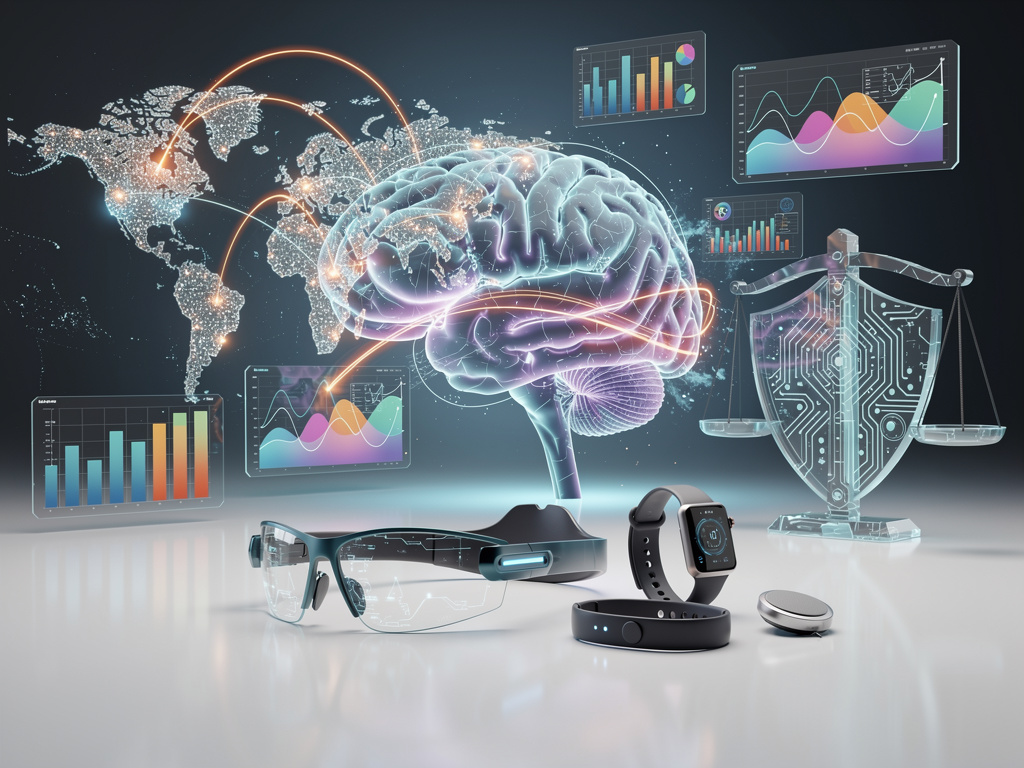
Unlocking the Brain’s Secrets: Psychophysiology’s 60-Year Journey into Emotion and Beyond
In the ever-evolving field of psychophysiological research, a recent bibliometric analysis has shed light on six decades of progress, revealing how this discipline has grown from niche explorations of bodily responses to a cornerstone of understanding human emotion and cognition. Published in the journal Psychophysiology, the study titled “Mapping 60 Years of Psychophysiology: A Bibliometric Analysis of Journal Performance, Authorship Trends, and Thematic Evolution” examines the flagship publication’s output since 1964. Researchers from institutions including the University of Granada and the University of Jaén delved into over 3,000 articles, tracking metrics like citation rates, authorship patterns, and emerging themes. Their findings highlight a field that has ballooned in influence, with annual publications surging from a handful in the 1960s to more than 100 today, driven by advancements in neuroimaging and real-time data collection.
This analysis, accessible via Psychophysiology, underscores the journal’s role in fostering interdisciplinary work. Early years focused on basic physiological measures like heart rate variability and skin conductance, often linked to stress and arousal. Over time, themes shifted toward complex integrations with psychology, neuroscience, and even artificial intelligence. The study notes a marked increase in international collaboration, with authors from over 50 countries contributing in recent decades, reflecting globalization in science. Citation impacts have soared, particularly for papers on emotion regulation and cognitive neuroscience, signaling psychophysiology’s growing relevance in mental health applications.
Beyond the journal’s internal metrics, the analysis points to broader trends where psychophysiological methods are increasingly applied to real-world scenarios. For instance, researchers have mapped how electroencephalography (EEG) can decode emotional states in dynamic environments, bridging lab-based findings with practical tools for therapy and human-computer interaction. This evolution mirrors a field adapting to technological leaps, where wearable devices now capture physiological data outside controlled settings, promising more ecologically valid insights into human behavior.
Pioneering Tools for Emotional Decoding
Recent advancements in EEG-based emotion recognition have propelled psychophysiology into new territories, as detailed in a systematic review from PMC. The paper, “From Neural Networks to Emotional Networks: A Systematic Review of EEG-Based Emotion Recognition in Cognitive Neuroscience and Real-World Applications,” published in 2025, explores how neural signals are harnessed to identify emotions like joy, anger, or sadness with high accuracy. By analyzing 64 studies following PRISMA guidelines, it reveals integrations of machine learning algorithms that process EEG data in real time, enabling applications from mental health diagnostics to adaptive user interfaces in gaming and education.
Complementing this, another PMC review titled “A Comprehensive Review of Multimodal Emotion Recognition: Techniques, Challenges, and Future Directions” emphasizes the fusion of EEG with other modalities such as facial expressions and voice analysis. This 2025 publication highlights biomimetic approaches, where systems mimic human emotional processing to achieve up to 90% accuracy in controlled tests. Challenges remain, including signal noise in everyday settings, but innovations like portable EEG headsets are addressing these, as seen in industry trends reported by Newstrail in their “Emotion Analytics Market: Trends, Growth Drivers & Future Outlook” article from two weeks ago.
On social platforms like X, discussions amplify these developments. Posts from neuroscience enthusiasts and researchers, such as those by Neuroscience News, describe brain mapping techniques that interconnect stress and social behaviors via the medial prefrontal cortex. These insights, shared in August 2025, align with psychophysiological themes of integrating physiological markers with behavioral outcomes, fostering excitement about personalized interventions.
Industry Shifts and Market Momentum
The emotion analytics sector is witnessing explosive growth, with market reports forecasting significant expansions through 2033. HackMD’s “Affective Computing Market Report 2025 | Growth, Trends, and Forecast by 2033,” released last week, projects the industry to reach billions in value, fueled by AI-driven tools that interpret physiological signals for customer experience enhancements. This ties directly to psychophysiology’s legacy, where foundational research on autonomic responses now underpins commercial technologies like sentiment analysis in retail and automotive safety systems.
Harvard University’s “Breakthroughs of 2025” overview, published three days ago, celebrates scientific strides amid funding uncertainties, including psychophysiological studies on reward pathways for depression treatment. By targeting brain signals like expected value and prediction error, as echoed in X posts from Mario Nawfal in January 2025, researchers are developing predictive models for recovery, blending psychophysiological data with therapeutic strategies.
Further, PsyResearch.org’s article “Trends in Psychological Research: What’s Shaping the Future?” from four weeks ago outlines how technology is reshaping mental health innovations. It discusses wearable biosensors that measure emotional responses via heart rate and galvanic skin response, building on 60 years of journal-documented methods. These tools are not just academic; they’re entering clinical practice, with closed-loop neuromodulation systems—automatically adjusting brain stimulation based on real-time feedback—gaining traction, as noted in an X post by Michael Okun in October 2025.
Bridging Labs to Everyday Applications
A Frontiers in Psychology article from April 2025, “Psychophysiological Research in Real-World Environments: Methodological Perspectives from the SLU Multisensory Outdoor Laboratory,” illustrates the push toward naturalistic settings. It describes outdoor labs equipped with mobile EEG and physiological sensors, capturing data during activities like walking or social interactions, which enhances the validity of emotional response measurements beyond sterile environments.
This real-world focus is echoed in older but foundational works, such as PMC’s 2021 review “Digital Technologies for Emotion-Regulation Assessment and Intervention,” which shifted emphasis to mobile apps and wearables for stress management. Updating this, ScienceDirect’s 2024 systematic review “Emotion Recognition and Artificial Intelligence: A Systematic Review (2014–2023) and Research Recommendations” calls for ethical AI integrations, a theme resonating in 2025’s industry reports like Indybay’s “Affective Computing Market Size, Share, Trends, Revenue” from November.
X conversations, including those from Sterling Cooley in December 2025, highlight wireless optogenetics for targeted brain stimulation, inducing perceptions with precision. Such innovations promise to revolutionize psychophysiological interventions, allowing for non-invasive mood modulation, as discussed in posts about brain implants boosting mood without surgery.
Ethical Horizons and Future Trajectories
As psychophysiology advances, ethical considerations loom large. The bibliometric analysis in Psychophysiology reveals a rising theme of bioethics in recent publications, with authors grappling with data privacy in emotion-tracking technologies. This is particularly pertinent amid market surges, as OpenPR’s “Emotion Detection & Recognition Market Surges as AI, Biometrics, and Behavioral Analytics Transform Human-Machine Interaction Forecast to 2034,” from two weeks ago, warns of potential misuse in surveillance.
Innovations like real-time imagined-speech decoding via wireless EEG, as shared in an X post by Su in December 2025, open doors to assistive devices for communication-impaired individuals, yet raise questions about neural privacy. Similarly, Psychology Today’s “First-of-Its-Kind AI Digital Biomarker for Chronic Stress,” referenced in a December 2025 X post by Sherman Bastarache, introduces biomarkers that could preempt mental health crises but demand robust safeguards.
Looking ahead, the field’s trajectory, as mapped in the 60-year analysis, suggests deeper integrations with genomics and AI. An X post by vittorio in April 2025 envisions behavioral profiling from DNA, potentially modulating traits like mood through gene editing, building on psychophysiological foundations.
Innovative Frontiers in Neural Interfaces
Frontiers in Neurorobotics’ January 2025 original research, accessible at their public pages, explores neurorobotic systems for emotion-responsive prosthetics, combining EEG with robotic feedback loops. This aligns with psychophysiology’s thematic evolution toward human augmentation, where emotional states inform device adaptations.
ScienceDirect’s recent “Research Progress on Emotion Recognition Based on Electroencephalogram Signals,” published two weeks ago, reviews applications in affective computing, achieving breakthroughs in decoding subtle emotions from brain waves. These developments are fueling industry optimism, as seen in Newstrail’s market report, which predicts emotion analytics will transform sectors like healthcare by providing granular insights into patient states.
On X, posts like those from The Encyclopaedia in December 2025 discuss silent texting via neural intent, emphasizing the need to prioritize patient benefits while protecting autonomy. This sentiment underscores psychophysiology’s role in ethical innovation, ensuring technologies enhance rather than exploit human vulnerabilities.
Sustaining Momentum Amid Challenges
The bibliometric study highlights authorship trends, with women increasingly leading publications, diversifying perspectives in a field once male-dominated. This inclusivity is vital as psychophysiology tackles global mental health issues, integrating cultural contexts into emotional measurement.
Industry reports, such as HackMD’s forecast, stress the importance of scalable technologies amid economic pressures, with affective computing poised for widespread adoption in telemedicine. Harvard’s breakthroughs summary reinforces this, noting resilient research outputs despite funding hurdles.
Finally, as X discussions from Court Nicole and JAY in December 2025 illustrate, emerging technologies like 5G-enabled wearables could enable remote emotion control and personalized clinical decisions, heralding a future where psychophysiological insights are seamlessly woven into daily life, promising profound impacts on well-being.


 WebProNews is an iEntry Publication