
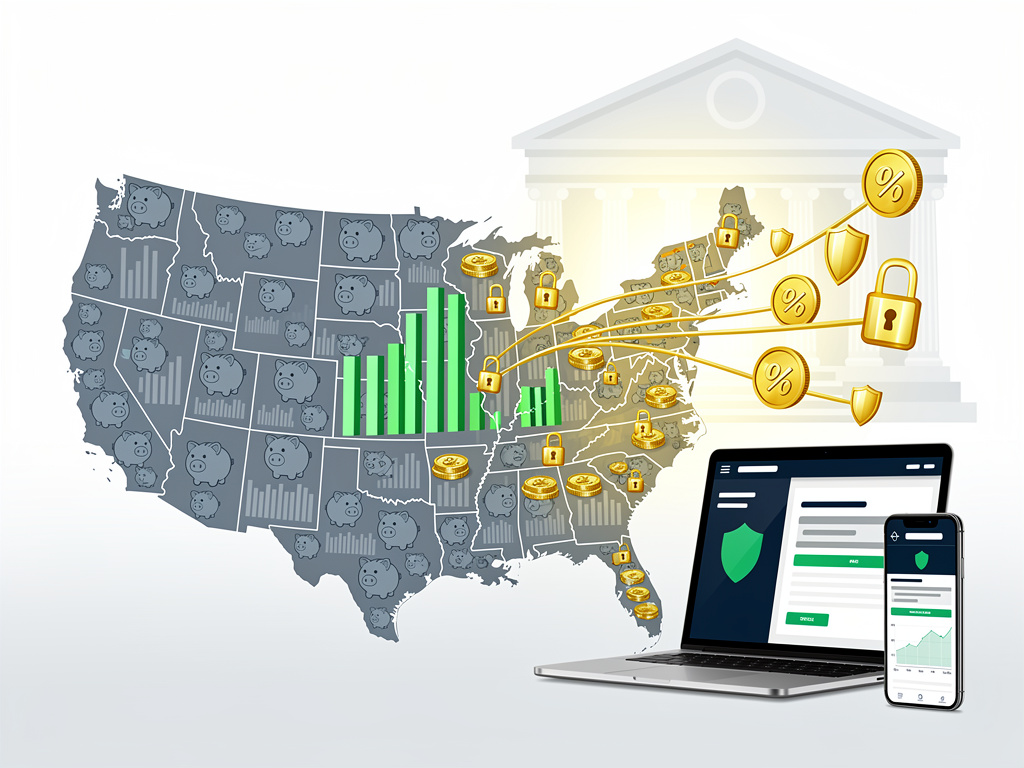
More than 56 million Americans have no access to a retirement plan at work. The figure, drawn from Pew Charitable Trusts research, has lingered for years. It captures a stubborn gap in the system that leaves small-business employees, gig workers, part-timers and the self-employed to fend for themselves.
But a new executive order signed by President Trump on April 30 seeks to change that. The directive creates TrumpIRA.gov, a website scheduled to launch by January 1, 2027. It will direct uncovered workers toward low-cost IRAs that qualify for a federal Saver’s Match of up to $1,000 a year. The White House order states plainly that “tens of millions of Americans lack access to employer-sponsored retirement plans.” It targets independent contractors, self-employed individuals and those at firms too small to offer benefits.
The policy builds on language already in the SECURE 2.0 Act. Yet it reframes the old Saver’s Credit as a match. That shift matters. Previous data showed just 5.7 percent of eligible taxpayers claimed the credit, with an average benefit of only $191. A match, proponents argue, feels like free money arriving sooner. It mirrors the employer contributions many never receive.
Numbers tell a harsh story. The National Institute on Retirement Security reported last February that the median defined-contribution retirement wealth for all workers ages 21 to 64 stood at just $955 when those with zero balances were included. Even among those who had saved something, the typical amount remained far below targets. Median balances for near-retirees looked only marginally better. And recent trends show no rapid improvement.
Savings rates slipped in 2025. CBS News reported on Dayforce data showing full-time workers cut their contribution rate from 9.2 percent to 8.9 percent. One in four reduced contributions outright. Loan usage from 401(k) accounts climbed for the third straight year. These patterns hit middle-income earners hardest. They also reinforced long-standing gaps by income, education and race.
Participation in workplace plans drives saving behavior. The Investment Company Institute found in its 2025 survey that nearly half of 401(k) participants said they probably would not save for retirement without the plan at work. The share rose to 58 percent among those earning under $50,000. Without automatic payroll deduction and some form of employer match, inertia wins.
TrumpIRA.gov will list IRAs from private providers that meet strict criteria. Expense ratios cannot exceed 0.15 percent. No minimum deposits or balances allowed. Investment menus must include target-date funds or other diversified, index-based options. The site aims to make choice simple and costs transparent. It will also explain how to claim the Saver’s Match for qualifying contributions.
Researchers see sizable upside. A CNBC article from May 1 cited Morningstar analysis estimating that expanded access, auto-enrollment features and stronger matches could lift cumulative U.S. retirement wealth by as much as 77 percent over a decade, adding $1.35 trillion. Even a base scenario with modest auto-enrollment produced a 28 percent gain and brought 32 million new savers into the system. Spencer Look, associate director of retirement studies at Morningstar, stressed that “consistent savings behavior is the biggest determinant of growing your nest egg.” He added that voluntary structures alone generate limited uptake. Auto-enrollment, he said, moves the needle.
The executive order stops short of creating a new government-run plan. It relies on private financial institutions to offer the accounts. It also calls for legislative recommendations to make the changes permanent, add portability and ensure low fees. Charitable organizations could contribute to workers’ IRAs under new guidance. Treasury and Labor officials must craft rules to protect participants and prevent prohibited transactions.
Yet barriers remain. Many in the uncovered group earn too little for consistent saving. Others face irregular income that complicates monthly contributions. The match itself carries income limits. And the website, while helpful, cannot replicate the power of payroll deduction at a regular job.
Critics have questioned whether the match will reach the lowest earners. They point to past low uptake of similar incentives. Supporters counter that the psychological difference between a tax credit received months later and an immediate match changes behavior. Early evidence from automatic features in existing plans supports that view.
Broader retirement confidence stays shaky. Transamerica Institute’s recent survey found only 59 percent of Americans believe they are building a large enough nest egg. That number has barely moved since the pandemic. Costs of living, housing prices and uncertainty around future Social Security benefits weigh on households.
Still, the initiative arrives at a moment of political focus on the coverage gap. Both parties have discussed ways to expand access. The Trump order puts concrete deadlines on the table. TrumpIRA.gov must operate by next January. Legislative proposals must follow.
Success will hinge on execution. Will enough providers sign up for the 0.15 percent fee cap? Can the site guide users without overwhelming them? Most important, will workers who have never saved systematically begin to do so?
The data suggest many would if given the right structure. Nearly nine in ten workers without workplace access told Pew researchers they would save more if offered a match. That signal is hard to ignore.
For financial advisors, plan sponsors and policy makers, the order adds urgency. It spotlights the millions left outside the traditional 401(k) world. It also tests whether a targeted, low-cost IRA portal with a federal match can deliver results where voluntary efforts have fallen short.
The gap has persisted too long. Median savings near zero for half the workforce cannot sustain comfortable retirements. Something had to give. This policy tries to deliver it. Whether it succeeds depends on details still unfolding. But the scale of the problem is no longer in dispute. Fifty-six million workers stand on one side of the divide. The new platform aims to bring them across.


 WebProNews is an iEntry Publication