
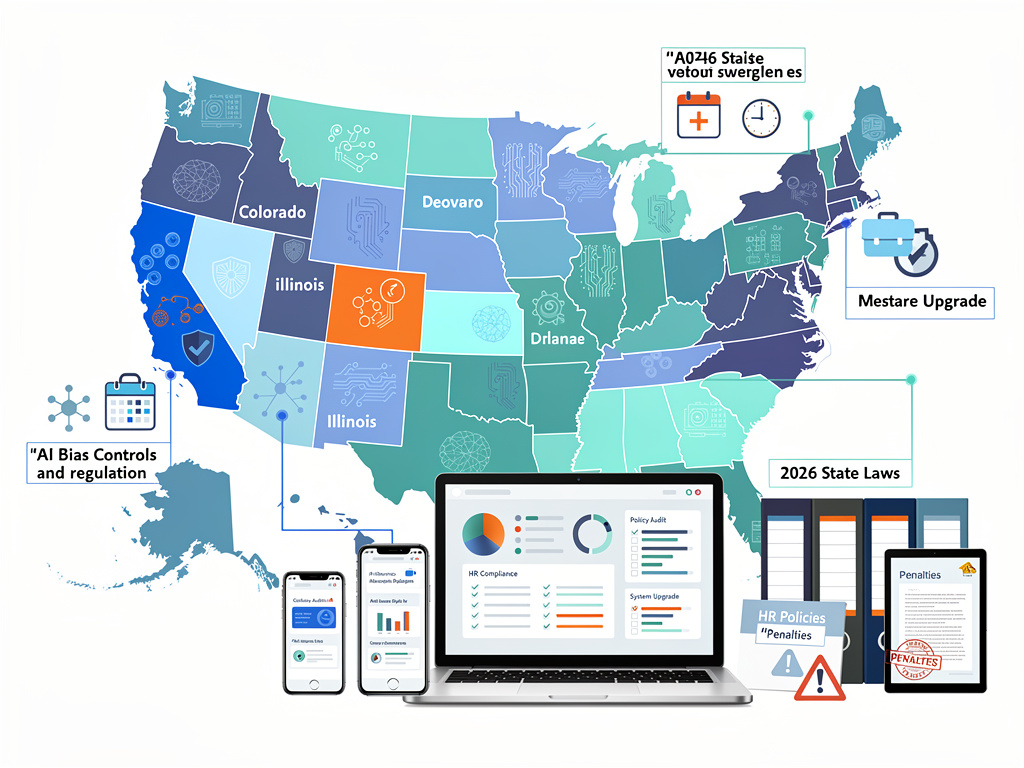
As the calendar flips to 2026, U.S. employers confront a dizzying array of state-specific regulations reshaping human-resources practices. From expansions in paid leave to novel restrictions on artificial intelligence in hiring, the divergences across jurisdictions demand vigilant adaptation, particularly for multistate operators. ADP’s SPARK blog details 48 targeted changes, underscoring the imperative for proactive policy overhauls.
California leads with multifaceted updates effective January 1, including amendments to sick leave allowing use for judicial proceedings tied to crime victimization and mandates separating pay data from personnel files. Employers must also revise “pay scale” definitions for disclosures and clarify vehicle reimbursement duties under business-expense rules. Ogletree Deakins highlights these as part of a broader wave impacting wage-hour compliance and leave administration in a January 1 watchlist.
Personnel-record access expands to education and training documents, while WARN notices gain new requirements for mass layoffs. By February 1, a standalone annual notice on employee rights becomes mandatory, per HR Dive’s coverage of 10 Golden State shifts. Hospitality recall rights for Covid-era layoffs persist through year-end.
West Coast AI and Leave Expansions
Colorado’s June 30 AI law targets high-risk systems to curb discrimination, imposing duties on developers and deployers, as noted in ADP’s roundup. Paid family leave extends for parents of NICU infants, with reduced premiums. Illinois joins the fray January 1, clarifying paid nursing breaks and prohibiting AI-driven bias in decisions, per HR Executive.
The Prairie State’s updates amend VESSA to bar retaliation for using company devices to document violence and expand organ-donation leave to part-timers. Human Rights Act tweaks ban ZIP-code proxies for protected classes and require AI-use notifications. By June 1, NICU leave mandates hit smaller employers at 10 days unpaid, scaling to 20 for larger ones.
Connecticut’s sick leave overhaul covers firms with 11-plus employees, broadening uses and accrual methods. Delaware and Maine launch 12-week paid family-medical programs January 1 and May 1, respectively, for qualifying employers, aligning with trends tracked by Paychex in HR Executive.
Midwest and Northeast Mandate Surge
Minnesota rolls out paid family-medical leave January 1, with tweaks to contributions and intermittent use, alongside mandated breaks: 15 minutes every four hours or longer for restroom access, plus 30-minute meals after six hours. New Hampshire introduces unpaid childbirth leave up to 25 hours for 20-plus-employee firms and military-spouse leave for 50-plus-employee operations.
New York City targets app-based grocery deliverers with minimum pay January 26, then expands earned safe-sick time February 22, adding unpaid leave, prenatal paid time, and easing schedule-change rules. Nevada requires air-quality monitoring for 10-plus-employee outdoor-exposed workers when indices hit 150-plus.
Oregon clarifies overpayment collections, adds blood donation to paid sick leave for 10-plus-employee firms (unpaid below), mandates hire-time pay explanations, and demands health-care violence prevention upgrades, as detailed in Seyfarth Shaw’s Horizon Report.
Pay, Safety, and Posting Pressures
Pennsylvania mandates veteran-benefits posters for 50-plus-employee employers January 1; Pittsburgh widens sick-leave accrual. Philadelphia tightens background checks January 6, bans hair discrimination January 24, and refines risk assessments for criminal records. Rhode Island requires hotel and rental human-trafficking training, new-hire notices, donor protections, and TCI sibling coverage.
Texas curbs discriminatory AI intent January 1. Washington’s hate-crime victim leave, paid family expansions, isolated-worker safety (panic buttons), hospital break waivers, and sick leave for immigration proceedings hit January 1; Fair Chance Act and child-labor penalties strengthen July 1, per ADP.
These shifts compound minimum-wage hikes in nearly 20 states, per HR Executive, and salary-threshold rises—like California’s $70,304 overtime exemption. Multistate firms must recalibrate payroll, per BambooHR’s guide.
Broader Implications for Operations
AI scrutiny intensifies: Colorado, Illinois, Texas, and others mandate bias checks, notices. “When evaluating any AI tool, consider whether it was developed using secure, high-quality data,” advises ADP’s Helena Almeida in SPARK’s trends piece. Paid-leave programs proliferate, adding to 13 active states.
Posters, notices, and training multiply: Pennsylvania veterans, Oregon earnings, California rights. Fisher Phillips flags 50-plus January 1 laws, urging handbook audits. Enforcement risks rise; violations invite penalties, suits.
Experts like Ogletree’s Lucas J. Asper urge webinars for playbooks. Proactive monitoring via tools like ADP alerts or Seyfarth reports positions firms ahead.
Strategic Pathways Forward
For industry insiders, 2026 tests HR-tech integration: Update HCM for geo-fencing compliance, audit AI vendors, model leave costs. Multistate operators face “added complexity,” per Paychex, with divergent accruals, notices.
Federal overlays—like OBBBA tax tweaks—intersect, but states dominate. Hughes Recruiting notes Midwest divergences demand tailored policies. Noncompliance erodes margins; foresight builds resilience.
Employers succeeding invest in compliance platforms, legal counsel, training. As ADP’s Eye on Compliance Team asserts, early alignment mitigates risk, bolsters workforce trust.


 WebProNews is an iEntry Publication