
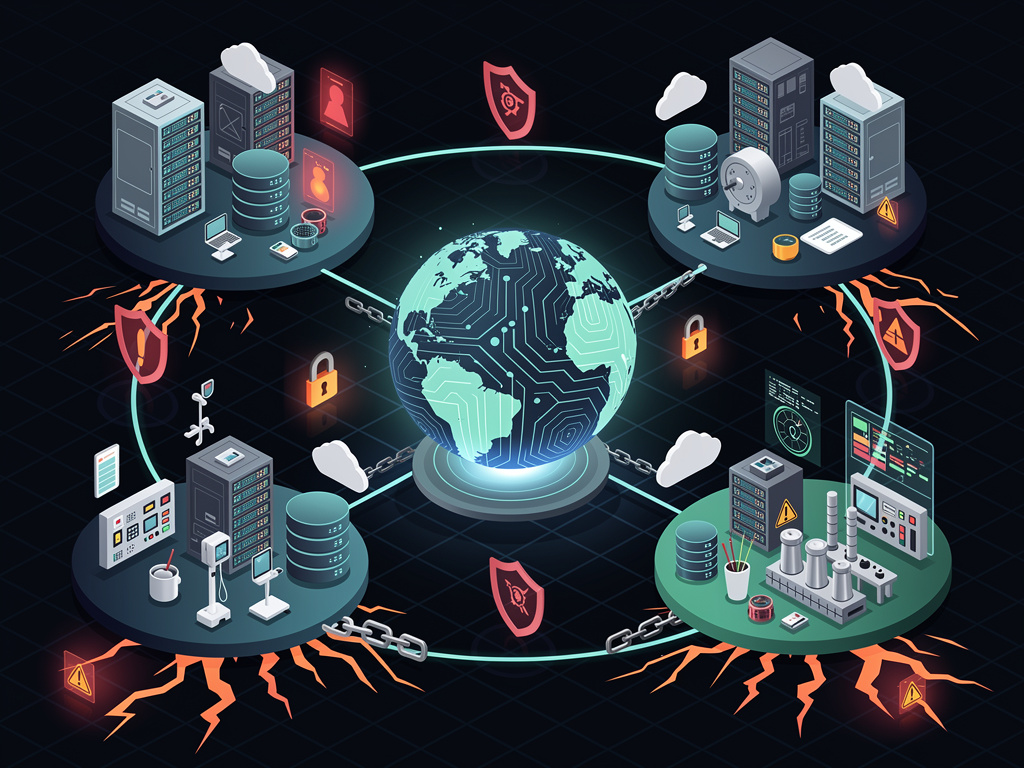
Half a year into 2026 and the tally of major hacks already strains belief. Companies large and small lost control of customer records, student data, medical files and internal secrets. Attackers grew bolder. Defenders seemed one step behind. The patterns repeat with unsettling frequency.
ShinyHunters stands out as one of the most active groups. The English-speaking crew relies on voice phishing. They call pretending to be IT help or a confused employee. Access follows. Then extortion. TechCrunch reported how the gang hit education technology provider Instructure. They breached the Canvas learning platform. Data on more than 30 million students and staff was taken. When Instructure balked at the ransom demand the attackers returned. They disrupted final exams across American schools. The company eventually paid despite FBI warnings. Simple tactics. Serious consequences.
Match Group suffered too. The dating app parent behind Tinder and OkCupid saw 10 million records exposed. ShinyHunters claimed responsibility once more. ACI Learning detailed the breach and pointed to third-party vendor risks as a likely entry point. User profiles. Corporate documents. All for sale or leverage.
But education and consumer apps represent only part of the damage. Healthcare and medical technology firms absorbed punishing strikes. Stryker, the medical device maker, endured a March attack linked to an Iran-aligned hacktivist group called Handala. Iranian government hackers gained access. They remotely wiped tens of thousands of employee devices. Operations halted for days. First-quarter earnings took a hit. The U.S. government formally attributed the action to Iranian intelligence. A shift from espionage to outright destruction. Retaliation tied to Middle East conflict.
Medtronic faced its own claim from ShinyHunters. Up to 9 million records allegedly compromised. Personal information and corporate data. Hospital networks reportedly stayed untouched. The pattern holds. Attackers probe for quick wins. Companies scramble to contain leaks that erode trust and invite lawsuits.
Critical infrastructure tells an even darker story. Russian-linked actors targeted European energy and water systems. Poland’s power grid absorbed wiper malware late in 2025. A Swedish thermal plant and a Norwegian dam followed. Water treatment facilities in Poland came under fire again in early 2026. Real-world effects. Spilled water. Disrupted power. Iranian hackers turned attention to U.S. water utilities as conflict escalated. Privately owned systems often lack basic protections. The hybrid warfare playbook expands.
Supply chain weaknesses multiplied the pain. Open source projects became favored targets. Compromises hit Aqua Security’s Trivy scanner, Bitwarden, Checkmarx and several npm packages. Backdoors delivered malware. Credentials and tokens were harvested from developer machines. Downstream victims included OpenAI and Vercel. TechCrunch noted a new incident nearly every week. One compromised package can ripple across thousands of organizations. Trust in shared code fractured further.
Vercel itself suffered through a third-party AI tool. Context.ai held broad OAuth permissions. Attackers maintained access for two months before detection. Employee Google Workspace data and some customer information were exposed. The PKWARE analysis of 2026 breaches highlighted this exact trend. PKWARE’s monthly review described April as dominated by supply-chain compromises and OAuth abuse. No brute force. No front doors kicked in. Attackers simply walked through trusted partners.
Two major U.S. banks learned that lesson harshly. Citizens Financial and Frost Bank were both compromised via the same shared vendor. Everest ransomware operators claimed credit. Citizens lost data on 3.4 million customers. Frost saw more than 250,000 records including SSNs and tax documents exposed. A single weak link in the vendor chain compromised separate financial giants on the same day.
France’s national identity agency confirmed another blow. ANTS, also known as France Titres, saw 11.7 million accounts compromised. Threat actors claimed as many as 19 million. Login details, names, dates of birth and contact information appeared for sale. Government identity data carries special risk. It fuels identity theft at scale. Investigations continue.
Adobe took a hit through an Indian business process outsourcing contractor. Phishing delivered remote access tools. Privilege escalation followed. Support tickets, HackerOne reports and employee records spilled. Thirteen million tickets. Fifteen thousand staff entries. The contractor became the soft underbelly.
Even government agencies stumbled. The FBI declared a major cyber incident in April after one of its surveillance systems was breached. Chinese spies stood accused. Phone numbers tied to targets under monitoring may have been exposed. Notification to Congress cited demonstrable harm to national security. The breach crossed a serious threshold.
Other exposures piled up. A misconfigured database left 149 million credentials sitting in plain sight. Nearly 100 gigabytes of data. Researchers found it exposed online in January. Basic cloud security oversights. No encryption. No access controls. The kind of mistake that should not happen at this scale.
Brightspeed, the telecommunications provider, reported impact to more than one million customers. The Crimson Collective, a newer extortion group, claimed the ransomware operation. Phishing, stolen credentials and unpatched systems offered multiple paths in. Telecom data holds billing details, call records and location information. Valuable on underground markets.
Nike lost 1.4 terabytes of internal data. Logistics files, intellectual property. No customer records according to reports. Still, the breach highlighted gaps in visibility and monitoring of internal systems. Supply chain elements appeared involved once more.
Smaller incidents revealed systemic fragility too. A prison payphone provider exposed driver’s licenses for over 300,000 people. Hotel check-in systems leaked passport scans. A money transfer app and UK visa service added to the tally. More than two million identity documents floated online from simple configuration errors. At a time when digital ID checks grow more common these leaks undermine the entire verification process.
Hasbro endured weeks of downtime after hackers entered systems in late March. The toy maker’s website went dark. Financial reporting slipped. Recovery dragged into May. Operational costs mounted even if specific data loss stayed unclear.
Recent weeks brought no relief. As of June 3, breach notification sites listed fresh incidents hitting an Indian hospital, a French staffing agency and South Africa’s African National Congress. BreachSense tracked these daily additions. KillSecurity, KRYBIT and BlackX claimed various attacks. The volume shows no sign of slowing.
May delivered more pain. Mediaworks in Hungary lost 8.5 terabytes to the World Leaks ransomware group. Payroll, contracts and internal emails leaked. Foxconn confirmed a Nitrogen ransomware attack. The manufacturing giant reportedly lost files tied to Apple and Nvidia projects. Nearly 8 terabytes according to some claims. Supply chain risk for electronics giants crystallized.
Instructure appeared again in May updates. ShinyHunters claimed a second strike. The education sector’s dependence on outside vendors stood exposed. CM Alliance documented the month’s major events including attacks on Trellix, Vimeo and NYC Health + Hospitals. Healthcare remained a prime target.
What ties these events together? Repeated reliance on third parties. Weak vendor oversight. Overly permissive OAuth grants. Voice phishing that bypasses technical controls. Ransomware groups that double as data thieves. State actors blending espionage with disruption. The pace accelerated in 2026. Average breach costs hover near $4.4 million. Reputational damage and regulatory fines add more.
Encryption emerges as one consistent recommendation across analyses. Persistent, data-centric protection that travels with the information. Even if attackers exfiltrate files the contents stay useless without keys. Visibility matters too. Organizations cannot protect data they cannot find. Automated discovery tools surface forgotten records in old systems or cloud buckets.
Yet many firms still treat security as a perimeter exercise. Firewalls and endpoint tools prove insufficient when trusted partners or cloud configurations fail. Training gaps persist. Employees fall for vishing calls. Developers install compromised packages without scanning. Cloud administrators misconfigure storage.
Geopolitical tension adds fuel. Iran, Russia and China-linked operations appear throughout the first half of the year. Destructive wipers on medical systems. Wiper malware on energy grids. Surveillance breaches at law enforcement agencies. Cyber serves as an extension of conventional conflict.
The Social Security Administration case raises unique alarms. Whistleblowers alleged that Department of Government Efficiency operatives uploaded a live copy of the SSA database to an unsecured server. Social Security numbers for most living Americans. Potential for political targeting or identity fraud on a historic scale. Two senior House Democrats called it possibly the largest breach in U.S. history. Lawsuits continue. Clarity remains elusive.
So the first six months of 2026 delivered a master class in systemic vulnerability. From dating apps to national identity databases, from learning platforms to power plants, no sector escaped unscathed. Attackers refined old tricks and invented new ones. Companies paid ransoms, issued apologies and promised improvements. The question now is whether boards and executives treat these events as isolated misfortunes or as evidence of deeper, structural weaknesses that demand fundamental change in how data is handled, shared and protected.
Because the next wave is already forming. And the targets grow larger every quarter.


 WebProNews is an iEntry Publication