
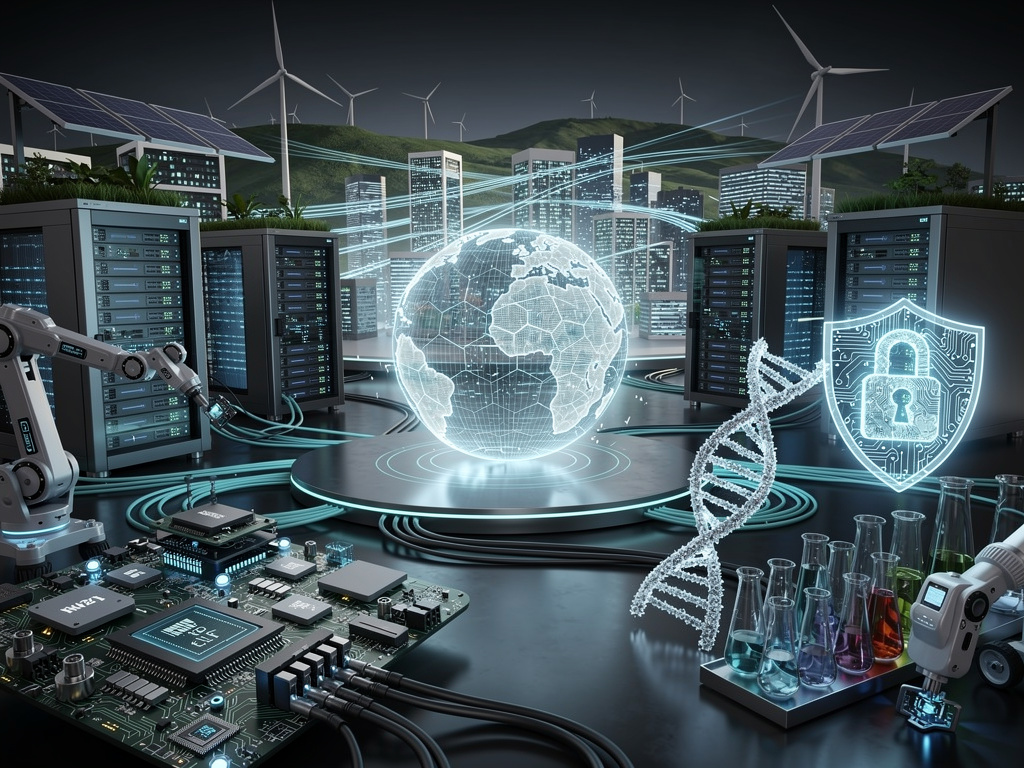
Emerging Frontiers in AI and Generative Technologies
As the technology sector barrels into 2026, artificial intelligence continues to dominate discussions among executives and innovators. Recent reports highlight how generative AI is evolving beyond basic applications into more integrated systems that influence enterprise resilience and cloud architectures. For instance, a press release from Capgemini outlines the top five trends to watch, emphasizing AI’s role in bolstering business operations against disruptions. This shift is not just about automation; it’s about creating adaptive frameworks that can predict and mitigate risks in real-time.
Industry insiders are particularly excited about the fusion of AI with other technologies like IoT and blockchain. Posts on X from users in the tech community, such as those discussing AI-powered decision-making and multilingual generative models, reflect a growing sentiment that these integrations will redefine strategic planning. One notable thread points to real-time business applications where AI combines with 5G for seamless data processing, enabling faster insights and more agile responses to market changes.
This momentum is echoed in broader media coverage. According to WIRED, which covers the latest in science and technology, advancements in AI are pushing boundaries in areas like climate change mitigation and biotech. The publication notes how AI tools are being deployed to model environmental impacts, offering predictive analytics that could revolutionize sustainability efforts in tech-driven industries.
The Rise of Sustainable and Resilient Infrastructures
Shifting focus to infrastructure, the push for resilience is becoming a cornerstone of tech strategy. With economic uncertainties like inflation and tariffs looming, leaders are prioritizing robust systems over flawless designs. An X post from a supply chain expert highlights this mantra: “Build for resilience, not perfection,” underscoring how companies are adapting to unpredictable freight costs and global trade tensions.
In the realm of energy and materials, emerging sectors are poised for growth. Trends in bio-based materials and decentralized renewable energy are gaining traction, as noted in various online discussions. For example, solar panel innovations are a hot topic, with GreenLancer detailing seven new trends for 2026 that enhance efficiency through advanced materials and smart grid integrations. These developments promise to lower costs and improve accessibility, particularly in regions investing in green tech.
Moreover, the integration of AI into agriculture is transforming traditional practices. Smart agriculture paradigms, as described in posts on X about digital brains for precise monitoring, enable intelligent decision-making in farming. Breakthroughs like synthetic apomixis could fix hybrid vigor in crops, leading to higher yields and reduced environmental footprints, according to insights from innovation-focused accounts.
Investment Themes and Startup Dynamics
Investment patterns are also evolving, with a keen eye on AI infrastructure and digital banking. An X thread from an investor outlines five key themes for 2025 and beyond, including the monetization ramp-up by cloud giants like Google, Amazon, and Microsoft. This suggests a maturation phase where subsidies give way to profitable models, potentially reshaping how developers build and scale applications.
Startups are at the forefront of this wave, leveraging AI for personalized services and embracing remote work as the norm. A post detailing future trends for startups emphasizes sustainable practices and blockchain integrations, predicting a surge in sectors like agri-tech and mental health apps. This aligns with reporting from TechCrunch, which focuses on venture capital funding and Silicon Valley happenings, noting increased investments in AI-driven diagnostics and telemedicine platforms.
Challenges abound, however. Regulatory hurdles and ethical concerns around AI are prompting calls for stronger digital identity systems. As one X user points out, the global tech environment in 2025 is defined by smarter automation and seamless financial integrations, but these require robust safeguards to prevent misuse.
Cybersecurity Shifts and Dark Web Monitoring
On the cybersecurity front, recent changes by major players are stirring debates. Google has discontinued its Dark Web Report feature, which scanned breach dumps for users’ personal data, as reported in a recent article from FindArticles. This move raises questions about consumer protection in an era of escalating cyber threats, forcing individuals and businesses to seek alternative monitoring tools.
Broader trends in information technology research, covered by ScienceDaily, reveal ongoing innovations in data security and network defenses. Studies highlight how AI is being used to detect anomalies in real-time, but they also warn of sophisticated attacks that exploit integrated circuits and IoT vulnerabilities.
Industry analysis from MIT Technology Review delves into emerging threats, including those in biotech and climate tech sectors. The site discusses how radiological and biological risks are intersecting with digital infrastructures, urging a proactive stance on security protocols.
Autonomy and Automation’s Broader Impacts
The trend toward autonomy is perhaps the most transformative, with predictions that whatever can be automated will be. An X post envisions this across transport, finance, manual labor, and knowledge work, suggesting that robots and AI agents will drive down living costs while elevating quality of life. Companies like Tesla and The Boring Company are cited as pioneers in autonomous transport, blending hardware with software for efficient systems.
In manufacturing, innovations like 3D printing and micro-factories are set to disrupt traditional models. Discussions on X about post-2025 sectors emphasize these shifts, with blockchain ensuring transparent supply chains. This is supported by insights from Reuters, which provides global technology news, reporting on how automation is reshaping labor markets and economic policies.
However, these advancements come with challenges, including job displacement and the need for reskilling workforces. Experts referenced in Bloomberg Technology argue that while AI data centers are becoming the new engines of industry, replacing manufacturing plants with digital factories, the transition requires careful management to avoid widening inequalities.
Innovation in Health and Biotech Sectors
Health tech is another area ripe for disruption. AI-driven diagnostics and mental health apps are exploding, as per X trends that forecast their rise in emerging sectors. Telemedicine platforms are democratizing access to care, particularly in underserved areas, with integrations that leverage 5G for real-time consultations.
Biotech breakthroughs, detailed in The Information, focus on deeply reported stories about tech business. The outlet highlights how functional integration in integrated circuits, like multifunctional MZTs that combine sensing, memory, and logic, is enabling compact medical devices with enhanced capabilities.
Ethical considerations are paramount here. As The New York Times Technology section explores, the intersection of AI with biotech raises questions about data privacy and equitable access, urging policymakers to keep pace with innovation.
Marketing and Advertising Evolutions
In marketing, emerging tech trends are reshaping how brands engage consumers. A roundup from Ad Age features Instacart’s new app in ChatGPT and Google’s foray into AI glasses, alongside data partnerships like WPP with Pinterest. These developments point to more immersive, AI-enhanced advertising experiences.
Social media’s role in tech trends is evident in X posts about digital transformations. Business innovation management, as discussed, is driving revenue growth through AI and sustainability, with examples like Tesla’s EV revolution and Amazon’s cloud dominance.
Yet, challenges in this space include navigating privacy regulations and combating misinformation. Industry views from TechMarketView provide opinionated analysis on the UK tech scene, noting how these factors influence global strategies.
Global Perspectives and Future Outlooks
Globally, the tech sector is witnessing a paradigm shift toward integrated ecosystems. Posts on X about smart agriculture and advanced waste management illustrate how technology is addressing planetary challenges, from food security to environmental conservation.
Investment in resilience is key, as Capgemini previously noted, with generative AI and cloud architectures forming the backbone of future enterprises. This is complemented by trends in enterprise resilience, where companies are fortifying against cyber and physical disruptions.
Looking ahead, the fusion of these elements—AI, autonomy, sustainability—promises a dynamic tech environment. While challenges like ethical AI use and infrastructure vulnerabilities persist, the innovations outlined in sources like MIT Technology Review suggest a path toward more inclusive and efficient systems. Industry insiders must stay vigilant, adapting to these shifts to harness their full potential for growth and societal benefit.


 WebProNews is an iEntry Publication