
Revolutionizing the Ride: How Cutting-Edge Tech Is Conquering Car Sickness in 2026
For millions of passengers, the simple act of riding in a car can turn into a nauseating ordeal. Motion sickness, that unwelcome companion on road trips, affects an estimated one in three people, disrupting everything from family vacations to daily commutes. But as we enter 2026, a wave of innovative technologies is poised to transform this age-old problem, offering relief through a blend of digital interfaces, pharmaceutical breakthroughs, and automotive engineering. Industry experts are buzzing about these advancements, which promise not just comfort but a fundamental shift in how we experience travel.
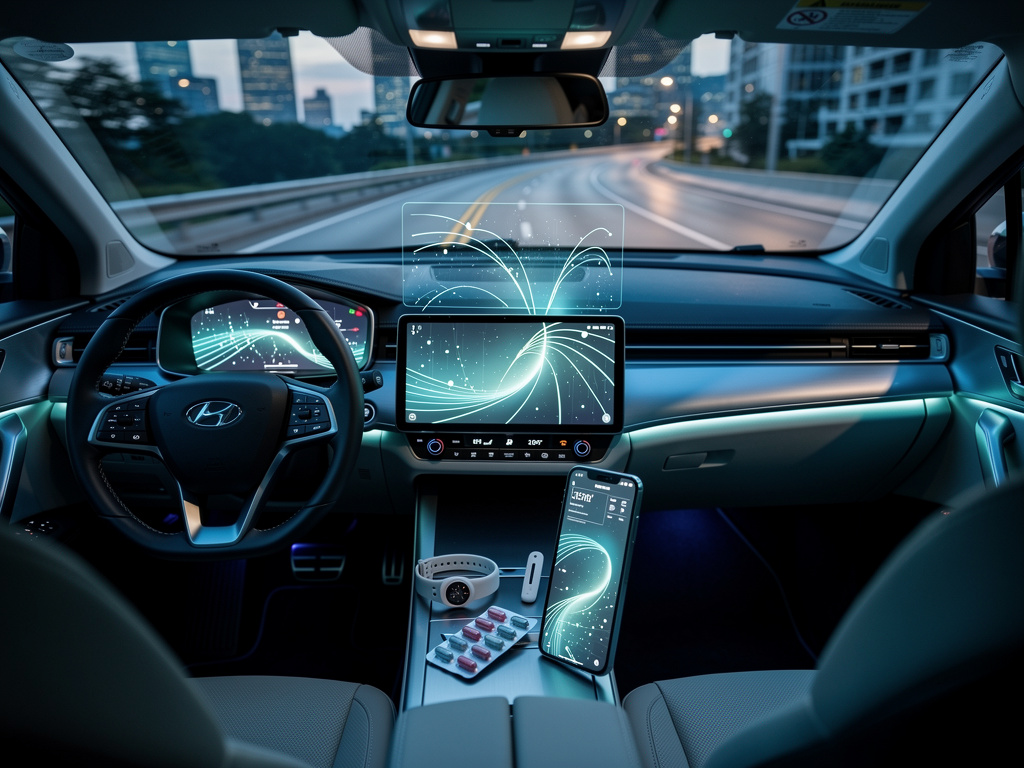
At the forefront is Apple’s Vehicle Motion Cues, a feature introduced in iOS 18 that has evolved significantly by 2026. This system uses animated dots on the edges of iPhone and iPad screens to mimic the vehicle’s movements, helping to align visual cues with the inner ear’s sense of motion. According to reports from MacRumors, the feature has gained widespread appeal for its simplicity and effectiveness in reducing symptoms for passengers glued to their devices. Users report a noticeable decrease in dizziness and nausea, making it easier to read, watch videos, or work during rides.
Building on this, automakers are integrating similar technologies directly into vehicle infotainment systems. Volvo, known for its safety innovations, is rolling out intelligent seat belts and cabin features that adjust in real-time to mitigate motion effects. A recent article in MotorTrend highlights how these updates, including over-the-air software enhancements, are part of a broader push toward smarter, more adaptive vehicles. The National Highway Traffic Safety Administration (NHTSA) is also playing a role, with regulatory changes encouraging such active safety measures.
Pharmaceutical Leaps Forward
Beyond gadgets, the pharmaceutical sector is making strides with new drugs specifically targeting motion sickness. In a groundbreaking development, the FDA approved Tradipitant, marketed as NEREUS, in late 2025—the first new motion sickness medication with a novel mechanism in over 40 years. This oral NK-1 receptor antagonist prevents vomiting induced by motion, offering a safe option for long drives without causing drowsiness. Posts on X from users like health tech enthusiasts have praised its impact, noting how it allows alert driving and passenger comfort without the side effects of older remedies like Dramamine.
Vanda Pharmaceuticals, the developer behind Tradipitant, conducted extensive trials showing efficacy in reducing nausea by up to 70% in test subjects. As detailed in a press release covered by PR Newswire, this drug fits into a larger trend of health tech integration, where wearables and AI monitor patient responses in real-time. For industry insiders, this approval signals a shift toward personalized medicine, where genetic profiles could soon tailor anti-nausea treatments.
Meanwhile, non-pharmaceutical wearables are gaining traction. Citroën’s Seetroën glasses, which use liquid-filled rims to synchronize visual and vestibular inputs, have been lauded in social media discussions on X for their innovative approach. These devices, originally launched a few years ago, are seeing renewed interest with 2026 updates incorporating smart sensors that adapt to individual motion sensitivities.
Automotive Integration and AI’s Role
The automotive industry isn’t stopping at accessories. At CES 2026, companies like Kia and Mercedes-Benz unveiled vehicles with built-in motion sickness prevention systems. According to coverage from ABC News, these models feature adaptive lighting and seat vibrations that counteract disorienting movements. Porsche, too, is experimenting with AR overlays in windshields to provide stabilizing visual anchors, drawing from concepts similar to Apple’s cues but scaled to the entire cabin.
AI plays a pivotal role here, with algorithms analyzing vehicle dynamics and passenger biometrics. For instance, systems in new Volvo SUVs use cameras and sensors to detect early signs of discomfort, then adjust acceleration profiles or activate calming audio. A deep dive in InsideEVs at CES 2026 emphasized how “physical AI” is revolutionizing autonomous vehicles, ensuring robotaxis don’t leave riders queasy—a critical barrier to widespread adoption.
This integration extends to electric and autonomous vehicles, where smoother rides are inherent but not foolproof. Tesla and Waymo are incorporating biofeedback loops, where passenger wearables feed data back to the car’s AI for real-time adjustments. Industry analysts predict that by 2029, such features could become standard, as per insights from MotorTrend’s forward-looking piece on car tech innovations.
Wearables and Apps Leading the Charge
On the consumer tech side, apps and wearables are democratizing access to these solutions. Bryan Johnson’s public quest on X for a nausea-free driving app inspired a flurry of developer activity, leading to tools that provide real-time feedback to drivers on acceleration patterns. One popular app simulates liquid borders on screens, reducing sensory conflict, as shared in various X threads and prototyped quickly using AI tools like Grok and Replit.
Mark Rober’s insights, referenced in recent X posts, reveal how former Apple Car projects explored VR/AR to combat sickness in autonomous vehicles. This technology ensures passengers can productively use travel time without staring blankly out windows. Publications like Self have tested Apple’s feature, reporting mixed but promising results, with users risking discomfort to validate its claims.
Moreover, gaming-inspired tech is crossing over. Innovations from Inventiv.org, discussed on X, use sensors to tweak settings like field of view in in-car entertainment systems, preventing sickness during virtual experiences. This convergence of gaming and automotive tech is creating hybrid solutions that appeal to tech-savvy consumers.
Regulatory and Safety Implications
Regulatory bodies are catching up, mandating certain features for safety. Starting in 2026, new cars must include DUI prevention tech, but this extends to broader impairment monitoring, including motion-induced issues. The Bussey Law Firm’s blog on DUI prevention notes how passive monitoring can limit vehicle operation if impairment is detected, indirectly aiding motion sickness management by ensuring smoother drives.
NHTSA’s push for advanced safety, as outlined in MotorTrend, includes enticements for automakers to innovate. This regulatory environment fosters competition, with companies like Apple enhancing CarPlay to include motion cues, as reported in The Truth About Cars. For insiders, this means watching how patents and partnerships shape the market.
Critically, these technologies address equity issues. Motion sickness disproportionately affects women and children, per medical studies, so inclusive design is key. Developers are now incorporating diverse testing pools to ensure broad efficacy.
Future Horizons in Motion Management
Looking ahead, brain-computer interfaces and space-inspired tech could redefine prevention. IEEE Spectrum’s article on new technologies in 2026 mentions brain chips that might directly modulate vestibular responses, though still in early stages. Meanwhile, F1’s 2026 regulations, explained in Autosport, introduce energy management systems that could inspire smoother civilian vehicles.
Social sentiment on X reflects excitement, with users sharing personal victories over car sickness using these tools. From FDA approvals to CES reveals, the buzz is palpable, signaling a market ripe for growth.
Industry projections estimate the motion sickness prevention sector could reach $5 billion by 2030, driven by autonomous vehicle adoption. Companies investing now, like those at CES 2026 covered by CNET, are positioning themselves as leaders.
Challenges and Ethical Considerations
Yet, challenges remain. Not all solutions work for everyone; some users report minimal relief from Apple’s cues, as per Self’s hands-on review. Privacy concerns arise with biometric monitoring in cars, prompting debates on data usage.
Ethically, ensuring accessibility is crucial. High-end features in luxury vehicles like Porsche’s might exclude budget-conscious consumers, though trickle-down effects are expected.
Finally, as tech evolves, collaboration between pharma, auto, and tech giants will be essential. The integration seen in 2026 models from Kia and others, as per ABC News, exemplifies this synergy, promising a future where car sickness is a relic of the past.
Industry Impact and Market Dynamics
The ripple effects on related sectors are profound. Travel industries, from ride-sharing to tourism, stand to benefit as more people opt for car travel without fear of illness. Uber and Lyft are piloting motion-optimized routing algorithms, informed by user feedback on X.
Economically, startups focusing on AR glasses and apps are attracting venture capital, inspired by successes like Citroën’s. MotorTrend’s 2026 Best Tech Awards, detailed in their recent piece on award winners, highlight top innovators, underscoring the competitive drive.
In healthcare, trends from PR Newswire point to AI-driven diagnostics that predict susceptibility, integrating with vehicle systems for proactive measures.
Personal Stories and Real-World Applications
Anecdotes from X users illustrate real impact: one driver reduced passenger nausea by adhering to acceleration specs shared online, transforming family outings. Another tester found relief in app-based simulations during bumpy rides.
For professionals, like remote workers in autonomous shuttles, these techs enable productivity. The Truth About Cars notes how Apple’s updates improve CarPlay, turning commutes into workspaces.
As we navigate 2026, these innovations collectively signal a paradigm shift, making motion sickness management a cornerstone of modern mobility.


 WebProNews is an iEntry Publication