
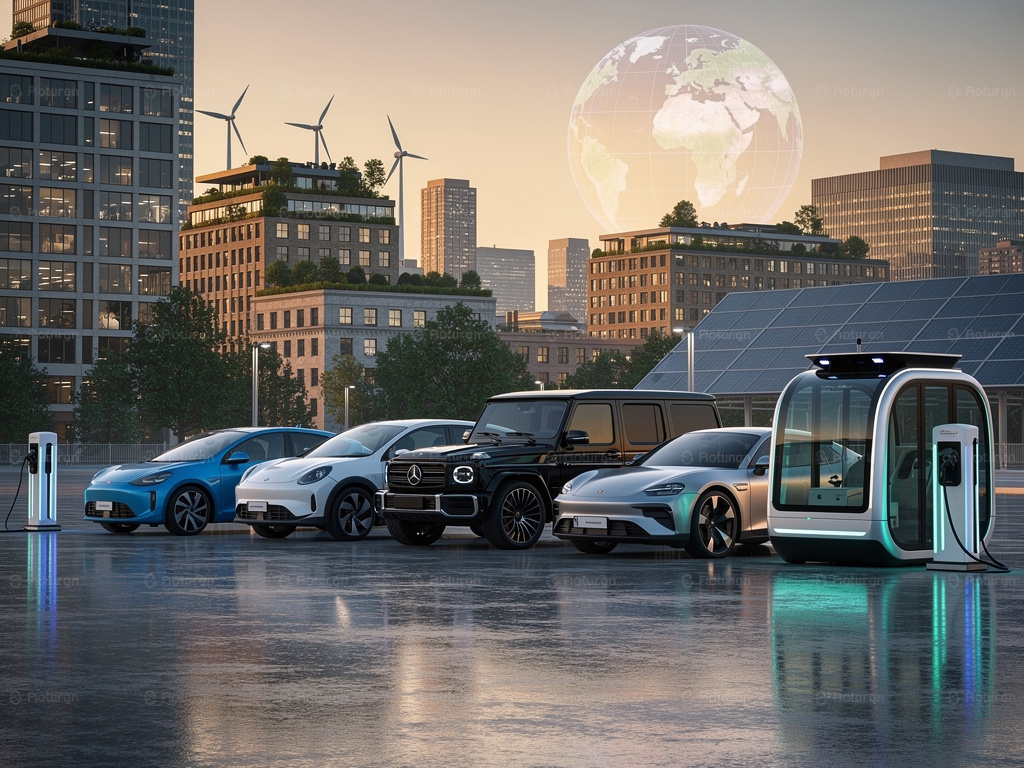
Electrifying Horizons: The 2026 EV Lineup Redefining Mobility
The electric vehicle sector is poised for a transformative year in 2026, with a slew of innovative models set to hit showrooms and challenge established norms in automotive design, performance, and accessibility. Drawing from recent industry analyses, this surge reflects automakers’ intensified efforts to capture market share amid evolving consumer demands and regulatory pressures. For instance, a report from Digital Trends highlights over a dozen anticipated releases, ranging from compact crossovers to luxury SUVs, each promising advancements in battery technology, range, and autonomous features.
Industry observers note that 2026 could mark a pivotal shift, as manufacturers respond to a mix of challenges and opportunities seen in 2025. Sales dipped last year due to policy reversals and economic headwinds, yet consumer interest remained resilient, according to coverage in NPR. This resilience is fueling optimism, with projections from BloombergNEF’s Electric Vehicle Outlook suggesting that electrification trends will accelerate, influenced by shared mobility and autonomous innovations.
Key players like Tesla, General Motors, and Hyundai are recalibrating strategies, focusing on cost-effective models to broaden appeal. Posts on X from industry insiders, such as those discussing Tesla’s ambitious rollout, underscore the excitement around high-volume production of vehicles like the Cybercab and Semi, signaling a year of unprecedented product launches.
Budget-Friendly Breakthroughs
Among the most eagerly awaited entries are affordable options aimed at democratizing electric mobility. The Chevrolet Bolt EUV, making a comeback after a brief hiatus, is expected to offer improved range and updated tech at a competitive price point. This model builds on GM’s legacy in the segment, addressing past battery issues with enhanced safety features.
Similarly, the Kia EV3 promises to undercut rivals with its sub-$30,000 starting price, featuring a sleek design and up to 300 miles of range. Kia’s strategy aligns with broader industry moves toward economical EVs, as noted in analyses from InsideEVs, which predicts that cheaper, faster-charging models will dominate discussions.
Luxury and Performance Pioneers
Shifting to the premium end, the Mercedes-Benz EQG electrifies the iconic G-Class, blending off-road prowess with electric efficiency. Expected to deliver over 300 miles of range and rapid charging, this model caters to adventure seekers unwilling to compromise on luxury.
Porsche’s Macan EV, already generating buzz, combines sporty dynamics with electric torque, aiming for a 0-60 mph sprint in under four seconds. Its integration of advanced driver-assistance systems positions it as a benchmark for performance EVs.
The Polestar 3, with its Scandinavian design ethos, emphasizes sustainability through recycled materials and a dual-motor setup yielding impressive power. Industry reports, including those from U.S. News, highlight its potential to rival Tesla in the luxury SUV space.
Autonomous and Futuristic Visions
Tesla’s Cybercab stands out as a harbinger of autonomous transport, designed for ride-sharing without traditional controls. Slated for volume production in 2026, it embodies Elon Musk’s vision for urban mobility, with X posts from Tesla enthusiasts like Sawyer Merritt detailing its integration with Optimus robots and Megapack energy solutions.
Rivian’s R2, a more accessible sibling to the R1T, targets adventure enthusiasts with modular accessories and over 300 miles of range. This model’s debut could solidify Rivian’s position in the growing electric adventure vehicle niche.
Lucid’s Gravity SUV extends the brand’s reputation for efficiency, promising class-leading range and spacious interiors. Its air suspension and advanced aerodynamics are engineered to optimize energy use, appealing to families seeking long-haul capabilities.
SUV Dominance and Market Shifts
The Volvo EX90, with its focus on safety and sustainability, incorporates lidar for enhanced autonomy and uses eco-friendly materials throughout. This flagship SUV is anticipated to set new standards in crash protection for electric vehicles.
Jeep’s Recon brings electrification to the off-road icon, featuring removable doors and a rugged chassis adapted for battery power. It’s designed to maintain Jeep’s trail-rated heritage while offering silent, emission-free adventures.
Cadillac’s Optiq rounds out the luxury crossover segment, with sleek styling and GM’s Ultium platform enabling fast charging and versatile performance. These models collectively illustrate how traditional automakers are adapting to electric demands, as explored in CNBC discussions on Detroit’s pivot from policy-driven to consumer-led strategies.
Global Influences and Regional Trends
Internationally, Norway’s near-total shift to EVs, with 96% of new car sales electric in 2025, serves as a model, per Reuters. This success story influences global manufacturers, encouraging bolder investments in charging infrastructure and battery tech.
In Australia, an influx of affordable models like new utes and hatchbacks is expected to break price barriers, as reported by The Guardian. This regional push highlights how localized incentives and consumer preferences are shaping model availability.
European brands, including Audi and VW, are gearing up for premieres with faster-charging capabilities and facelifts, according to Electrive. These developments underscore a continent-wide commitment to electrification amid stringent emissions regulations.
Innovations in Battery and Charging Tech
Underpinning these releases are breakthroughs in battery technology. Toyota’s plans for EVs with over 600 miles of range by 2026, using bipolar lithium iron phosphate batteries, could reduce costs by 40%, as shared in X posts referencing older announcements but still relevant to current trends.
Kia’s refreshed EV6, with its larger battery and native NACS port, exemplifies the move toward standardized charging, enabling up to 319 miles of range and 350kW fast charging. Such advancements address range anxiety, a persistent barrier to adoption.
Moreover, Tesla’s redesigned Semi truck, with improved efficiency and 500-mile range, targets commercial sectors, promising 1.2MW peak charging speeds. This heavy-duty focus extends EV benefits beyond passenger cars, potentially revolutionizing logistics.
Industry Challenges and Consumer Sentiment
Despite the excitement, hurdles remain. Automakers like GM and Ford are refocusing on profitable gas models amid slower EV uptake, yet 2026’s lineup suggests a balanced approach. Consumer surveys indicate steady interest, buoyed by falling battery costs and expanding infrastructure.
X discussions reveal enthusiasm for models like the Ferrari Elettrica and Dacia’s budget offerings, pointing to a diverse market catering to various segments. This variety could mitigate risks associated with economic fluctuations.
Regulatory environments play a crucial role; reversals in U.S. federal policies have tempered growth, but state-level incentives persist, fostering innovation.
Sustainability and Supply Chain Dynamics
Sustainability emerges as a core theme, with models incorporating recycled components and ethical sourcing. Polestar’s commitment to transparency in its supply chain sets a precedent, influencing peers to adopt similar practices.
Supply chain resilience is another focus, as automakers secure lithium and rare earth materials amid geopolitical tensions. BloombergNEF forecasts that these efforts will stabilize prices, making EVs more accessible.
The integration of solar and home energy solutions, as seen in Tesla’s ecosystem, blurs lines between vehicles and stationary power, enhancing overall efficiency.
Market Projections and Competitive Dynamics
Analysts project that 2026 will see over 20 new EVs, from Kia’s sporty entries to Mercedes’ high-end offerings, as per ABC News. This influx could boost global sales by 20-30%, driven by competitive pricing and tech upgrades.
Competition intensifies with startups like Rivian challenging incumbents, while legacy brands leverage scale for rapid deployment. Tesla’s multi-product launch, including the Optimus robot, positions it as a tech conglomerate rather than just an automaker.
Consumer adoption hinges on education and infrastructure; widespread fast-charging networks will be key to unlocking these models’ potential.
Looking Ahead to Broader Impacts
The 2026 EV cohort isn’t just about new cars—it’s a statement on mobility’s future. Autonomous features in vehicles like the Cybercab could reshape urban planning, reducing congestion through efficient ride-sharing.
Environmental benefits are profound, with reduced emissions contributing to climate goals. As models like the EQG prove, electrification need not sacrifice capability.
Ultimately, this year’s releases signal a maturing industry, where innovation meets practicality, setting the stage for widespread electric adoption in the years to follow.


 WebProNews is an iEntry Publication