
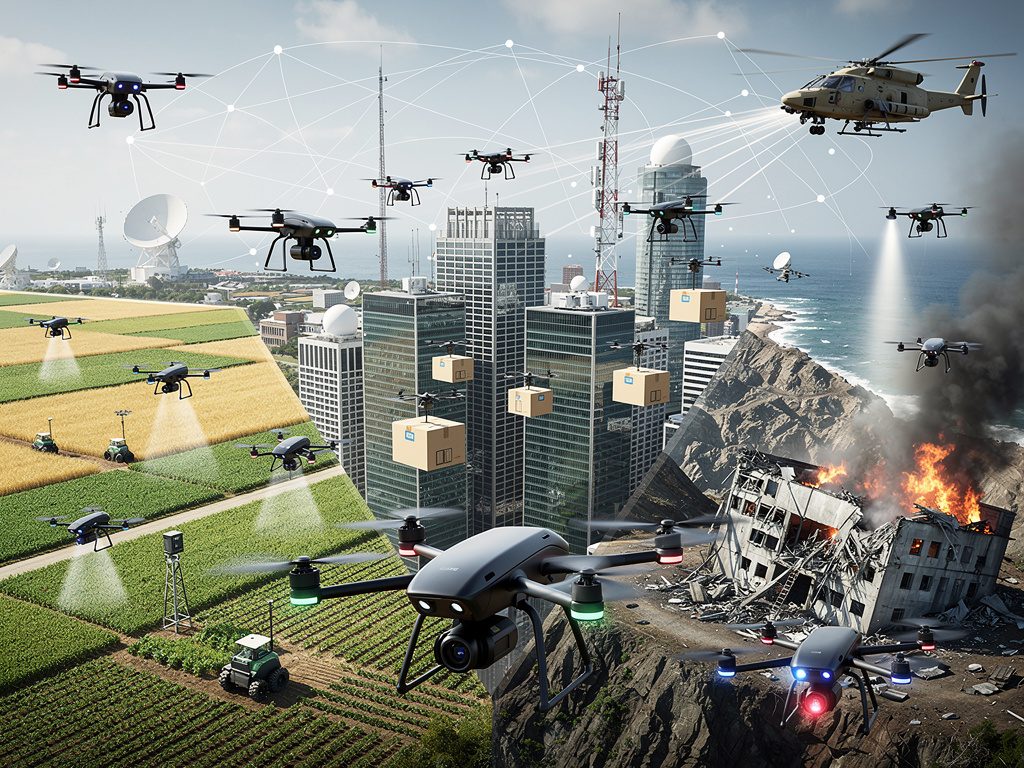
Drones Unleashed: The Radical Tech Revolutions Redefining Flight in 2026
In the fast-evolving world of unmanned aerial vehicles, 2026 is shaping up to be a pivotal year where breakthroughs in autonomy, artificial intelligence, and regulatory frameworks are pushing drones into uncharted territories. From agricultural fields to urban skies, these machines are no longer just tools for hobbyists or filmmakers; they’re becoming integral to industries like logistics, defense, and public safety. Drawing from recent insights, including a video overview on MSN that highlights “insane innovations” such as swarming capabilities and bio-inspired designs, the sector is witnessing a surge in capabilities that could transform how we interact with the air around us.
One of the most talked-about advancements is the rise of Beyond Visual Line of Sight (BVLOS) operations, which allow drones to venture far beyond their operators’ direct view. This shift, detailed in a preview from The Drone U, is enabled by sophisticated detect-and-avoid systems and Remote ID technologies that ensure safer, longer-range flights. For instance, infrastructure monitoring over vast power lines or pipelines is now feasible without constant human oversight, reducing risks and operational costs. These systems use real-time data processing to navigate obstacles autonomously, marking a leap from the line-of-sight limitations that have constrained drone use for years.
Artificial intelligence is at the heart of many of these developments, with edge AI allowing drones to make split-second decisions without relying on cloud connectivity. As noted in coverage from FlytBase, this technology is transforming swarm coordination, where multiple drones operate in unison like a flock of birds. Imagine a fleet of drones surveying disaster zones, each unit adapting to the others’ movements to cover more ground efficiently. This isn’t just theoretical; practical applications are emerging in search-and-rescue missions, where swarms can map areas faster than individual units.
Swarming Into the Future: How AI-Driven Collectives Are Changing Operations
Battery innovations are another cornerstone, extending flight times and enabling all-weather resilience. Publications like TechTimes emphasize how these advancements will reshape global industries over the next five years, with drones capable of enduring harsh conditions that previously grounded them. For agriculture, this means year-round crop monitoring, even in rain or high winds, boosting yields and sustainability. Companies are integrating advanced sensors that provide hyperspectral imaging, detecting plant health issues invisible to the naked eye.
In the agritech space, leaders like XAG Co., Ltd. are pioneering complete smart farming ecosystems. According to Inventiva, XAG’s P Series drones have logged millions of flight hours since 2022, showcasing reliability across vast hectarage. Their innovations, unveiled at events like Agritechnica 2025, include autonomous spraying systems that precisely target weeds, minimizing chemical use and environmental impact. This integration of drones with ground-based robots creates a seamless network for precision agriculture, where data from the air informs real-time decisions on the ground.
Military applications are accelerating too, with the U.S. Air Force’s drone wingman program nearing key decisions. Breaking Defense reports that 2026 will see selections for production designs, focusing on collaborative combat aircraft that fly alongside manned jets. These “loyal wingmen” enhance pilot safety by handling reconnaissance or even offensive roles, leveraging AI for tactical autonomy. The Marine Corps is also ramping up, aiming to procure 10,000 new drones this year while expanding training for off-the-shelf systems, as per DefenseScoop.
Military Might: Drones as Force Multipliers in Modern Warfare
Geopolitical shifts are influencing drone strategies globally. In Ukraine, the appointment of Mykhailo Fedorov as Defense Minister signals a deeper commitment to unmanned systems, building on the “Army of Drones” initiative. DroneXL highlights how this move could redefine battlefield tactics, with drones playing central roles in reconnaissance and strikes. Posts on X echo this sentiment, with users discussing how 2026 might see battlefields dominated by autonomous swarms extending 20-25 kilometers, minimizing human exposure to danger.
On the civilian front, enterprise drones are booming, with market projections from Loyalty Drones estimating growth from $2.09 billion in 2025 to $10.70 billion by 2035. Innovations in AI and autonomy are key drivers, enabling uses in logistics for last-mile deliveries and in public safety for rapid response. The Electronic Frontier Foundation’s review in EFF notes the expansion of Drone as First Responder programs, where AI-integrated drones provide real-time video feeds to law enforcement, though it raises privacy concerns about data retention and surveillance.
Consumer Electronics Show (CES) 2026 is set to showcase many of these cutting-edge developments. Coverage from Yahoo Finance anticipates major unveils in AI and robotics, with drones featuring prominently. Live updates from The Verge and Tom’s Guide suggest breakthroughs like on-device AI for smarter navigation and integration with emerging tech like haptic controllers for immersive FPV experiences.
Showcasing Tomorrow: CES 2026 Spotlights Drone Breakthroughs
Bio-inspired designs are captivating innovators, with MIT’s robotic insect drones capable of extended flights mimicking natural insect mechanics. X posts describe these “bug-bots” as game-changers for pollination, potentially revolutionizing agriculture by addressing pollinator declines. Similarly, transformative drones like the Transwing, which fold wings midair for versatile takeoff and flight, are blurring lines between helicopters and fixed-wing aircraft, as shared in platform discussions.
Regulatory changes are crucial enablers, with shifts allowing broader BVLOS adoption and addressing security concerns. The U.S. ban on foreign drone imports, mentioned in X previews from sources like DJI Rumors, is pushing domestic innovation, fostering a robust ecosystem of American-made tech. This includes software for coordinating drone groups and communication systems ensuring secure operations, as outlined in investment analyses on the platform.
Looking ahead, speculative ventures like Tesla potentially entering the drone market could disrupt transportation. X users point to massive opportunities in human and goods transport via drones, predicting a shift where aerial mobility becomes commonplace. Stocks in related companies, from hardware providers to software coordinators, are buzzing with potential, reflecting investor optimism for a 2026 supercycle.
Investment Horizons: Betting on Drone Dominance
In India, aerospace ambitions are soaring with projects like the Tejas Mk2 fighter and Ghatak UCAV set for first flights in 2026, as per X insights. These indigenous platforms underscore a global trend toward self-reliant drone tech, enhancing national security and economic growth. Meanwhile, French analyst Xavier Tytelman warns on X of escalating drone swarms by 2026, capable of operator-free strikes, which could intensify conflicts.
For mapping and surveying, advancements in photogrammetry and LiDAR are elevating drone utility. SimActive’s article on X emphasizes how 2026 will demand both speed and precision in drone mapping, integrating aerial data with BIM and GIS for automated reality capture. This convergence is making drones indispensable in construction and urban planning.
The integration of drones into everyday life raises ethical questions. As EFF points out, the normalization of surveillance through first-responder programs necessitates robust policies on data use. Balancing innovation with privacy will be key as these technologies proliferate.
Ethical Skies: Navigating Privacy in an Era of Ubiquitous Drones
Emerging players in agritech, beyond XAG, include firms leveraging AI for predictive analytics in farming. Inventiva’s list highlights how these companies are not just building drones but entire ecosystems that predict crop needs and optimize resources.
In defense, the push for more training and procurement, as in the Marine Corps initiative, ensures operators are adept at handling advanced systems. DefenseScoop details how this expansion focuses on first-person-view drones, enhancing tactical flexibility.
Globally, Ukraine’s strategic pivot under Fedorov could inspire other nations to prioritize drone forces. DroneXL’s coverage suggests this “drone architect” is poised to innovate warfare, potentially leading to more autonomous systems.
Global Ripples: How International Strategies Shape Drone Evolution
As CES 2026 unfolds, expect announcements that further blur lines between drones and other robotics. LatestLY reports major tech leaders unveiling AI-driven innovations, promising smarter, more integrated devices.
X discussions also forecast budget-friendly advancements, like waterproof quads and 360-degree capable drones, democratizing access. This could spur widespread adoption in hobbies and small businesses.
Ultimately, the drone sector in 2026 stands at the cusp of maturity, where technological prowess meets practical application, driven by AI, extended capabilities, and regulatory support. From farms to frontlines, these innovations are not just enhancing efficiency but redefining possibilities in the air.


 WebProNews is an iEntry Publication