
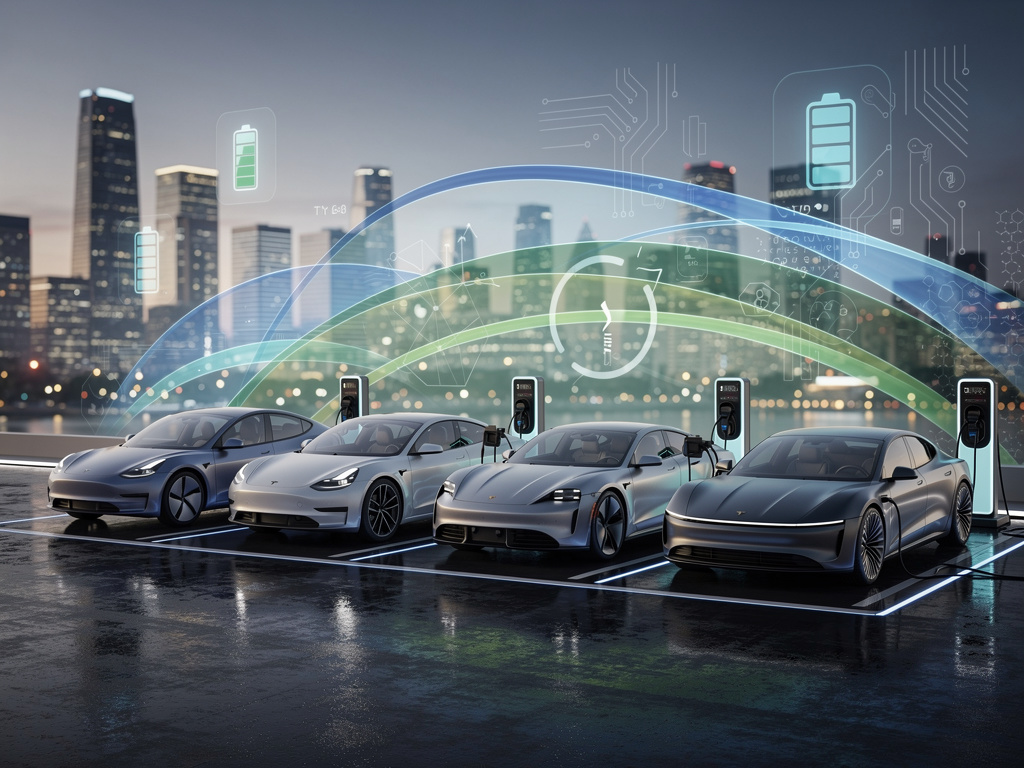
Electrifying Revolutions: The EVs That Redefined Mobility in 2025 and Beyond
In a year marked by policy upheavals and market fluctuations, the electric vehicle sector demonstrated remarkable resilience, with several models emerging as beacons of innovation and performance. As federal incentives waned and traditional automakers recalibrated their strategies, consumers and industry players alike turned their attention to vehicles that balanced cutting-edge technology with practical appeal. Drawing from expert reviews and real-world testing, this deep dive explores the top electric cars that captivated reviewers in 2025, while weaving in broader industry trends shaping the path forward.
One standout was the Tesla Model 3, which continued to dominate discussions for its refined updates and efficiency. Reviewers praised its enhanced range and interior upgrades, making it a benchmark for affordable luxury in the EV space. According to a comprehensive evaluation by Edmunds, the Model 3’s 2025 iteration scored highly on performance and value, solidifying its position as a top contender. This model’s success underscores Tesla’s ability to iterate rapidly, even amid competitive pressures from newcomers.
Beyond Tesla, the BMW i4 impressed with its blend of sporty dynamics and electric prowess. Testers noted its seamless integration of BMW’s driving heritage into an EV format, offering a thrilling experience without compromising on range. Insights from Car and Driver highlight how the i4’s handling and acceleration set it apart, appealing to enthusiasts transitioning from combustion engines. Such vehicles illustrate how legacy brands are adapting to electrification, blending familiar attributes with new energy paradigms.
Rising Stars in Performance and Range
The Porsche Taycan, particularly in its GTS variant, earned accolades for pushing the boundaries of EV performance. Reviewers who spent extensive time behind the wheel described it as a revelation, combining blistering speed with refined comfort. A detailed account from TechRadar positions the Taycan as a top pick, emphasizing its superior build quality and driving engagement that rivals high-end sports cars. This model’s reception reflects a growing demand for premium EVs that don’t sacrifice excitement for sustainability.
Shifting to more accessible options, the Hyundai Ioniq 5 N brought high-performance credentials to a broader audience. Its aggressive styling and track-ready features surprised many, offering a fun-to-drive package at a competitive price point. U.S. News rankings placed it among the elite for 2025, citing its rapid charging capabilities and versatile interior. This vehicle’s emergence signals how Korean manufacturers are challenging established players by innovating in both design and technology.
On the luxury front, the Lucid Air Sapphire stood out for its extraordinary power and efficiency. With over 1,200 horsepower, it redefined what an electric sedan could achieve, drawing praise for its aerodynamic efficiency and long-range capabilities. Industry observers, including those at InsideEVs, noted its role in elevating expectations for ultra-luxury EVs, even as market conditions tightened.
Market Dynamics and Policy Impacts
The year 2025 saw electric vehicle sales facing headwinds, with reversals in pro-EV policies contributing to a dip in overall adoption rates. Despite this, consumer interest remained robust, as evidenced by steady inquiries and test drives reported across dealerships. A report from NPR details how, amid discontinued models and plummeting sales figures, underlying enthusiasm persisted, buoyed by advancements in battery tech and infrastructure.
Hybrids, however, stole some spotlight, proving to be a transitional favorite for buyers hesitant about full electrification. Publications like How-To Geek analyzed how hybrids captured market share by offering familiarity with fuel efficiency, suggesting a phased approach to EV dominance. This trend highlights the sector’s adaptability, where pure EVs must compete not just with each other but with hybrid alternatives gaining traction.
Looking globally, China’s EV market experienced a slowdown in growth, with intense price competition and expansion efforts testing manufacturers’ resilience. CNBC reports predict that 2026 will resemble a survival test for many players, as domestic saturation pushes brands toward international markets. This global shift could influence pricing and availability in regions like North America and Europe.
Innovations Driving Future Adoption
Battery breakthroughs were a highlight of 2025, with improvements in energy density and charging speeds addressing key consumer pain points. Models incorporating these advancements, such as the updated Tesla Model Y, benefited from extended ranges and quicker recharges, making long-distance travel more feasible. Posts on X from industry influencers echoed this sentiment, noting how Tesla’s refreshed Model Y Performance became a value leader in the SUV segment, with aggressive styling and enhanced capabilities drawing widespread acclaim.
Emerging players like Rivian introduced compelling options, with the R2 model generating buzz for its off-road prowess and tech-forward features. Consumer Reports profiled upcoming EVs, including Rivian’s entries, as part of a wave set to invigorate the market in 2026. These developments point to a diversification of offerings, catering to niches from adventure seekers to urban commuters.
In India, electric passenger vehicles surged, contrasting with struggles in the two-wheeler segment due to subsidy reductions. ETAuto outlines how this growth reflects varying regional dynamics, with policy and infrastructure playing pivotal roles in adoption rates.
Challenges and Opportunities Ahead
Infrastructure remains a critical factor, with expansions in charging networks alleviating range anxiety for many users. The IEA’s insights, shared via posts on X, indicate a burgeoning build-out of global EV support systems, positioning markets like Europe and Asia for accelerated growth. In the UK, statistics from RAC Drive show EVs nearing mainstream status, driven by increasing model variety and competitive pricing.
Affordability emerged as a key theme, with forecasts suggesting that 25% of new vehicles sold in 2025 would be electrified, including a 10% share for pure EVs. X discussions from market analysts projected this shift, marking a decline in gas-powered dominance to historic lows. Such data underscores the momentum building toward widespread electrification, despite temporary setbacks.
For 2026, anticipation builds around launches like the Audi Q6 e-tron and Volkswagen’s electric GTI, promising faster charging and bolder designs. Electrive previews these as potential game-changers, with German brands leading a charge of facelifts and new entries.
Sustainability and Consumer Shifts
Sustainability narratives gained traction, with EVs positioned as integral to reducing emissions. The Scout Terra and Jeep Recon, highlighted in forward-looking reviews, embody this by offering rugged, eco-friendly alternatives to traditional SUVs. Their integration of bidirectional charging capabilities, as noted in guides from RTÉ Brainstorm, allows vehicles to power homes, adding utility beyond transportation.
Consumer preferences evolved, favoring models with advanced infotainment and autonomous features. The Xiaomi SU7, a Chinese entrant, captured attention for its tech integration and competitive pricing, as per X posts summarizing late-2025 trends. This influx of innovative imports could reshape competitive dynamics in Western markets.
Finally, as the sector navigates regulatory changes and technological leaps, the EVs of 2025 serve as milestones. From the Model 3’s efficiency to the Taycan’s thrill, these vehicles not only met but exceeded expectations, paving the way for an electrified future where choice and capability abound. Industry insiders will watch closely as 2026 unfolds, with new models and strategies likely to further accelerate this transformation.


 WebProNews is an iEntry Publication