
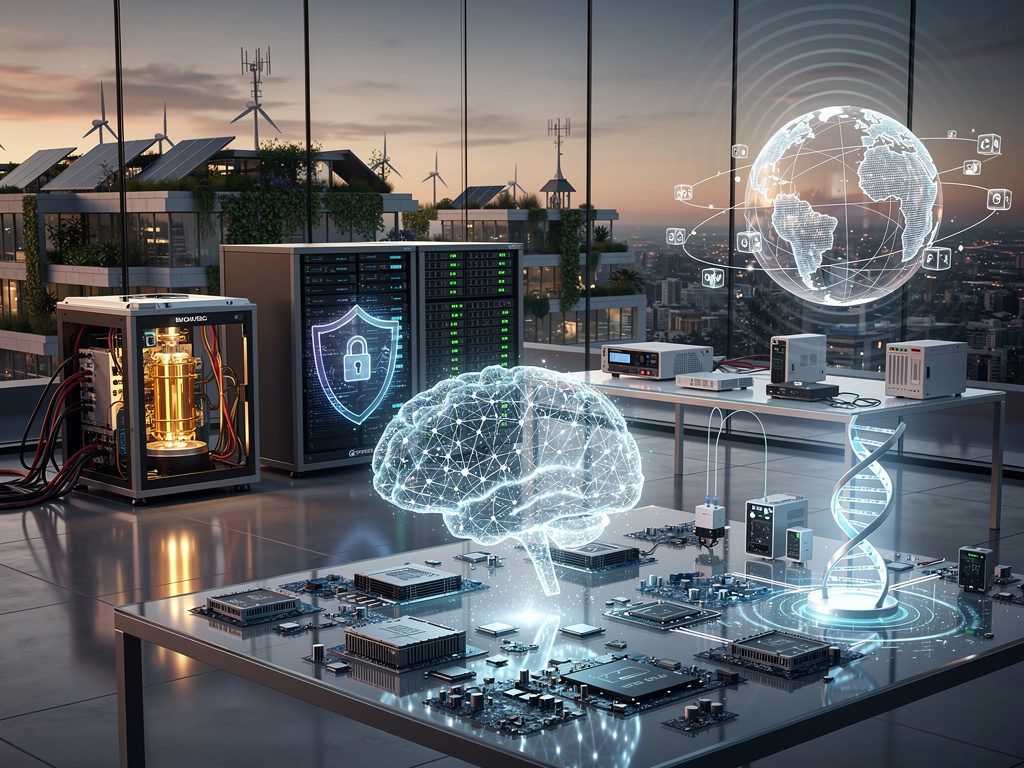
Emerging Frontiers in Artificial Intelligence
As the technology sector accelerates into 2025, artificial intelligence continues to dominate discussions among executives and innovators. Recent advancements in AI are not just incremental; they’re reshaping entire industries with unprecedented speed. According to a report from McKinsey, AI’s integration into business operations is expected to generate trillions in economic value, with applications ranging from predictive analytics to autonomous systems. This surge is driven by improvements in machine learning algorithms that process vast datasets more efficiently, enabling real-time decision-making that was once the realm of science fiction.
Beyond basic automation, AI is evolving into agentic systems capable of independent action. These intelligent agents can negotiate, plan, and execute tasks without constant human oversight, a trend highlighted in analyses from various industry watchers. For instance, generative AI models are now multilingual and integrated with Internet of Things (IoT) devices, expanding their utility in global markets. This convergence is fostering innovations in sectors like healthcare, where AI-driven diagnostics are becoming standard, promising faster and more accurate patient outcomes.
However, the rapid adoption of AI brings challenges, including ethical concerns and the need for robust governance. Industry insiders note that while AI can enhance productivity, it also risks amplifying biases if not carefully managed. Discussions on platforms like X reveal a mix of optimism and caution, with posts emphasizing the importance of sustainable AI development to mitigate energy consumption issues, as data centers supporting these technologies demand enormous power resources.
Sustainability Drives Tech Evolution
Sustainability has emerged as a critical imperative in the tech world, pushing companies to rethink their environmental impact. Innovations in green technology are gaining traction, with a focus on reducing carbon footprints through efficient computing and renewable energy integrations. Deloitte’s Tech Trends report, accessible at Deloitte Insights, underscores how AI is being leveraged to optimize energy use in everything from smart grids to manufacturing processes. This shift is not merely regulatory; it’s a competitive edge, as consumers and investors increasingly favor eco-conscious firms.
One notable development is the rise of bio-based materials and decentralized renewable energy systems. These technologies are poised to transform supply chains, making them more resilient and less dependent on fossil fuels. For example, advancements in 3D printing using sustainable materials are enabling micro-factories that produce goods on-demand, cutting down on waste and transportation emissions. This trend aligns with broader industry movements toward circular economies, where resources are reused rather than discarded.
Challenges persist, particularly in scaling these innovations. The high initial costs and technological hurdles can deter widespread adoption, but collaborative efforts between startups and established players are accelerating progress. Recent news from Reuters Tech News highlights partnerships in the energy sector that combine AI with solar and wind technologies, aiming to create more efficient power distribution networks.
Quantum Computing’s Quantum Leap
Quantum computing represents one of the most intriguing frontiers, promising computational power that dwarfs current capabilities. As we move into 2025, breakthroughs in quantum algorithms are enabling solutions to complex problems in fields like drug discovery and financial modeling. Gartner’s top strategic technology trends, detailed at Gartner, position quantum as a game-changer, with potential to revolutionize encryption and optimization tasks that classical computers struggle with.
The integration of quantum with existing tech stacks is gaining momentum, though it remains in early stages. Industry experts predict that by 2026, hybrid quantum-classical systems will become more common, allowing businesses to tackle simulations that were previously impossible. This is particularly relevant for materials science, where quantum simulations can accelerate the development of new compounds for batteries and semiconductors.
Yet, the path forward is fraught with obstacles, including the need for extreme cooling and error correction. Posts on X from tech enthusiasts and analysts reflect excitement about quantum’s merger with AI and Web3, suggesting a “new world order” in computing. These sentiments underscore the transformative potential, but also highlight the necessity for substantial investments in infrastructure to make quantum accessible beyond research labs.
Blockchain and Decentralized Innovations
Blockchain technology is maturing beyond its cryptocurrency origins, finding applications in supply chain transparency and secure data sharing. Innovations in this area are enhancing trust in digital transactions, with smart contracts automating agreements across industries. A piece from Simplilearn outlines how blockchain’s integration with AI and 5G is creating robust ecosystems for decentralized finance and beyond, projecting significant job growth in related fields.
In particular, the rise of decentralized renewable energy grids powered by blockchain allows for peer-to-peer energy trading, democratizing access to power. This is especially promising for emerging markets, where traditional infrastructure lags. Companies are experimenting with tokenization of assets, turning physical goods into digital tokens for easier trading and verification.
Security remains a paramount concern, as blockchain’s immutability can be a double-edged sword if vulnerabilities are exploited. Recent coverage in The New York Times Technology section discusses high-profile breaches and the ongoing efforts to fortify these systems against cyber threats, emphasizing the need for standardized protocols.
The Rise of Edge Computing and IoT Synergies
Edge computing is shifting data processing closer to the source, reducing latency and enhancing real-time applications. This trend is crucial for autonomous vehicles and smart cities, where split-second decisions are vital. According to insights from WIRED, the combination of edge computing with AI is enabling more intelligent devices that operate independently of central servers, improving efficiency and privacy.
IoT devices are proliferating, creating interconnected networks that gather and analyze data on an massive scale. Innovations in this space include AI-driven predictive maintenance for industrial equipment, which can prevent costly downtimes. The synergy between edge, IoT, and 5G networks is fostering environments where data flows seamlessly, supporting everything from telemedicine to automated agriculture.
However, the expansion of IoT raises privacy and security issues, as more devices mean more potential entry points for attacks. Industry reports stress the importance of advanced cybersecurity measures, with AI playing a dual role in both defending against and potentially enabling threats if misused.
Cybersecurity in an Interconnected World
As technologies interconnect, cybersecurity emerges as a foundational element of innovation. The increasing sophistication of threats, including ransomware and AI-powered attacks, demands proactive defenses. McKinsey’s analysis, previously referenced, points to the growing investment in cybersecurity tools that use machine learning to detect anomalies in real-time.
Innovations like zero-trust architectures are becoming standard, ensuring that no entity is automatically trusted within a network. This approach is vital for protecting critical infrastructure in sectors like healthcare and transportation. Recent X posts highlight trends in AI-driven cybersecurity, with companies adopting these technologies to stay ahead of evolving risks.
The challenge lies in balancing security with usability, as overly restrictive measures can hinder productivity. Collaborative international efforts are essential to combat global cyber threats, with governments and private sectors working together to establish norms and share intelligence.
Automation and the Future of Work
Automation powered by robotics and AI is transforming workplaces, automating routine tasks and allowing humans to focus on creative endeavors. Deloitte Insights notes the rise of intelligent automation that adapts to changing conditions, enhancing operational efficiency across industries.
In manufacturing, cobots—collaborative robots—are working alongside humans, improving safety and output. This trend extends to services, where chatbots and virtual assistants handle customer interactions with increasing sophistication.
The societal impact includes job displacement concerns, prompting calls for reskilling programs. Industry insiders advocate for ethical automation that prioritizes worker well-being, ensuring that technological progress benefits society as a whole.
5G and Beyond: Connectivity Redefined
The rollout of 5G networks is enabling faster, more reliable connectivity, paving the way for innovations like augmented reality and remote surgery. Simplilearn’s trends article discusses how 5G’s low latency supports mission-critical applications, driving growth in mobile edge computing.
Looking ahead, research into 6G promises even greater speeds and integration with satellite systems for global coverage. This could revolutionize rural access to technology, bridging digital divides.
Challenges include spectrum allocation and infrastructure costs, but the potential for economic growth through enhanced connectivity is immense, as noted in various tech publications.
Biotech and Health Tech Advancements
Biotechnology is intersecting with tech, leading to breakthroughs in personalized medicine and gene editing. AI algorithms are accelerating drug discovery, reducing development times dramatically.
Telemedicine platforms, bolstered by AI diagnostics, are expanding healthcare access, especially in underserved areas. Mental health apps using machine learning provide tailored support, addressing global wellness needs.
Ethical considerations, such as data privacy in health tech, are paramount, with regulations evolving to keep pace with innovations.
Navigating Regulatory and Ethical Horizons
Regulatory frameworks are adapting to tech’s rapid pace, with governments implementing policies on AI ethics and data protection. The EU’s AI Act serves as a model, balancing innovation with safeguards.
Industry leaders are calling for self-regulation to complement government efforts, fostering trust in new technologies.
As we look toward 2026, the interplay of these trends will define the tech sector’s trajectory, demanding agility from all stakeholders.
The convergence of AI, sustainability, and connectivity is not just reshaping industries but redefining human potential. Executives must prioritize strategic investments to harness these forces, ensuring that innovation serves broader societal goals. With careful navigation, the tech sector can overcome challenges and unlock unprecedented opportunities for growth and progress.


 WebProNews is an iEntry Publication