
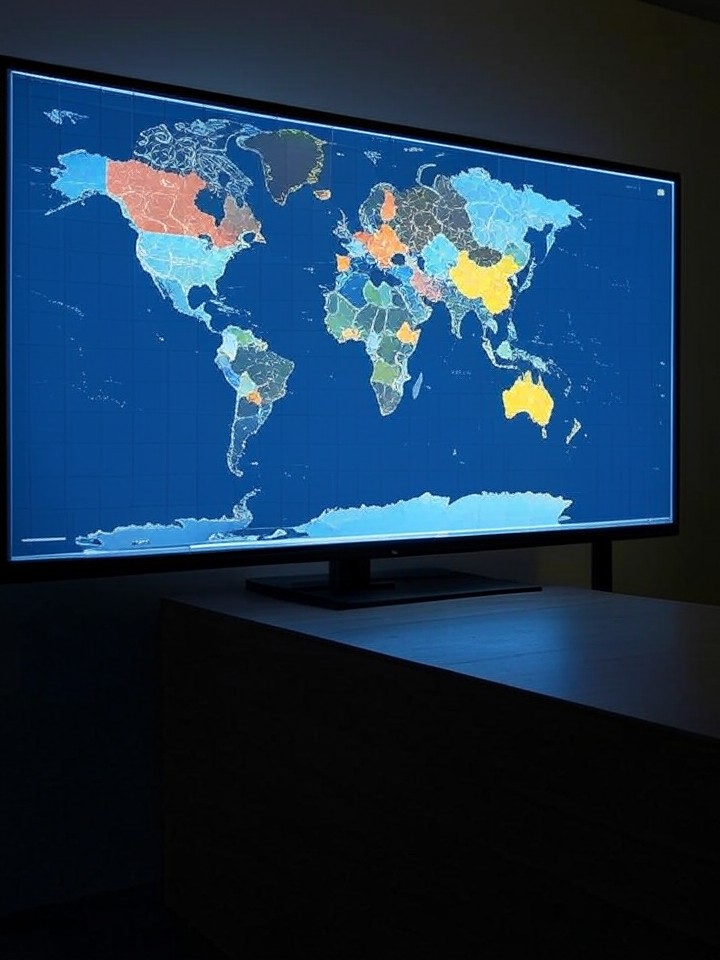
Shadows Over the Digital Horizon: How Censorship Engulfed Billions in 2025 and Casts a Longer Pall in 2026
In an era where information flows as freely as currency in global markets, the stark rise of internet censorship has emerged as a formidable barrier, affecting billions and reshaping how societies interact online. According to a recent analysis by cybersecurity firm Surfshark, more than half of the world’s population—approximately 4.6 billion people—faced some form of internet restriction in 2025. This surge marks a troubling escalation from previous years, driven by governments tightening controls amid political unrest, security concerns, and efforts to curb dissent. The implications ripple through economies, human rights, and technological innovation, prompting urgent questions about the future of open access.
Surfshark’s report, detailed in a piece from TechRadar, highlights how censorship manifested in shutdowns, content blocks, and VPN bans across dozens of nations. In regions like the Middle East and South Asia, authorities deployed these measures with increasing frequency, often justifying them as necessary for national security. For instance, Iran’s repeated blackouts, including a near-total shutdown in early January 2026 that lasted over 90 hours, underscore a pattern where digital darkness accompanies protests. Justas Pukys, a senior product manager at Surfshark, noted that such restrictions not only disrupt daily life but also endanger safety by limiting access to essential information.
The global tally for 2025 included widespread incidents in 19 countries, building on trends observed in prior years. A 2022 review by Surfshark, as covered in their own blog, showed 4.2 billion people affected, but the jump to 4.6 billion in 2025 indicates an accelerating crisis. This isn’t isolated; it’s part of a broader shift where authoritarian regimes and even democracies experiment with digital controls. In Jammu and Kashmir, a two-month VPN ban aimed at thwarting “terrorist” activities further illustrates how tools meant for privacy are being criminalized.
Rising Tides of Restriction in Volatile Regions
Delving deeper, the Middle East stands out as a hotspot for censorship escalation. Iran’s 62nd recorded instance of internet restriction in the past decade, as reported in IT-Online, coincided with riots and violent crackdowns, plunging the nation into communications isolation for days. This tactic isn’t new, but its persistence signals a normalization of digital suppression as a governance tool. Experts warn that such actions stifle economic activity, with businesses unable to operate and citizens cut off from global markets.
South Asia mirrors this pattern, with India and Pakistan implementing periodic blackouts. Surfshark’s internet shutdown tracker, accessible via their research page, logs these events in real-time, revealing a mid-2023 recap where over 4.24 billion lives were impacted in the first half of that year alone. By 2025, the numbers swelled, incorporating new players like Bangladesh, where restrictions targeted social media during elections. These measures often extend beyond politics, affecting education and healthcare by blocking access to online resources.
The economic fallout is profound. In a world increasingly reliant on digital connectivity, shutdowns can cost billions in lost productivity. A post on X from user Pirat_Nation, reflecting broader sentiment on the platform, warned of impending “full lockdowns” under pretexts like misinformation and child safety, echoing fears that privacy tools like VPNs are next in line for bans. This user-driven discourse on X highlights growing public anxiety, with many posts decrying the erosion of online freedoms.
Geopolitical Undercurrents and Cybersecurity Intersections
Beyond regional flare-ups, geopolitical tensions are fueling this censorship wave. The Tom’s Guide year-end review, featuring insights from Surfshark experts, predicts that 2026 will see heightened threats from AI-amplified cyberattacks and state-sponsored restrictions. As nations grapple with misinformation and cyber threats, censorship becomes a blunt instrument, often at the expense of civil liberties.
Cybersecurity reports underscore this intersection. The World Economic Forum’s Global Cybersecurity Outlook for 2026, as detailed in Help Net Security, notes that 64% of organizations now factor geopolitically motivated attacks into their strategies. This environment pressures companies like Surfshark to innovate, deploying technologies such as “Everlink” for self-healing connections and 100Gbps servers to counter disruptions, as outlined in another TechRadar article on their 2025 milestones.
Privacy concerns amplify the stakes. Posts on X, including those from users like Mike Benz, discuss how global censorship networks, influenced by entities like the U.S. State Department, are twisting policies in the EU, Brazil, and Australia. These sentiments portray a future where the internet, as a free space, could vanish by 2028 if unchecked. Such discussions on X, while not always verifiable, capture a pulse of unease among tech-savvy communities.
Technological Responses and Industry Adaptations
In response, the VPN industry is evolving rapidly. Surfshark’s efforts in 2025, including fortifying infrastructure against AI threats, position it as a key player in combating censorship. Their weekly cybersec charts, found on Surfshark’s research hub, provide bite-sized recaps of trends, helping insiders track developments. Meanwhile, broader studies like their 2023 internet shutdowns recap emphasize patterns of digital suppression.
Mobile privacy adds another layer. A TechRadar warning about data-hungry browsers like Yandex, Edge, and Chrome on Android ties into censorship by highlighting how everyday tools collect user data, potentially aiding surveillance. This dovetails with X posts from users like Marconius Solidus, who decry omnipresent surveillance in operating systems and apps, urging a rethink of digital habits.
For industry insiders, the challenge lies in balancing security with freedom. Surfshark’s Senior Product Manager Justas Pukys, quoted in TechRadar, stresses that restrictions during unrest hinder safety and information flow. As 2026 unfolds, with early shutdowns already signaling a grim year, companies must innovate to bypass blocks while advocating for policy changes.
The Human Cost and Broader Societal Shifts
At the heart of this issue is the human element. Billions affected means disrupted lives—students unable to learn, activists silenced, and economies stalled. In Iran, the ongoing blackout, as per IT-Online, exemplifies how repeated censorship fosters a culture of fear and isolation. Similar patterns in other nations suggest a global contagion, where one government’s tactics inspire others.
Emerging technologies like AI and post-quantum encryption offer hope and hurdles. A post on X from FAUN.dev notes Cloudflare’s 2025 Radar Review, where 52% of web traffic now uses post-quantum safeguards, hinting at resilient infrastructures. Yet, as regulators target privacy coins and VPNs, per an X post from FORMULA by Cointelegraph, usage fragments, pushing activities underground.
Geopolitical reports, such as the one from Mezha on the World Economic Forum’s findings, reveal that 91% of large companies anticipate more threats. This foresight is crucial for insiders plotting strategies amid uncertainty.
Forecasting the Path Ahead for Digital Freedom
Looking forward, 2026 appears poised for further intensification. Surfshark’s predictions in Tom’s Guide suggest AI misuse and supply chain vulnerabilities will compound censorship efforts. Industry adaptations, like those Surfshark implemented in 2025, provide blueprints for resilience, but systemic change requires global advocacy.
Sentiment on X, from users like vxdb recapping 2025 cybersecurity news—including TikTok bans and pardons—illustrates a year of upheaval. These platform insights, combined with formal reports, paint a multifaceted picture of a world where digital rights are under siege.
Ultimately, as censorship affects half the globe, the onus falls on technologists, policymakers, and citizens to push back. Innovations in privacy tools and international pressure could stem the tide, ensuring the internet remains a bastion of open exchange rather than a controlled domain. The coming months will test whether these efforts can illuminate the shadows encroaching on our digital world.


 WebProNews is an iEntry Publication