
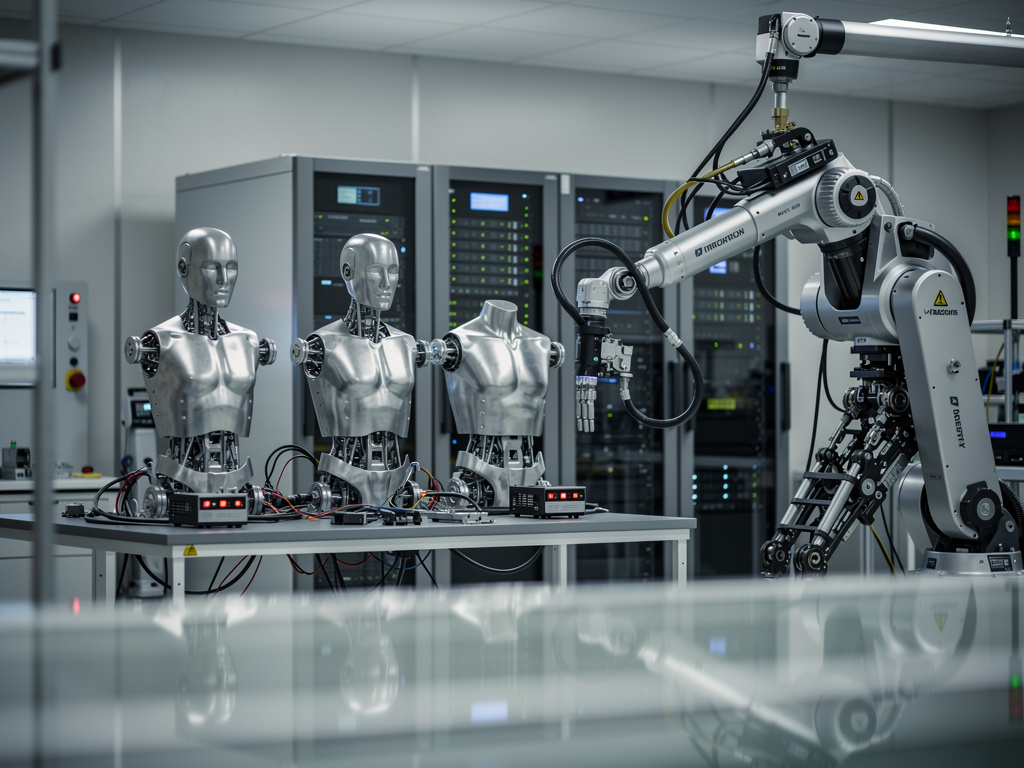
The Enigmatic Power of AI Humanoids: Probing the Limits of Robotic Strength in 2025
In the rapidly evolving world of artificial intelligence and robotics, humanoid robots are capturing imaginations and raising eyebrows with their purported capabilities. Recent demonstrations have showcased these machines performing tasks that blur the line between science fiction and reality, from pouring lattes to navigating complex terrains. Yet, a veil of uncertainty shrouds their true physical strength, prompting questions about safety, transparency, and the future of human-robot interactions.
At the heart of this discussion is a CNET article that highlights how recent events, including lawsuits and public demos, are forcing the industry to confront these issues head-on. For instance, videos of robots lifting heavy objects or enduring physical stress have gone viral, but experts argue that we might not fully grasp the extent of their power. This lack of clarity stems from proprietary technologies and varying testing standards, leaving regulators and the public in the dark.
As companies like Tesla and Figure AI push boundaries, the conversation extends beyond mere functionality to ethical and safety concerns. Industry insiders note that while these robots promise to revolutionize sectors like manufacturing and healthcare, their strength could pose unintended risks if not properly managed. The push for standardization is gaining momentum, with calls for clearer metrics on torque, lifting capacity, and failure points.
Unveiling Demonstrations and Doubts
Public showcases, such as those at Silicon Valley summits, have featured small-scale robots performing delicate tasks, but full-sized humanoids remain elusive in many presentations. According to a Bloomberg report, evangelists are hailing new AI techniques as game-changers, yet prototypes often fall short of hype. This discrepancy fuels skepticism about actual strength levels.
Lawsuits are adding fuel to the fire, with cases alleging misrepresentation of robotic capabilities in promotional materials. These legal battles underscore the need for verifiable data on strength parameters, as missteps could lead to accidents in real-world deployments. For example, if a robot’s grip strength exceeds safe limits, it might inadvertently cause harm during collaborative tasks.
Beyond legalities, technical advancements are accelerating. Posts on X from industry observers suggest that by late 2025, humanoid robots could ship in tens of thousands, with capabilities rivaling human dexterity. These insights, drawn from various X discussions, indicate a surge in production forecasts, but they also warn of overhyped claims without concrete evidence.
Strength Metrics Under Scrutiny
Delving deeper into the mechanics, humanoid robots’ strength is often measured by factors like joint torque and payload capacity. A Winssolutions analysis separates reality from exaggeration, noting that while some robots can lift objects weighing up to 50 kilograms, real-world applications demand consistent performance across varied environments. This variability raises questions about reliability.
Recent news from China showcases innovative designs, such as the TRON 2 bipedal robot with modular modes for enhanced mobility and manipulation. As reported in Interesting Engineering, these developments promise dual-arm operations that could amplify effective strength through coordinated efforts. However, without standardized testing, comparing these to Western counterparts remains challenging.
Similarly, Midea’s six-armed humanoid, unveiled at a major forum, claims to boost output by 30% through multi-limb coordination. The same publication details how this robot’s design leverages AI for tasks requiring superior strength and precision, yet experts caution that such claims need independent verification to ensure they don’t overstate capabilities.
Industry Forecasts and Market Projections
Market predictions paint an optimistic picture, with analysts forecasting explosive growth. A post on X referencing Morgan Stanley anticipates a $5 trillion market by 2050, emphasizing the challenges in achieving scalable strength without compromising safety. This aligns with broader sentiments on the platform, where users discuss the hurdles in transitioning from prototypes to mass production.
Goldman Sachs’ earlier research, echoed in X conversations, projects the humanoid sector reaching $154 billion by 2035, driven by leaders in AI and components manufacturing. These figures highlight the economic stakes, where strength capabilities directly influence adoption in industries like automotive and logistics.
On the deployment front, a Bain & Company insight explores how bipedal robots are moving from demos to practical use, with strength playing a pivotal role in tasks like heavy lifting in warehouses. The report stresses assessing when these capabilities will truly disrupt traditional workflows.
Safety Standards and Regulatory Gaps
Safety emerges as a critical concern amid these advancements. The CNET piece points to lawsuits questioning the transparency of strength demonstrations, where edited videos might mask limitations or exaggerate prowess. This opacity could erode trust, especially as robots integrate into human-centric environments.
International perspectives, such as those from the World Economic Forum, advocate for guardrails to harness benefits while mitigating risks. They argue that clear standards on strength could prevent incidents, fostering societal acceptance of humanoid technologies.
X posts from tech enthusiasts reinforce this, noting rapid progress in robots like Tesla’s Optimus, which now handles real-world terrain and recovers from falls. Yet, these informal sources often highlight the need for caution, as unverified strength claims could lead to overreliance on machines not fully tested for edge cases.
Technological Breakthroughs and Challenges
Innovations in AI integration are enhancing robotic strength indirectly through better control systems. For instance, Standard Bots lists advanced models like Figure 02, which combine AI with robust actuators for improved lifting and manipulation. These breakthroughs suggest a future where strength is augmented by intelligent decision-making.
However, challenges persist in energy efficiency and material durability. High-strength operations demand powerful batteries and resilient components, areas where current tech lags. News from The Verge discusses the hype surrounding humanoids, with figures like Elon Musk envisioning robot armies, but practical deployment hinges on overcoming these technical barriers.
Chinese advancements, as per X updates, include AgiBot’s datasets for real-world problem-solving, potentially leading to stronger, more adaptive robots. These efforts aim for mass production by 2025, intensifying global competition and the race for superior strength metrics.
Real-World Applications and Ethical Considerations
In practical settings, humanoid strength is being tested in factories and homes. BMW’s trials with Figure AI robots, mentioned in X threads, demonstrate physical skills in assembly lines, where consistent strength ensures efficiency without human intervention.
Healthcare applications promise gentle yet strong assistance for the elderly, but this requires precise calibration to avoid injury. The World Economic Forum’s story underscores the promise of disruption, provided ethical frameworks address strength-related risks.
Looking ahead, predictions from WIRED speculate on AI’s trajectory, including potential layoffs in the industry if strength advancements automate jobs too aggressively. This societal impact necessitates balanced development.
Global Competition and Future Trajectories
Competition between nations is heating up, with China leading in patents and production, as per X analyses. Their focus on multi-armed designs could redefine strength paradigms, offering higher output in collaborative scenarios.
In the U.S., companies like Apptronik are scaling up, with X posts forecasting millions of units by 2027. These robots, boasting high IQ equivalents, could possess strength amplified by polymath AI, transforming industries.
Yet, the Bain & Company report warns that evolving capabilities demand proactive assessment. As strength becomes a differentiator, industries must adapt to integrate these powerful machines safely.
Navigating Uncertainty in Robotic Power
Amidst the excitement, incidents like a robot kicking a company CEO in a demo, reported by BGR, illustrate the raw power on display. Such events, while promotional, highlight the need for controlled environments to test limits.
Collaborative robots, or cobots, are bridging gaps by combining human judgment with robotic endurance, as detailed in X posts on smart factories. This synergy tempers raw strength with safety protocols.
Ultimately, as the field matures, transparency in strength reporting will be key. Drawing from the CNET analysis, ongoing lawsuits may catalyze better practices, ensuring that the enigmatic power of AI humanoids benefits society without unforeseen dangers.
The path forward involves interdisciplinary efforts, blending engineering, policy, and ethics. With projections from Bloomberg indicating transformative AI breakthroughs, the industry stands at a crossroads, where understanding and harnessing robotic strength could define the next era of innovation. As 2025 unfolds, stakeholders must prioritize clarity to unlock the full potential of these mechanical marvels.


 WebProNews is an iEntry Publication