
Unraveling the Cellular Code: 2025’s Pivotal Breakthroughs in Biology’s Inner Workings
In the fast-evolving realm of cellular biology, 2025 has marked a turning point with discoveries that promise to reshape our understanding of life’s fundamental building blocks. A recent article in the journal Cell, published in December 2025, highlights a groundbreaking study on cellular reprogramming that could revolutionize treatments for age-related diseases. Researchers at a leading institute detailed how partial epigenetic reprogramming using modified Yamanaka factors can reset cellular age without causing cancerous transformations, offering new hope for regenerative medicine. This work builds on years of incremental progress, but its implications extend far beyond the lab, potentially influencing everything from drug development to personalized healthcare.
The study, accessible via Cell, demonstrates that short bursts of gene expression can rejuvenate skin cells in mice, improving tissue repair and extending lifespan markers. Lead authors describe a precise mechanism where epigenetic markers—chemical tags on DNA that control gene activity—are selectively altered. This isn’t just about turning back the clock; it’s about fine-tuning the cellular machinery to combat degeneration. Industry experts are buzzing about the potential for human trials, with early data suggesting applications in treating conditions like Alzheimer’s and heart disease.
Complementing this, broader trends in the field show a surge in integrative approaches. For instance, advancements in single-cell sequencing have allowed scientists to map cellular behaviors with unprecedented detail, revealing how individual cells respond to stressors. This convergence of technologies is accelerating discoveries, as seen in collaborative efforts across global labs.
Pioneering Tools Reshape Cellular Insights
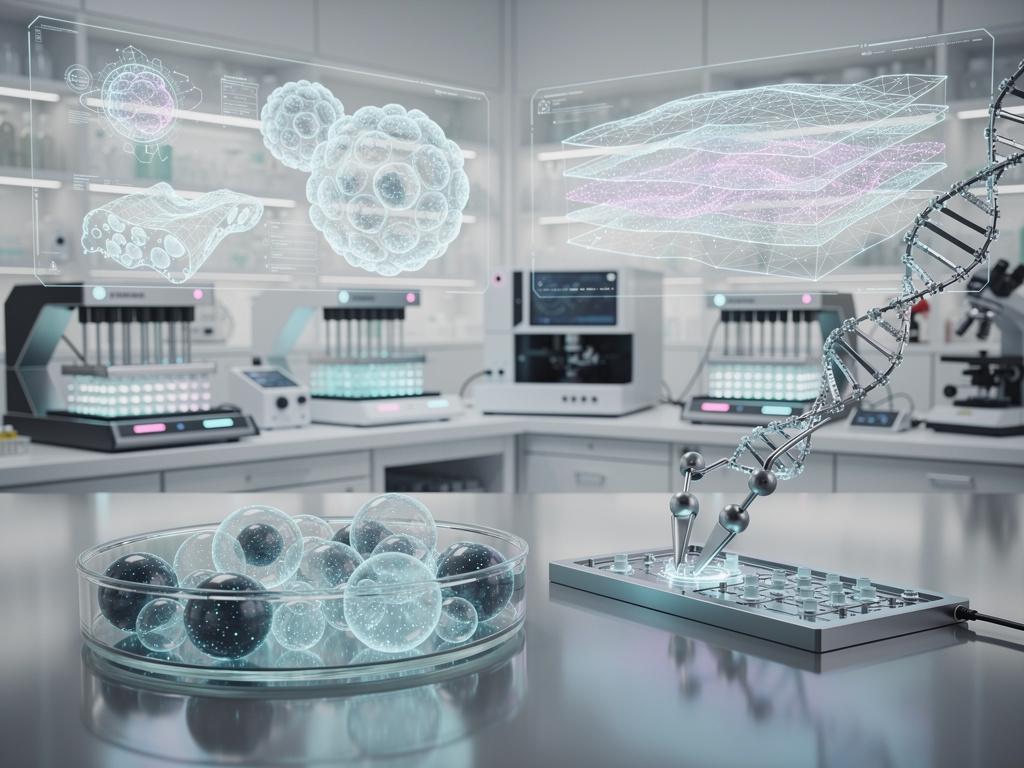
One key innovation driving these advances is the development of virtual cell models, which simulate real-world cellular functions in digital environments. Posts found on X from researchers like those at Altos Labs emphasize how these models, powered by artificial intelligence, enable virtual testing of therapies, reducing the need for costly animal experiments. In a notable example, a diffusion-based generative pipeline called MorphoDiff, accepted at a major conference, predicts cellular morphology under various perturbations, offering a glimpse into how cells adapt to changes.
This digital shift aligns with findings from Nature, where a 2025 article discusses rapid methods for creating stem-cell-based mini-organs from patient cells. As reported in Nature Reviews Molecular Cell Biology, experts predict that by 2050, AI-driven virtual cells could transform our grasp of complex diseases, allowing simulations of entire organ systems. Such tools are not mere novelties; they’re essential for decoding intricate cellular networks.
Moreover, CRISPR-based gene editing continues to evolve, with 2025 seeing approvals for therapies targeting sickle cell disease and beyond. X posts highlight milestones like mRNA cancer vaccines entering phase 3 trials and gene therapies showing reversal in Huntington’s disease, underscoring a year of tangible progress in translating lab findings to clinics.
From Theory to Therapeutic Realities
Delving deeper, the Cell study reveals how reprogramming factors—originally discovered over a decade ago—have been refined to avoid pitfalls like uncontrolled cell growth. By limiting exposure to these factors, researchers achieved a “youthful” epigenetic state in cells, enhancing their resilience. This method, tested on aged rodents, led to improved wound healing and reduced inflammation, metrics that mirror human aging processes.
Supporting this, data from ScienceDaily’s coverage of cell biology news points to related breakthroughs in understanding cellular senescence, where cells stop dividing but contribute to aging. In a September 2025 update on ScienceDaily, reports detail how senescent cells can be cleared or reprogrammed, potentially delaying age-related decline. These insights are crucial for insiders, as they inform investment in biotech firms focusing on longevity.
Industry applications are already emerging. Pharmaceutical companies are exploring these techniques for drug screening, using reprogrammed cells to model diseases more accurately. A post on X from a biotech analyst notes the excitement around 3D bioprinting and microbiome engineering, which complement cellular reprogramming by creating tailored tissues for transplantation.
Interdisciplinary Synergies Fuel Progress
The intersection of cellular biology with fields like immunology and neurobiology is yielding hybrid innovations. For example, the Journal of Cell Biology, in its October 2025 issue available at Journal of Cell Biology (Volume 224, Issue 10 (October 6, 2025)), published research on how cellular signaling pathways influence immune responses, with implications for vaccine development. This ties into the Cell study’s findings on epigenetic controls, suggesting that reprogramming could enhance immune cell function in older adults.
Further afield, Harvard’s Department of Molecular & Cellular Biology shared news of large-scale single-cell datasets from the Brain Initiative, mapping neural cells at unprecedented scales. As detailed in their November 2025 update on Harvard MCB, these efforts reveal how cellular diversity underpins brain function, potentially linking to reprogramming strategies for neurodegenerative disorders.
On X, discussions from experts like Rahul Satija highlight Perturb-seq methods, which systematically test gene perturbations across millions of cells. A February 2025 post describes profiling over 2.6 million cells, uncovering signaling regulators that could be targeted in reprogramming protocols.
Challenges and Ethical Horizons
Despite the optimism, hurdles remain in scaling these technologies. The Cell article acknowledges variability in reprogramming efficiency across cell types, necessitating further refinement. Safety concerns, such as off-target effects, are paramount, especially as human trials loom. Insiders must weigh these against the potential benefits, as regulatory bodies scrutinize data from animal models.
Ethically, the power to “reset” cells raises questions about access and equity. X posts echoing Yuval Noah Harari’s talks ponder the societal impact of god-like abilities to modify life, with 2025 advancements in CRISPR prime editing amplifying these debates. As one thread notes, while biotech accelerates, ensuring equitable distribution of therapies is critical.
Collaborative frameworks are addressing these issues. Initiatives like those from the Royal Society, outlined in their cell and molecular biology collections at Royal Society, promote open-access research to democratize knowledge.
Scaling Innovations for Global Impact
Looking ahead, the integration of multi-omics data—combining genomics, proteomics, and more—is set to enhance cellular models. A November 2025 X post on spatial omics platforms describes 3D mapping of tissues at single-cell resolution, enabling precise studies of tumor-immune interactions. This could refine reprogramming for cancer therapies, building on the Cell study’s epigenetic focus.
In practical terms, startups are leveraging these advances. For instance, reports from Newswise on Cell journal-related research, found at Newswise, detail how companies are developing RNA therapies tested via virtual cells, accelerating drug pipelines.
Educational institutions are also adapting. Trends in Cell Biology, as per its January 2025 content on Cell Press, reviews how molecular tools are evolving, preparing the next generation of scientists for these complexities.
Emerging Frontiers in Cellular Dynamics
Another layer involves cellular metabolism and its role in aging. The Cell study links epigenetic changes to metabolic shifts, where reprogrammed cells exhibit youthful energy production. This resonates with findings from Current Opinion in Cell Biology, accessible via ScienceDirect, which explores metabolic regulation in cell growth.
X posts from biotech enthusiasts list 2025 breakthroughs like brain-computer interfaces and xenotransplantation, hinting at how cellular reprogramming could interface with these technologies for hybrid human enhancements.
Finally, as we reflect on these strides, the field’s momentum suggests a future where cellular manipulation becomes routine in medicine. The December 2025 Cell article stands as a cornerstone, inspiring ongoing research that bridges basic science with clinical outcomes.
Visions of Tomorrow’s Cellular Mastery
Pushing boundaries further, AI’s role in predicting cellular behaviors is expanding. A Chubby post on X describes building complete digital cell models for drug testing, aligning with the virtual cell visions in Nature’s 2025 review.
Journal of Cell Science, in its November 2025 edition at Journal of Cell Science, covers phagocytic reprogramming in developmental biology, echoing the Cell study’s themes.
Industry insiders note that funding surges, driven by these discoveries, are fostering startups focused on personalized epigenetics.
Sustaining Momentum Amid Uncertainties
Yet, translating lab successes to bedside requires rigorous validation. The Cell research includes caveats on long-term effects, urging caution in hype.
Posts on X from Revive discuss epigenetic resetting in a landmark paper, emphasizing partial reprogramming’s safety.
As global collaborations intensify, the field’s trajectory points toward integrated solutions for complex health challenges.
In essence, 2025’s cellular biology advancements, spearheaded by the Cell journal’s December publication, herald an era of profound transformation, where understanding and manipulating life’s microscopic engines could redefine human potential. With careful stewardship, these breakthroughs promise not just longer lives, but healthier ones.


 WebProNews is an iEntry Publication