
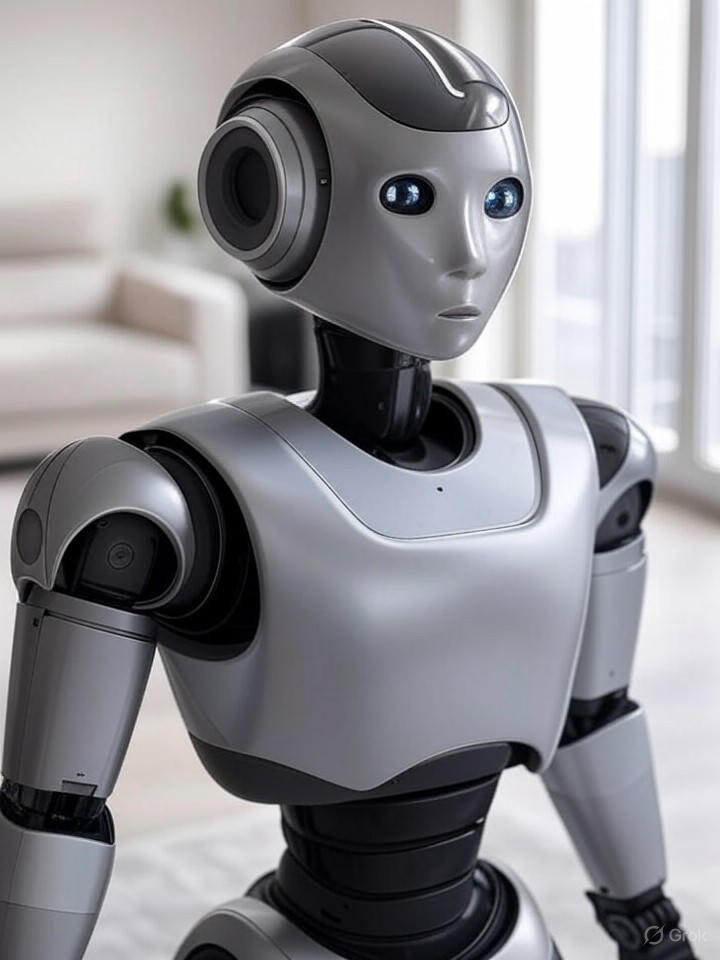
1X Neo: The Dawn of Household Humanoids
In the bustling tech hub of Palo Alto, California, 1X Technologies has launched what could be the most ambitious consumer robotics product yet: the Neo humanoid robot. Priced at around $20,000, Neo is designed to integrate seamlessly into everyday homes, tackling mundane chores like watering plants, unloading dishwashers, and even engaging in natural conversations. This unveiling marks a significant step toward democratizing advanced robotics, shifting them from industrial settings to personal spaces.
Drawing from recent announcements, 1X positions Neo as a safe, versatile assistant powered by AI and robotics. The company’s website details how Neo uses tendon-driven motors and soft materials for gentle interactions, ensuring it can navigate human environments without causing harm. Pre-orders opened recently, with the robot touted as the world’s first consumer-ready humanoid for home use, according to BusinessWire.
From Factory Floors to Living Rooms
1X Technologies, backed by investors like OpenAI, has a history of developing robots for enterprise applications. Their earlier model, Eve, was deployed in warehouses and security roles. Now, with Neo, the focus shifts to domestic tasks. As reported by Engadget, Neo starts with teleoperation—human operators remotely control it via VR for complex tasks—gradually transitioning to full autonomy through AI learning.
Industry insiders note that this hybrid approach addresses current limitations in AI dexterity. Eric Jang, 1X’s VP of AI, shared on X that Neo has undergone extensive testing in employee homes, improving reliability with hardware upgrades like natural walking and bending. Posts on X from users like Mario Nawfal highlight Neo’s ability to handle laundry and vacuuming, emphasizing its human-like movements.
Technological Backbone and Safety Features
At the core of Neo is a sophisticated blend of AI models and robotics hardware. The robot stands about 5.5 feet tall, weighs around 66 pounds, and can carry up to 44 pounds. Its design incorporates soft, skin-like materials to prevent injuries, making it suitable for homes with children or pets. According to TechWeez, Neo responds to voice commands and can engage in conversations, aiming to become a ‘family member’ rather than just a machine.
Safety is paramount; 1X claims Neo is engineered to be inherently safe, with built-in mechanisms to avoid collisions. Recent news from City Magazine describes how its AI enables it to learn chores over time, starting with basics like cleaning and progressing to more personalized assistance. This learning curve is supported by teleoperators, as detailed in X posts from PCMag, where ‘expert mode’ involves remote supervision for tricky tasks.
Economic Implications for Labor Augmentation
The $20,000 price tag positions Neo as an accessible entry into humanoid robotics, potentially disrupting the home services market. Analysts compare it to early smartphones—expensive at launch but transformative. Parametric Architecture notes that Neo could augment household labor, freeing time for more meaningful activities, especially in aging populations or busy households.
However, challenges remain. Full autonomy is projected for around 2027, per X posts citing 1X CEO Bernt Bornich. Until then, reliance on teleoperation raises privacy concerns, as remote operators access home environments. Industry discussions on X, including from The Humanoid Hub, suggest a ‘long queue’ of early adopters, indicating strong interest despite the cost.
Competitive Landscape and Market Positioning
Neo enters a heating race among humanoid developers. Competitors like Tesla’s Optimus and Figure’s robots focus on industrial uses, but 1X targets consumers directly. StartupNews.fyi reports that Neo’s affordability and home-centric design set it apart, with pre-orders signaling market readiness.
Investor backing from heavyweights like Samsung underscores confidence. As per Al Bawaba, Neo’s launch in Norway and global expansion plans aim to make humanoid assistants commonplace. X sentiment, from users like Ole Lehmann, praises its natural integration into homes, potentially revolutionizing smart home ecosystems.
Future Prospects and Ethical Considerations
Looking ahead, 1X envisions Neo evolving through software updates, much like Tesla vehicles. The company’s blog on 1X.tech details beta testing, where user feedback refines capabilities. This iterative approach could accelerate adoption, with potential applications beyond chores, like elderly care.
Ethically, the rise of home humanoids prompts questions about job displacement in service sectors and data privacy. Jang highlights Neo as the ‘safest and most capable’ yet, but experts on X warn of over-reliance on teleoperation. As AI advances, balancing innovation with safeguards will be key.
Adoption Challenges and User Experiences
Early adopters, as shared in X posts by Ashley Schendel, imagine seamless integration: voice commands triggering actions like starting laundry. However, the need for human oversight in ‘expert mode’—detailed by BitcoinEthereumNews—means it’s not fully hands-off yet.
User reactions on X vary; some see it as a futuristic convenience, while others joke about privacy risks with remote operators. 1X addresses this by emphasizing secure, opt-in teleoperation, positioning Neo as a stepping stone to autonomous living assistants.
Global Impact on Smart Homes
Neo’s launch could catalyze the smart home industry, integrating with devices like smart thermostats. 1X’s official site promotes scheduling chores, envisioning a cleaner home without effort. In regions with labor shortages, such as Europe and Asia, Neo might fill gaps in domestic help.
As per recent X discussions from otticcreative, the VR-guided system offers a ‘wild peek’ into future AI homes. With ongoing improvements, Neo represents not just a product, but a paradigm shift in how technology augments daily life.


 WebProNews is an iEntry Publication