
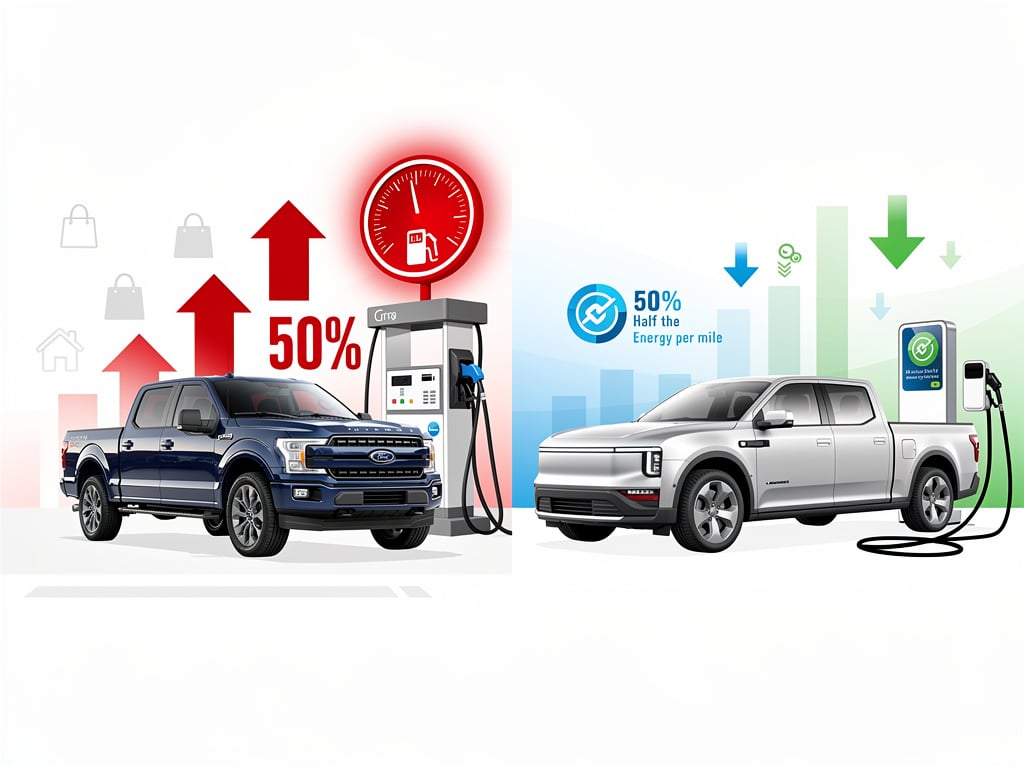
America’s top-selling vehicle just crossed a painful milestone. Filling the Ford F-150’s 23-gallon tank now tops $100 at the national average gas price of $4.483 per gallon, per AAA Fuel Prices. That’s up from $68 at pre-war levels of $2.98 a gallon—a 50% jump that stings truck owners nationwide.
Matthew Benjamin flagged this threshold in The Motley Fool. “It now costs more than $100 to fill the nation’s best-selling vehicle with gasoline,” he wrote. The surge ties directly to the Iran war, which has kept oil prices elevated. Even after a brief cease-fire, analysts expect gasoline to stay high through 2026.
Drivers feel it. X users gripe about $150 tabs for larger tanks. One posted, “Now we know why Ford calls their pickup an F-150. It takes $150 to fill it up.” Another: “$145 to fill up an ICE F-150, $142 for an entire month” on a Lightning EV, from a r/f150 thread.
Consumer Wallets Tighten Amid Record-Low Sentiment
Nearly 80% of 1,000 Americans surveyed say the gas spike alters their spending, according to a mid-April CNBC All-America Economic Survey. Six in 10 have slashed entertainment—fewer dinners out, movies, concerts. Over half plan less travel. “About 6 in 10 respondents said they’ve already cut back on entertainment,” the poll found.
And sentiment? Plummeting. The University of Michigan index hit a record low of 49.8 in April, revised from an initial 47.6, per Surveys of Consumers. Gas prices drive the gloom: 7 in 10 consumers link them to their economic views, says a National Association of Convenience Stores survey cited by Benjamin.
First-quarter GDP grew at just 2%, below historical norms. Consumer spending slowed. Business investment in AI propped it up. Fatter tax refunds from prior cuts offer temporary relief—but they’ll fade by summer. Higher pump prices could drag growth further if they persist.
Discretionary sectors suffer. McDonald’s and Domino’s Pizza stocks dropped over the past month. TJX Companies and Lululemon Athletica followed. Energy? Up 31% year-to-date via the State Street Energy Select Sector SPDR ETF.
But. Trucks like the F-150 guzzle 18-20 mpg combined, per Recharged. At $4.48 a gallon, that’s $0.22-$0.25 per mile. Annual cost for 12,000 miles: around $2,700.
Lightning’s Charge: Fuel Savings That Stack Up
Enter the F-150 Lightning. Home charging at $0.13-$0.17 per kWh yields $0.07-$0.12 per mile—50-70% less than gas. Yearly tab: $960-$1,320. “In most typical U.S. scenarios, a Lightning owner charging primarily at home will spend roughly half to two-thirds as much on energy as a comparable gas F-150 driver,” Recharged reports.
Reddit users back it. One spent $142 charging a Lightning for a full month’s driving—versus $145 for one ICE fill-up. At 2.0 miles per kWh and $0.11/kWh, daily 60-mile commutes stay cheap. Even in high-rate states like California ($0.35-$0.39/kWh off-peak), it often beats $4.48 gas.
Upfront? Lightning starts higher—$56,975 for Pro trim, per Kelley Blue Book. Federal credits up to $7,500 helped until late 2025. Maintenance drops 25-40%—no oil changes. Payback hits 3-7 years for high-mileage drivers.
Ford pushes hybrids too. The 3.5L PowerBoost gets 22-24 mpg, trimming costs to $1,920 annually at current prices. But pure EV shines brightest for routine use. As gas hovers near four-year highs, per CNBC, the math tilts electric.
Investors watch closely. Ford stock rose 2.22% amid the noise. Consumer pain tests resilience. If $100 fill-ups become routine, expect more shifts—to hybrids, EVs, even fewer road trips. The F-150’s throne endures. But its gas era? Facing real pressure.


 WebProNews is an iEntry Publication