
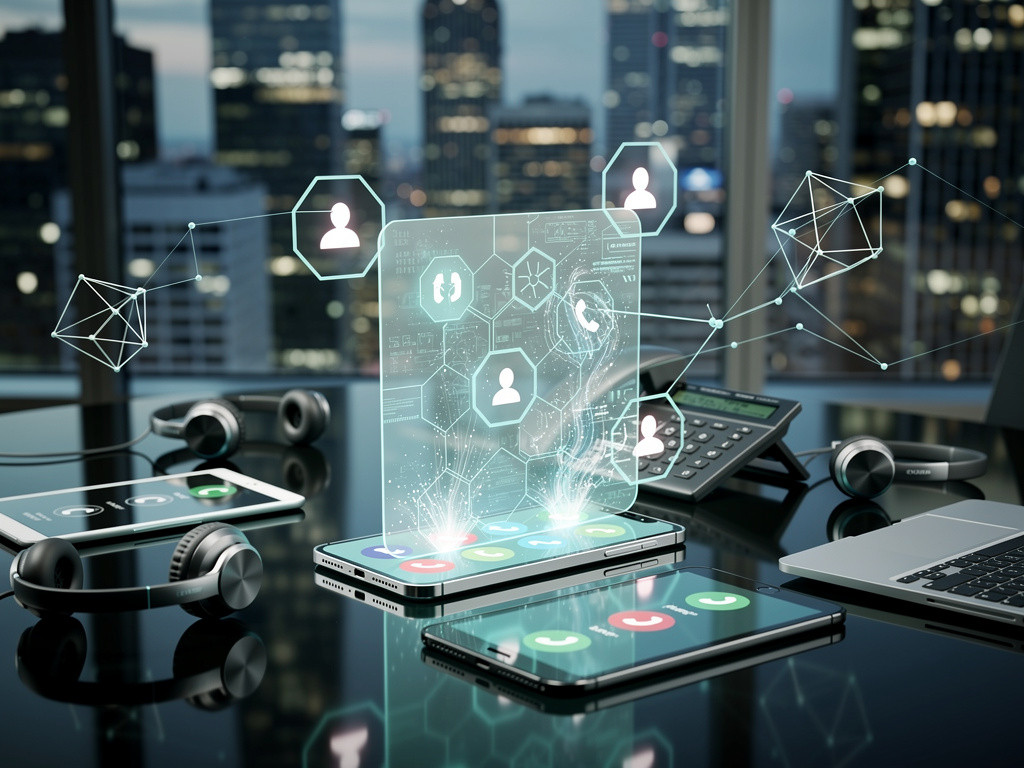
In the rarefied corridors of corporate power, a quiet revolution is underway that threatens to upend decades of carefully cultivated networking protocols. Chief executives, venture capitalists, and political operatives—accustomed to commanding immediate attention through a simple phone call—are discovering their privileged access increasingly thwarted by an unexpected adversary: artificial intelligence-powered call screening technology. What began as a consumer tool to combat spam has evolved into a sophisticated digital gatekeeper that makes no distinction between telemarketing robots and Fortune 500 CEOs.
According to MSN’s recent reporting, the frustration among elite circles has reached a crescendo as these automated systems become increasingly sophisticated and ubiquitous. The technology, initially championed by Google and Apple as a defense mechanism against the estimated 50 billion robocalls Americans receive annually, now screens calls with such efficiency that even legitimate high-priority communications face unprecedented barriers. Investment bankers report missing time-sensitive deal opportunities, while political consultants complain of being unable to reach key decision-makers during critical campaign moments.
The irony is palpable: the same technological innovation that corporate leaders once celebrated as a productivity enhancement now stands as an impediment to their own influence. “We’re seeing a fundamental shift in how business gets done,” notes one technology analyst familiar with the situation. “The traditional power dynamic where a CEO could pick up the phone and immediately connect with another executive is being disrupted by algorithms that don’t recognize status or urgency.”
The Technology Behind the Frustration
Modern call screening systems employ sophisticated machine learning algorithms that analyze caller behavior patterns, voice characteristics, and metadata to determine call legitimacy. Google’s Call Screen feature, integrated into Pixel phones and expanding across Android devices, uses Google Assistant to answer calls, transcribe conversations in real-time, and provide users with enough information to decide whether to pick up. Apple’s Silence Unknown Callers feature takes an even more aggressive approach, automatically routing any call from a number not in the user’s contacts, recent calls, or Siri Suggestions directly to voicemail without any notification.
These systems have become remarkably effective at their primary mission. Industry data suggests that call screening technology has reduced answered spam calls by approximately 40% among users who employ these features. However, this efficiency comes at a cost that extends far beyond blocking unwanted solicitations. The algorithms operate on probability assessments rather than certainty, and even calls from verified business numbers can trigger screening protocols if they exhibit patterns associated with automated dialing systems or mass calling campaigns.
The sophistication of these systems continues to advance. Recent updates incorporate natural language processing that can detect conversational nuances, assess caller intent within seconds, and even identify potential social engineering attempts. For legitimate callers attempting to reach busy executives, these technological barriers represent a fundamental challenge to traditional business communication protocols that have existed since the telephone became a standard business tool over a century ago.
Power Dynamics in the Digital Age
The democratizing effect of call screening technology extends beyond mere inconvenience for the wealthy and influential. It represents a subtle but significant redistribution of control over one’s time and attention—resources that have become increasingly precious in an age of constant connectivity. Junior employees can now effectively shield themselves from unsolicited contact by senior executives at other firms, while entrepreneurs can avoid being cornered into premature discussions with aggressive investors.
This shift has profound implications for how business relationships are initiated and maintained. Traditional networking strategies that relied on cold calling or leveraging mutual connections for introductions face new obstacles when the intended recipient never knows a call was attempted. The screening technology effectively creates a two-tier communication system: those already in one’s network enjoy relatively unfettered access, while outsiders—regardless of their credentials or the potential value of their proposition—face algorithmic gatekeepers that are impervious to charm, credentials, or urgency.
Some executives have adapted by reverting to older communication methods or developing new protocols. Email has seen a resurgence as a primary contact method for initial outreach, though it too faces its own filtering challenges. Others have turned to professional networking platforms like LinkedIn, where connection requests and direct messages offer an alternative pathway to attention. Text messaging has emerged as another workaround, though its effectiveness varies significantly based on generational preferences and professional norms.
The Unintended Consequences of Digital Protection
The widespread adoption of call screening has created a series of cascading effects throughout professional ecosystems. Recruitment firms report increased difficulty in reaching passive candidates for high-level positions, as executive prospects often screen unknown numbers as a matter of course. Journalists covering breaking news stories face new challenges in reaching sources for time-sensitive quotes or confirmations. Even emergency services have expressed concerns about potential delays when critical information needs to reach individuals who maintain aggressive call filtering settings.
The technology has also exposed generational divides in communication preferences and expectations. Younger professionals, who grew up with smartphones and are more accustomed to asynchronous communication, tend to embrace call screening enthusiastically. They view unexpected phone calls as intrusive and prefer the control that screening provides over their time and attention. Older executives, particularly those who built their careers when phone calls were the primary business communication tool, often perceive call screening as a barrier to efficiency and a sign of disrespect or unavailability.
Financial implications have also emerged. Deal-making in industries where timing is crucial—such as investment banking, venture capital, and real estate—has been affected by communication delays. Several anecdotes circulate within these communities about opportunities lost or complicated because key decision-makers never received time-sensitive calls. While difficult to quantify precisely, some industry observers estimate that call screening may be adding hours or even days to transaction timelines in certain contexts.
Adaptive Strategies and Workarounds
As frustration with call screening has grown, various workarounds and adaptive strategies have emerged. Some executives have begun maintaining separate phone numbers for different purposes: a widely distributed number that employs aggressive screening, and a more private line reserved for important contacts. Executive assistants and chiefs of staff have seen their roles expand to include managing these multiple communication channels and ensuring that important calls aren’t missed due to automated filtering.
Technology vendors have also responded to the challenge by developing new solutions. Several services now offer verified caller identification systems that work with major carriers to authenticate legitimate business calls, similar to how email authentication protocols like SPF and DKIM help distinguish legitimate messages from spam. These systems assign trust scores to calling numbers based on business registration, calling patterns, and user feedback, theoretically allowing important calls to bypass screening filters.
However, these solutions introduce their own complications and costs. Verified caller systems require businesses to register their phone numbers and maintain compliance with various authentication protocols. Smaller organizations or individuals making one-off important calls may lack access to these verification systems, potentially deepening the divide between established institutional players and newcomers or outsiders trying to break into elite networks.
Privacy Rights Versus Professional Accessibility
The tension between personal privacy rights and professional accessibility expectations lies at the heart of the call screening debate. Consumer advocates argue that individuals have an absolute right to control who can demand their immediate attention, noting that the expectation of constant availability contributes to burnout and work-life balance problems. The ability to screen calls represents an important boundary-setting tool in an era when work communications increasingly intrude into personal time.
Conversely, some business leaders contend that certain professional roles carry implicit obligations regarding accessibility. They argue that executives who accept positions of significant responsibility or who cultivate reputations as industry leaders have corresponding duties to remain reachable for important matters. From this perspective, aggressive call screening represents a form of professional isolationism that undermines collaborative business culture and slows decision-making processes.
Legal and regulatory questions have also begun to emerge. Some jurisdictions are considering whether certain professionals—such as corporate officers, licensed professionals, or public officials—should face restrictions on their ability to screen calls during business hours. While no significant legislation has yet passed, the discussions reflect broader societal questions about the balance between personal autonomy and professional obligations in an increasingly connected world.
The Future of Executive Communication
As artificial intelligence continues to advance, call screening technology will likely become even more sophisticated and widespread. Future systems may incorporate voice biometric analysis, behavioral pattern recognition, and integration with calendar and email systems to make more nuanced decisions about which calls warrant interruption. Some developers are working on AI assistants that can conduct preliminary conversations with callers, gather information about their purpose, and make intelligent routing decisions based on the user’s preferences and current context.
These developments suggest that the current frustrations experienced by executives may represent only the beginning of a more fundamental transformation in business communication norms. The telephone call—once the gold standard for urgent, important business communication—may continue its decline in favor of more asynchronous, documented forms of interaction. This shift could have profound implications for business culture, potentially favoring more deliberative, documented decision-making processes over the rapid-fire deal-making that has characterized certain industries.
The call screening phenomenon ultimately reflects broader tensions in modern professional life between efficiency and accessibility, privacy and collaboration, technological capability and human judgment. As these technologies continue to evolve and proliferate, businesses and individuals alike will need to develop new norms and expectations around professional communication. The days when a phone call guaranteed immediate access to anyone, regardless of their status or schedule, appear to be ending—much to the frustration of those who benefited most from that old paradigm. What emerges in its place will likely be a more complex, mediated system of professional interaction that reflects both the capabilities of modern technology and the evolving expectations of a new generation of business leaders who value control over their time and attention as highly as any other professional resource.




 WebProNews is an iEntry Publication