
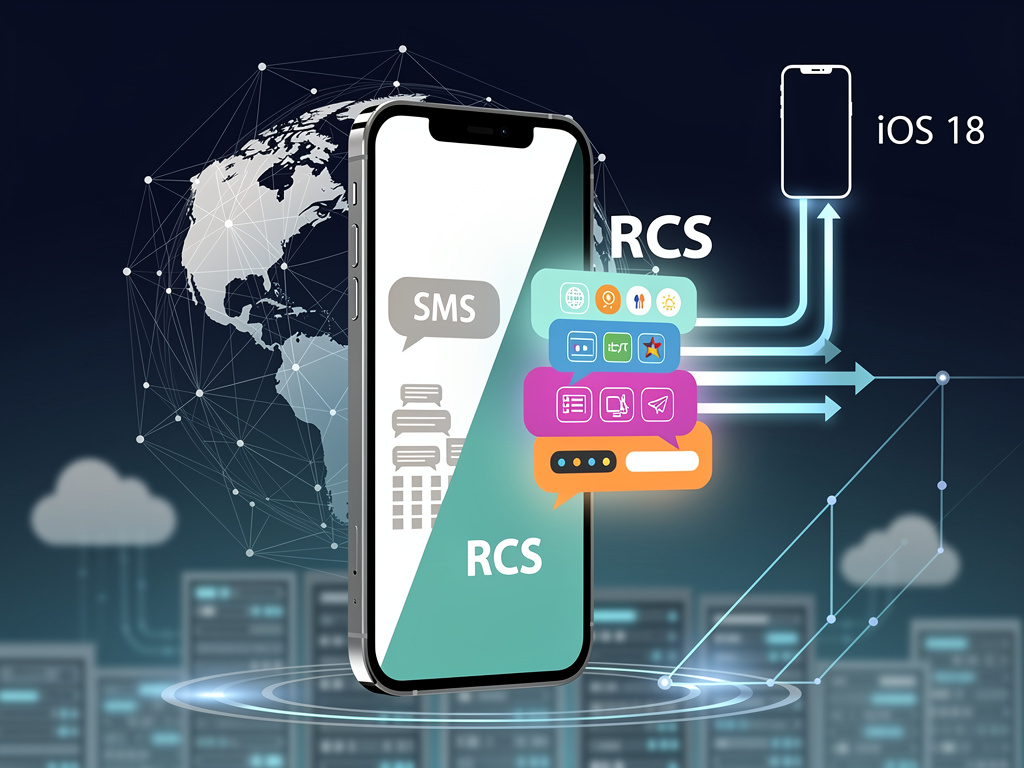
The mobile messaging industry stands at an inflection point as Rich Communication Services (RCS) emerges as a formidable challenger to the decades-old SMS standard that has dominated business-to-consumer communications since the 1990s. With global enterprises spending billions annually on SMS campaigns, the arrival of RCS represents more than just a technological upgrade—it signals a fundamental transformation in how brands engage with customers through their most personal device: the smartphone.
According to Twilio’s analysis, RCS offers capabilities that dwarf traditional SMS, including high-resolution images, video content, interactive buttons, and read receipts—features that have long been standard in popular messaging apps like WhatsApp and iMessage but absent from the carrier-level messaging that businesses rely upon. The technology operates through mobile data or Wi-Fi rather than cellular networks, enabling richer media experiences while maintaining the universal reach that made SMS the backbone of business messaging for a quarter-century.
The stakes are substantial. SMS has generated consistent revenue for mobile carriers while providing businesses with a reliable, if limited, channel for customer engagement. Now, as Apple’s recent adoption of RCS in iOS 18 creates a unified messaging standard across Android and iPhone devices, enterprises face critical decisions about when and how to transition their messaging strategies. The shift carries implications for marketing effectiveness, customer experience, and technology infrastructure investments across virtually every consumer-facing industry.
The Technical Evolution Behind the Messaging Revolution
At its core, SMS was designed in the 1980s with severe technical constraints that persist today. The 160-character limit, text-only format, and lack of delivery confirmation made sense in an era of limited bandwidth and processing power. RCS, by contrast, leverages modern mobile data networks to support messages up to 8,000 characters, along with files up to 105 megabytes in size. As Twilio notes, this expansion enables businesses to embed product catalogs, appointment scheduling interfaces, and payment processing directly within message threads—transforming what was once a notification channel into a full-fledged commerce platform.
The technical architecture differs fundamentally between the two standards. SMS routes through Signaling System 7 (SS7) protocols on cellular networks, creating inherent security vulnerabilities that have been exploited for years by sophisticated attackers. RCS messages travel over internet protocols with end-to-end encryption capabilities, addressing long-standing concerns about message interception and fraud. This security enhancement proves particularly crucial as businesses increasingly use messaging for sensitive transactions like two-factor authentication codes and financial notifications.
Apple’s Strategic Pivot and Market Implications
For years, Apple resisted RCS adoption, maintaining its proprietary iMessage system while relegating communications with Android users to SMS fallback. The company’s decision to integrate RCS support in iOS 18, announced in late 2023 and implemented in 2024, fundamentally altered the competitive dynamics. Industry observers suggest this move stemmed from regulatory pressure in key markets and recognition that the fragmented messaging experience damaged user satisfaction. The integration means that for the first time, iPhone and Android users can exchange rich media messages through their default messaging apps without third-party applications.
This development carries enormous implications for business messaging strategies. Previously, companies faced a fractured ecosystem where message capabilities varied dramatically based on recipient device types. Marketing campaigns required multiple versions—rich media for Android users via RCS, plain text for iPhone recipients via SMS. Apple’s adoption eliminates this complexity, enabling businesses to design unified campaigns with consistent user experiences. The timing coincides with growing enterprise frustration over the limitations of SMS-based customer engagement in an era when consumer expectations have been shaped by feature-rich social messaging platforms.
Enhanced Engagement Metrics and Business Performance
Early adoption data reveals substantial performance improvements for businesses deploying RCS compared to traditional SMS campaigns. The interactive capabilities—including suggested replies, calendar integration, and location sharing—drive measurably higher engagement rates. Businesses report click-through rates on RCS messages that exceed SMS benchmarks by factors of two to three times, according to industry case studies. The ability to showcase products with high-resolution imagery and enable one-tap purchasing removes friction from the customer journey, directly impacting conversion rates.
Read receipts and typing indicators, standard in RCS but absent from SMS, provide businesses with valuable data about message effectiveness and customer intent. These analytics enable real-time campaign optimization and more sophisticated customer segmentation. For customer service applications, RCS supports rich card formats that present multiple options with visual elements, reducing the need for customers to navigate complex phone trees or mobile websites. The result is faster issue resolution and improved satisfaction scores, metrics that directly correlate with customer lifetime value in competitive markets.
Security Considerations and Fraud Prevention
The security profile of RCS versus SMS presents a complex calculus for enterprise decision-makers. While RCS offers superior encryption capabilities, the technology’s relative novelty means that security protocols continue to evolve. The ability to verify sender identity through RCS Business Messaging—displaying verified brand names and logos—addresses a critical vulnerability in SMS, where sender ID spoofing has enabled widespread phishing attacks. According to Twilio’s research, this verification layer significantly reduces successful fraud attempts, protecting both businesses and consumers.
However, the transition period creates new attack vectors. Fraudsters have begun exploiting consumer unfamiliarity with RCS features, crafting sophisticated phishing attempts that leverage the technology’s rich media capabilities to appear more legitimate. Security teams must adapt their threat detection systems to account for RCS-specific risks while educating customers about verification indicators. The industry faces a critical challenge in establishing trust frameworks that prevent RCS from becoming a more powerful tool for bad actors even as it enhances legitimate business communications.
Infrastructure Requirements and Implementation Challenges
Deploying RCS at scale requires substantial infrastructure investments that extend beyond simple API integrations. Unlike SMS, which operates through established carrier relationships and standardized protocols refined over decades, RCS implementation varies across carriers and regions. Businesses must navigate a complex ecosystem of RCS Business Messaging platforms, carrier partnerships, and technical integrations. The requirement for brand verification, while beneficial for security, adds administrative overhead and delays to campaign launches.
Legacy systems present additional complications. Many enterprises have built extensive marketing automation, customer relationship management, and notification systems around SMS capabilities and character limits. Migrating these systems to support RCS features requires significant development resources and testing. The fallback mechanisms—ensuring messages reach customers on networks or devices without RCS support—add complexity to message routing logic. For global enterprises, the uneven rollout of RCS across different countries and carriers necessitates market-by-market strategies rather than unified global approaches.
Cost Structures and Return on Investment
The economics of RCS versus SMS factor prominently in adoption decisions. RCS messages typically cost more than SMS on a per-message basis, with pricing varying significantly across carriers and message complexity. The enhanced capabilities and improved engagement rates must justify this premium through measurable business outcomes. For high-value transactions or complex customer interactions, the cost differential often proves negligible compared to the value of improved conversion rates and customer satisfaction. However, for high-volume, low-margin communications like promotional alerts, the economics remain challenging.
Forward-thinking enterprises are approaching the transition strategically, identifying use cases where RCS capabilities deliver disproportionate value. Appointment confirmations with calendar integration, product launches requiring visual storytelling, and customer service interactions benefit most from RCS features. Meanwhile, simple notifications and alerts may remain on SMS for cost efficiency. This hybrid approach allows businesses to optimize spending while gradually building RCS capabilities and expertise. The return on investment calculation must account not only for direct response metrics but also for brand perception improvements and customer experience enhancements that compound over time.
Regulatory Environment and Carrier Dynamics
The regulatory framework surrounding mobile messaging continues to evolve, with implications for both SMS and RCS adoption. Privacy regulations like GDPR and CCPA impose strict requirements on message consent and data handling regardless of the underlying technology. However, RCS’s richer data collection capabilities—including read receipts and interaction analytics—create additional compliance considerations. Businesses must ensure their RCS implementations respect privacy preferences and provide transparent opt-out mechanisms.
Carrier dynamics add another layer of complexity. Mobile network operators view RCS as an opportunity to recapture value from messaging, which has been largely commoditized by over-the-top applications like WhatsApp and Facebook Messenger. This strategic interest drives carrier support for RCS adoption, but also creates potential conflicts around pricing, feature access, and data ownership. The Google-led RCS Business Messaging initiative has standardized many technical aspects, yet carrier-specific implementations and business terms vary. Enterprises must navigate these relationships carefully to ensure reliable message delivery and consistent user experiences across their customer base.
The Path Forward for Enterprise Communications
As the mobile messaging ecosystem transitions from SMS dominance to a multi-channel reality including RCS, businesses face strategic decisions that will shape their customer engagement capabilities for years to come. The technology’s potential extends beyond marketing to encompass customer service, transaction notifications, and even conversational commerce. Early adopters gain competitive advantages through superior customer experiences, but premature commitments to immature platforms carry risks.
The most successful strategies will likely involve gradual migration, starting with high-impact use cases that leverage RCS’s unique capabilities while maintaining SMS as a reliable fallback. Investment in flexible messaging platforms that abstract away underlying protocols enables businesses to adapt as the technology matures and market dynamics shift. The ultimate goal transcends any specific technology—creating seamless, valuable interactions that meet customers where they are, with the right message at the right moment, delivered through whatever channel proves most effective. As RCS capabilities expand and adoption accelerates, the businesses that master this new medium will establish significant advantages in the increasingly competitive battle for customer attention and loyalty.




 WebProNews is an iEntry Publication